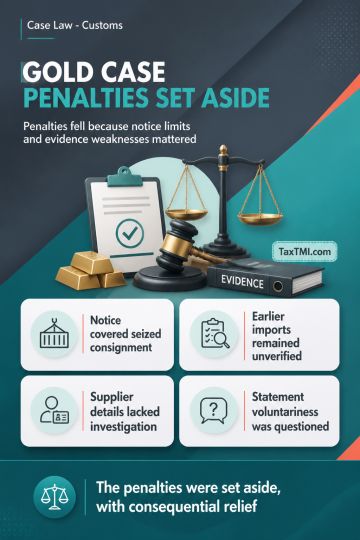
Arrest safeguards and transit remand requirements invalidated detention following inter-State transfer without communicated grounds or magistrate auth...
Arrest safeguards require disclosed grounds, relative intimation and transit remand, while duplicate prosecution under the CGST framework is unsustain...
Document Identification Number defects can invalidate GST assessments, with delayed challenges entertained conditionally where patent irregularities e...
Windmill commissioning evidence supported higher depreciation where grid connection and electricity generation proved operational use before the relev...
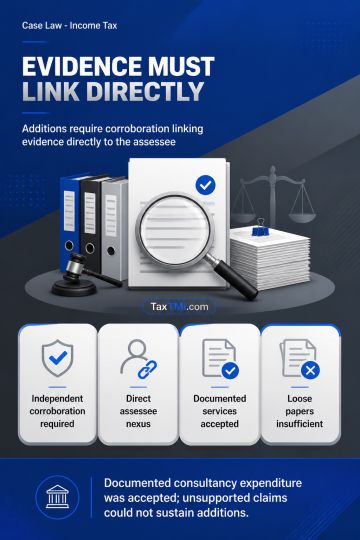
Pharmaceutical promotion and transfer-pricing comparability principles limited disallowances, while uncorroborated search allegations and unsupported ...
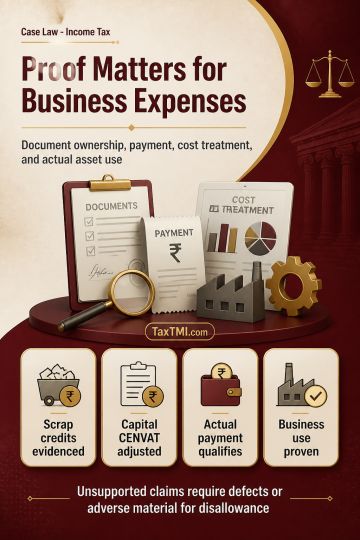
Business expenditure substantiation supports scrap credits, statutory payments and expense claims, while depreciation requires proof of actual busines...
The Commissioner's rejection of the appellant's requests for conversion of DFIA Shipping Bills to Drawback Shipping Bills, relying on Para 3(a) of the CBIC Circular No. 36/2010-Customs, was held to be incorrect. The Gujarat High Court had previously ruled that Para 3(a) of the said Circular was ultra vires Articles 14 and 19(1)(g) of the Constitution of India and ultra vires Section 149 of the Customs Act, 1962. Since the Commissioner's rejection was solely based on the struck-down Para 3(a), the impugned order was held to be bad in law. Furthermore, under Para 4.28(e) of the Handbook of Procedures 2009-14, the appellant could apply for conversion after the DFIA licenses were cancelled, which they promptly did. No time limit was prescribed for seeking conversion. Consequently, the appellant was entitled to conversion of the Shipping Bills into drawback shipping bills. The CESTAT allowed the appeal.
The Commissioner's rejection of the appellant's requests for conversion of DFIA Shipping Bills to Drawback Shipping Bills, relying on Para 3(a) of the CBIC Circular No. 36/2010-Customs, was held to be incorrect. The Gujarat High Court had previously ruled that Para 3(a) of the said Circular was ultra vires Articles 14 and 19(1)(g) of the Constitution of India and ultra vires Section 149 of the Customs Act, 1962. Since the Commissioner's rejection was solely based on the struck-down Para 3(a), the impugned order was held to be bad in law. Furthermore, under Para 4.28(e) of the Handbook of Procedures 2009-14, the appellant could apply for conversion after the DFIA licenses were cancelled, which they promptly did. No time limit was prescribed for seeking conversion. Consequently, the appellant was entitled to conversion of the Shipping Bills into drawback shipping bills. The CESTAT allowed the appeal.
Note: It is a system-generated summary and is for quick reference only.
 TaxTMI
 of 4792


















 Join Channel


 TaxTMI