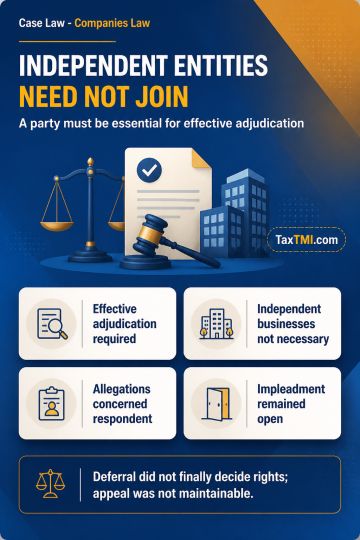
Necessary-party requirements limit impleadment of independent entities, while deferred consideration does not create an appealable adverse determinati...
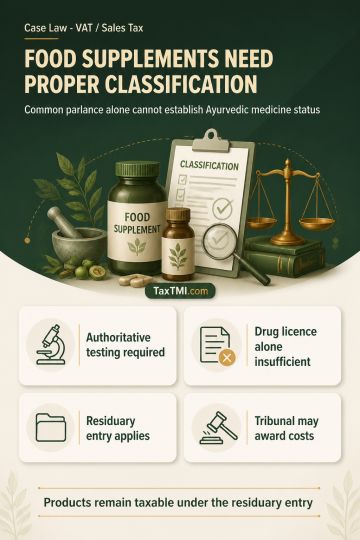
Food supplement classification requires common parlance and authoritative tests, preventing treatment as proprietary Ayurvedic medicines without suppo...
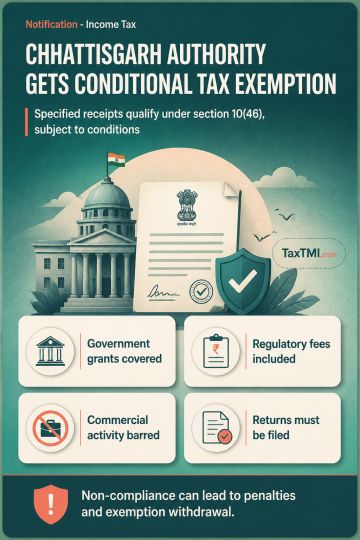
Specified regulatory authority income receives conditional tax exemption, subject to non-commercial activity, unchanged income character, and return f...
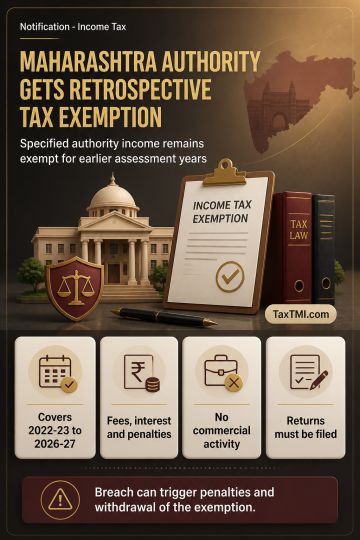
Tax exemption for regulatory authority income applies retrospectively, subject to non-commercial activity, unchanged income sources, and return-filing...
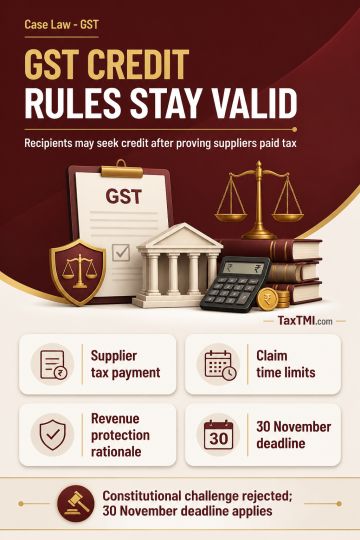
Input tax credit conditions remain constitutionally valid, with eligible recipient claims considered under GST circulars and retrospective filing dead...
The Commissioner's rejection of the appellant's requests for conversion of DFIA Shipping Bills to Drawback Shipping Bills, relying on Para 3(a) of the CBIC Circular No. 36/2010-Customs, was held to be incorrect. The Gujarat High Court had previously ruled that Para 3(a) of the said Circular was ultra vires Articles 14 and 19(1)(g) of the Constitution of India and ultra vires Section 149 of the Customs Act, 1962. Since the Commissioner's rejection was solely based on the struck-down Para 3(a), the impugned order was held to be bad in law. Furthermore, under Para 4.28(e) of the Handbook of Procedures 2009-14, the appellant could apply for conversion after the DFIA licenses were cancelled, which they promptly did. No time limit was prescribed for seeking conversion. Consequently, the appellant was entitled to conversion of the Shipping Bills into drawback shipping bills. The CESTAT allowed the appeal.
The Commissioner's rejection of the appellant's requests for conversion of DFIA Shipping Bills to Drawback Shipping Bills, relying on Para 3(a) of the CBIC Circular No. 36/2010-Customs, was held to be incorrect. The Gujarat High Court had previously ruled that Para 3(a) of the said Circular was ultra vires Articles 14 and 19(1)(g) of the Constitution of India and ultra vires Section 149 of the Customs Act, 1962. Since the Commissioner's rejection was solely based on the struck-down Para 3(a), the impugned order was held to be bad in law. Furthermore, under Para 4.28(e) of the Handbook of Procedures 2009-14, the appellant could apply for conversion after the DFIA licenses were cancelled, which they promptly did. No time limit was prescribed for seeking conversion. Consequently, the appellant was entitled to conversion of the Shipping Bills into drawback shipping bills. The CESTAT allowed the appeal.
Note: It is a system-generated summary and is for quick reference only.
 TaxTMI
 of 4792




 Join Channel


 TaxTMI