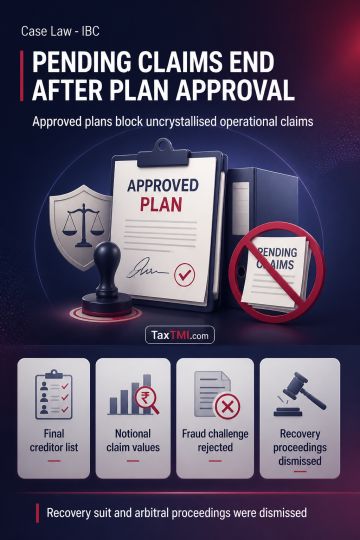
Clean slate principle extinguishes uncrystallised operational claims and bars continuation of pending recovery and arbitral proceedings after plan app...
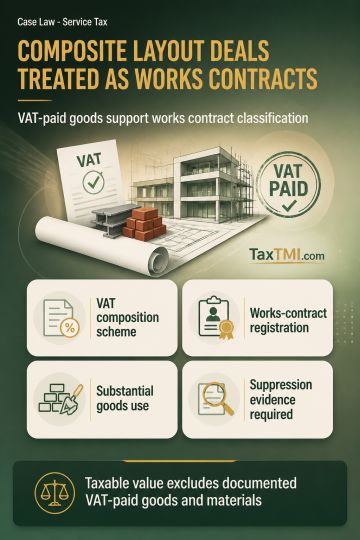
Works contract classification governs composite layout-development contracts where VAT-paid goods are transferred alongside construction and infrastru...
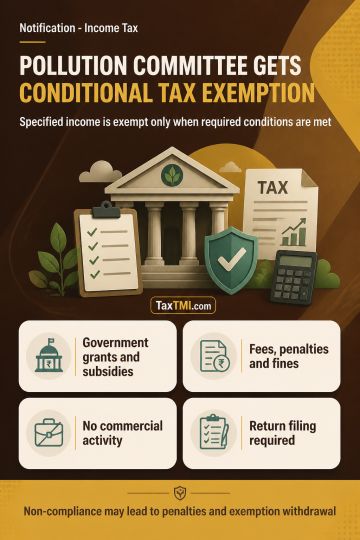
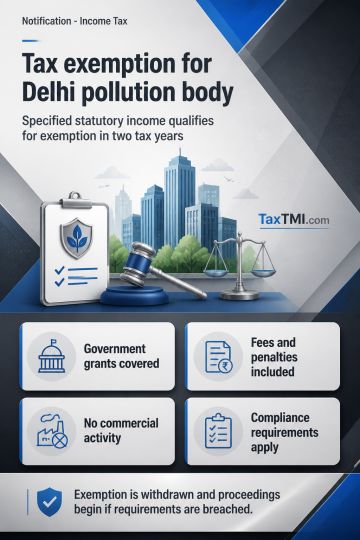
Specified income tax exemption for pollution control body remains conditional on non-commercial activity, unchanged income character, and return filin...
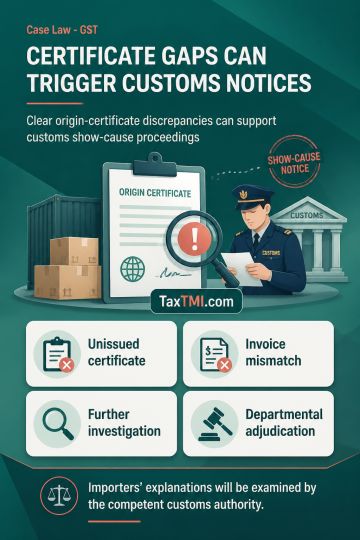
Jurisdictional facts in certificate-of-origin discrepancies can support customs show-cause proceedings, leaving factual explanations for departmental ...
The CESTAT allowed the appeal filed by the Appellant against the demand of customs duty. The Tribunal held that the Appellant had obtained a bonded warehouse license u/s 58 of the Customs Act, 1962, and the manufacturing activity was carried out within the licensed premises in the knowledge of the Revenue authorities since 1986. Despite the impracticable conditions imposed under the license, the Revenue did not raise any objections for over 30 years. The Tribunal observed that there was no allegation of diversion or misuse of imported goods by the Appellant. The amendment to the license in 2017, enlarging the bonded area to the entire factory premises, was treated as a curative measure with retrospective effect from 2014. Consequently, the demands raised by invoking Sections 28 and 72 of the Customs Act were set aside by the Tribunal.
The CESTAT allowed the appeal filed by the Appellant against the demand of customs duty. The Tribunal held that the Appellant had obtained a bonded warehouse license u/s 58 of the Customs Act, 1962, and the manufacturing activity was carried out within the licensed premises in the knowledge of the Revenue authorities since 1986. Despite the impracticable conditions imposed under the license, the Revenue did not raise any objections for over 30 years. The Tribunal observed that there was no allegation of diversion or misuse of imported goods by the Appellant. The amendment to the license in 2017, enlarging the bonded area to the entire factory premises, was treated as a curative measure with retrospective effect from 2014. Consequently, the demands raised by invoking Sections 28 and 72 of the Customs Act were set aside by the Tribunal.
Note: It is a system-generated summary and is for quick reference only.
 TaxTMI
 of 4796




 Join Channel


 TaxTMI