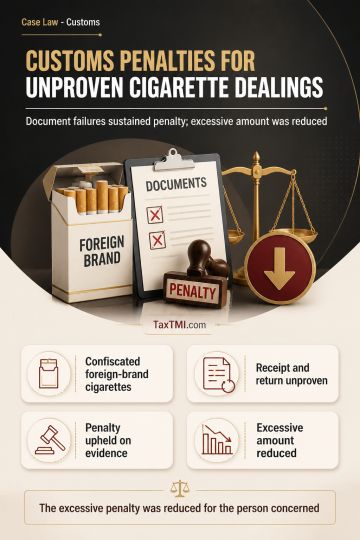
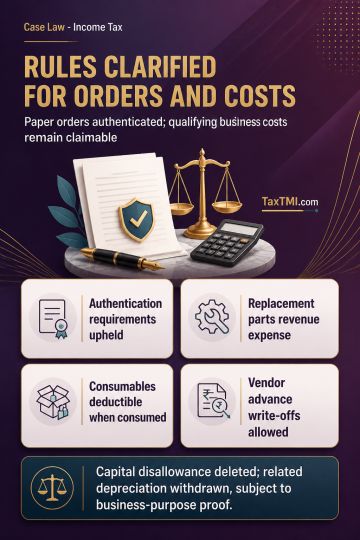
Authentication of paper assessment orders upheld, while qualifying repairs, consumables and vendor advance write-offs remain deductible business claim...
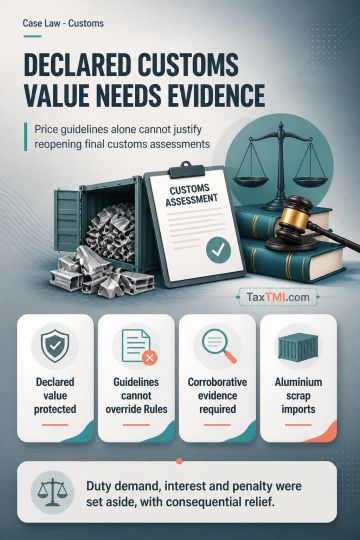
Transaction value cannot be rejected solely on non-statutory valuation guidelines without corroborative evidence supporting reassessment of final cust...
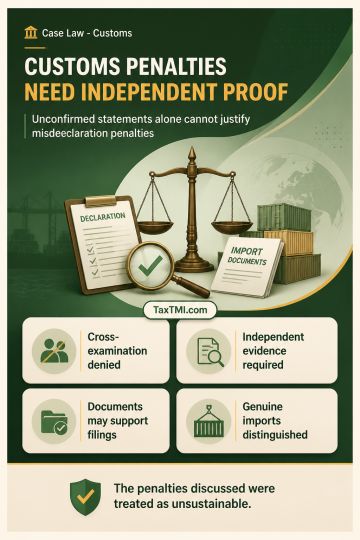
Cross-examination rights and corroborated evidence limit customs penalties for misdeclaration in genuine import transactions involving documented clea...
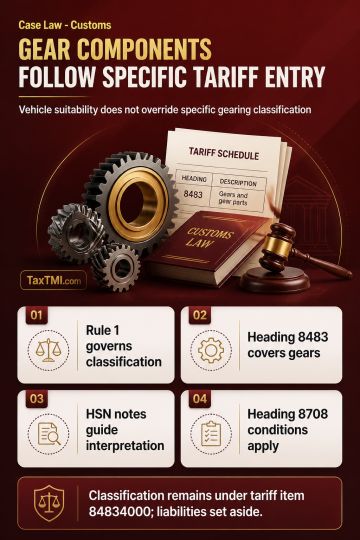
Tariff classification of vehicle gear components follows the specific gearing entry, displacing motor-vehicle parts classification and related liabili...
The CESTAT allowed the appeal filed by the Appellant against the demand of customs duty. The Tribunal held that the Appellant had obtained a bonded warehouse license u/s 58 of the Customs Act, 1962, and the manufacturing activity was carried out within the licensed premises in the knowledge of the Revenue authorities since 1986. Despite the impracticable conditions imposed under the license, the Revenue did not raise any objections for over 30 years. The Tribunal observed that there was no allegation of diversion or misuse of imported goods by the Appellant. The amendment to the license in 2017, enlarging the bonded area to the entire factory premises, was treated as a curative measure with retrospective effect from 2014. Consequently, the demands raised by invoking Sections 28 and 72 of the Customs Act were set aside by the Tribunal.
The CESTAT allowed the appeal filed by the Appellant against the demand of customs duty. The Tribunal held that the Appellant had obtained a bonded warehouse license u/s 58 of the Customs Act, 1962, and the manufacturing activity was carried out within the licensed premises in the knowledge of the Revenue authorities since 1986. Despite the impracticable conditions imposed under the license, the Revenue did not raise any objections for over 30 years. The Tribunal observed that there was no allegation of diversion or misuse of imported goods by the Appellant. The amendment to the license in 2017, enlarging the bonded area to the entire factory premises, was treated as a curative measure with retrospective effect from 2014. Consequently, the demands raised by invoking Sections 28 and 72 of the Customs Act were set aside by the Tribunal.
Note: It is a system-generated summary and is for quick reference only.
 TaxTMI
 of 4792







 Join Channel


 TaxTMI