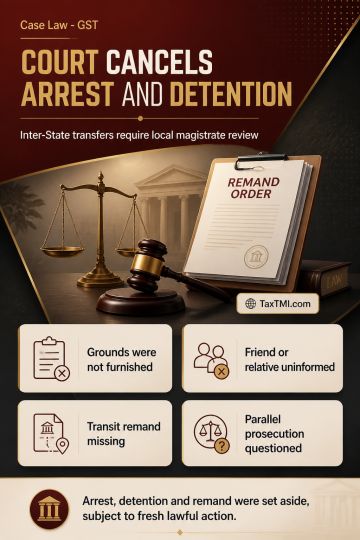
Arrest safeguards and transit remand requirements invalidated detention following inter-State transfer without communicated grounds or magistrate auth...
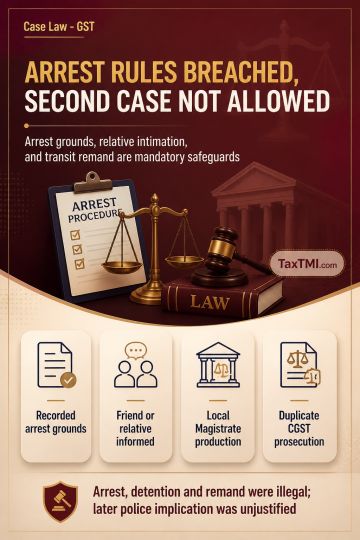
Arrest safeguards require disclosed grounds, relative intimation and transit remand, while duplicate prosecution under the CGST framework is unsustain...
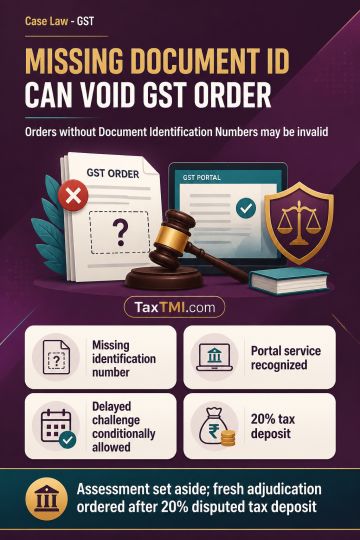
Document Identification Number defects can invalidate GST assessments, with delayed challenges entertained conditionally where patent irregularities e...
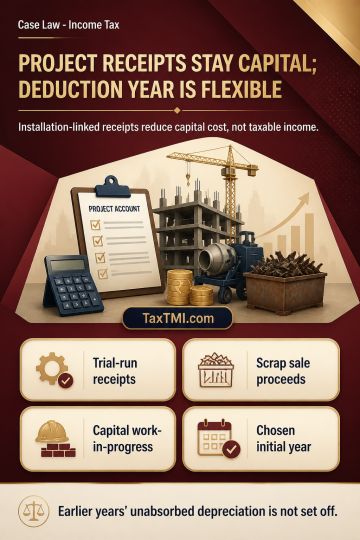
Windmill commissioning evidence supported higher depreciation where grid connection and electricity generation proved operational use before the relev...
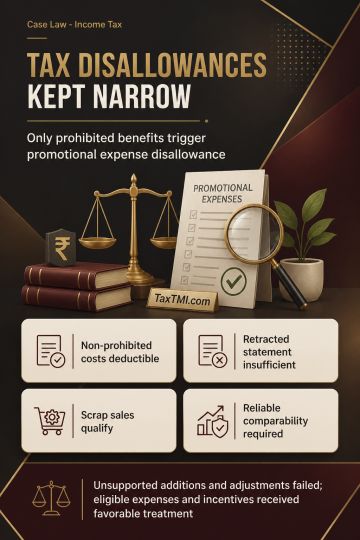
Pharmaceutical promotion and transfer-pricing comparability principles limited disallowances, while uncorroborated search allegations and unsupported ...
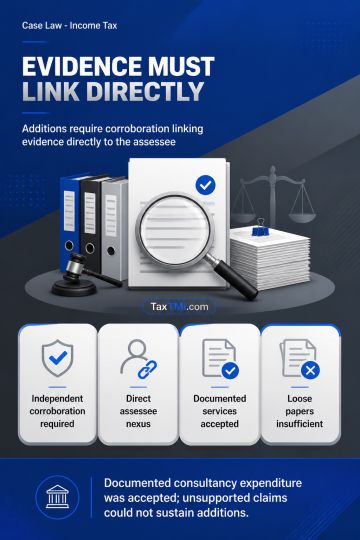
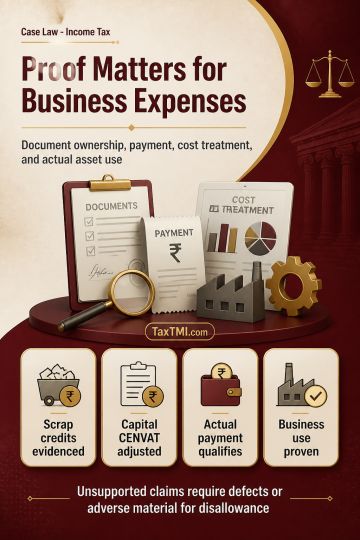
Business expenditure substantiation supports scrap credits, statutory payments and expense claims, while depreciation requires proof of actual busines...
The NCLAT dismissed the appeal filed by the corporate debtor against the order admitting the application u/s 7 of the Insolvency and Bankruptcy Code (IBC) filed by the Union Bank of India. The NCLAT held that there was a clear acknowledgment of outstanding dues by the corporate debtor prior to the Section 10A period. During the 10A period, additional facilities were extended, and the statements of account indicated an overdue amount of more than Rs. 1 crore as of March 31, 2021. The NCLAT referred to the Supreme Court's judgment in Laxmi Pat Surana vs. Union Bank of India, which held that the date of declaration of a loan account as a Non-Performing Asset (NPA) can be reckoned as the date of default for initiating action u/s 7 of the IBC. The NCLAT observed that while defaults during the 10A period cannot be the basis for proceedings u/s 7, the corporate debtor had committed continuous defaults even after the 10A period, exceeding the threshold amount. Therefore, the NCLAT upheld the Adjudicating Authority's order admitting the Section 7 application.
The NCLAT dismissed the appeal filed by the corporate debtor against the order admitting the application u/s 7 of the Insolvency and Bankruptcy Code (IBC) filed by the Union Bank of India. The NCLAT held that there was a clear acknowledgment of outstanding dues by the corporate debtor prior to the Section 10A period. During the 10A period, additional facilities were extended, and the statements of account indicated an overdue amount of more than Rs. 1 crore as of March 31, 2021. The NCLAT referred to the Supreme Court's judgment in Laxmi Pat Surana vs. Union Bank of India, which held that the date of declaration of a loan account as a Non-Performing Asset (NPA) can be reckoned as the date of default for initiating action u/s 7 of the IBC. The NCLAT observed that while defaults during the 10A period cannot be the basis for proceedings u/s 7, the corporate debtor had committed continuous defaults even after the 10A period, exceeding the threshold amount. Therefore, the NCLAT upheld the Adjudicating Authority's order admitting the Section 7 application.
Note: It is a system-generated summary and is for quick reference only.
 TaxTMI
 of 4792





 Join Channel


 TaxTMI