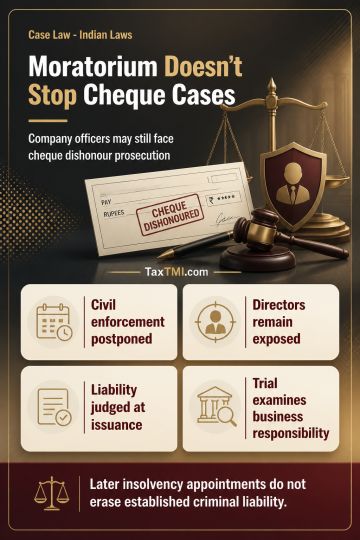
Insolvency moratorium does not shield company officers from cheque dishonour prosecution for liability arising before corporate insolvency proceedings...
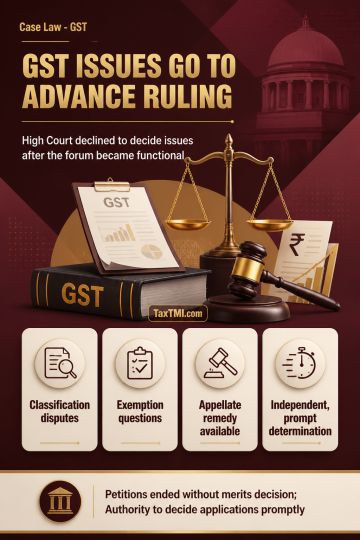
Advance-ruling mechanism governs pending GST classification, exemption and taxability disputes, limiting writ review once the specialised forum functi...
The High Court dismissed the writ petition. The petitioner failed to file GSTR-3B returns and discharge the tax liability, despite having self-assessed and filed GSTR-1. The court held there was no scope for exercising discretion by extending the payment period, as the petitioner ought to have filed GSTR-3B and paid the tax. Furthermore, more than two years had elapsed since the impugned order dated 13.04.2022, providing ample time for the petitioner to pay the amount during the pendency of the writ petition.
The High Court dismissed the writ petition. The petitioner failed to file GSTR-3B returns and discharge the tax liability, despite having self-assessed and filed GSTR-1. The court held there was no scope for exercising discretion by extending the payment period, as the petitioner ought to have filed GSTR-3B and paid the tax. Furthermore, more than two years had elapsed since the impugned order dated 13.04.2022, providing ample time for the petitioner to pay the amount during the pendency of the writ petition.
Note: It is a system-generated summary and is for quick reference only.
 TaxTMI
 of 4805






 Join Channel


 TaxTMI
