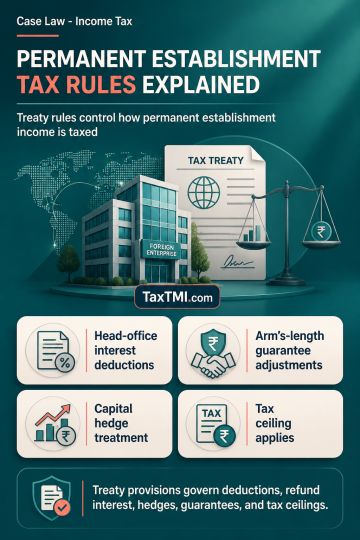
Business expenditure deduction requires proof of genuine commission payments and commercial allowability; turnover growth alone cannot validate the cl...
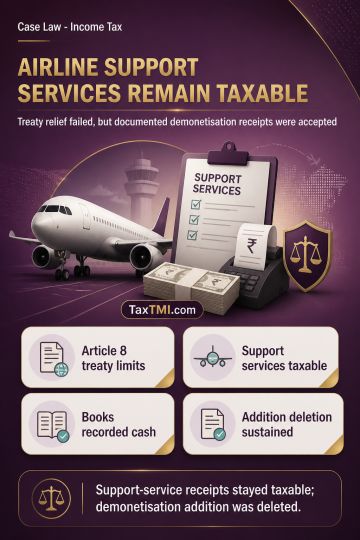
Article 8 treaty coverage excluded third-party airline support services, while documented demonetisation cash receipts remained accepted business inco...
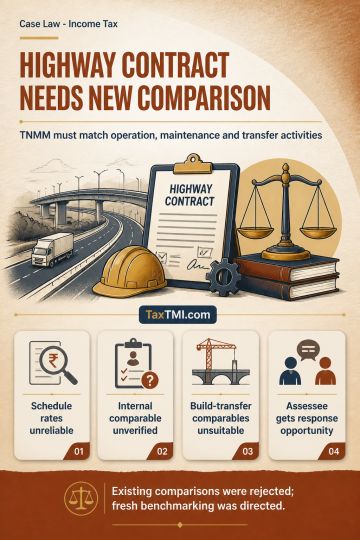
Functional comparability under TNMM requires highway contract benchmarks to reflect operation, maintenance and transfer activities, requiring fresh be...
The High Court dismissed the writ petition. The petitioner failed to file GSTR-3B returns and discharge the tax liability, despite having self-assessed and filed GSTR-1. The court held there was no scope for exercising discretion by extending the payment period, as the petitioner ought to have filed GSTR-3B and paid the tax. Furthermore, more than two years had elapsed since the impugned order dated 13.04.2022, providing ample time for the petitioner to pay the amount during the pendency of the writ petition.
The High Court dismissed the writ petition. The petitioner failed to file GSTR-3B returns and discharge the tax liability, despite having self-assessed and filed GSTR-1. The court held there was no scope for exercising discretion by extending the payment period, as the petitioner ought to have filed GSTR-3B and paid the tax. Furthermore, more than two years had elapsed since the impugned order dated 13.04.2022, providing ample time for the petitioner to pay the amount during the pendency of the writ petition.
Note: It is a system-generated summary and is for quick reference only.
 TaxTMI
 of 4805








 Join Channel


 TaxTMI