Bogus donation receipts justified commission income assessment and defeated political-party tax exemption for inaccurate accounts and reporting failur...
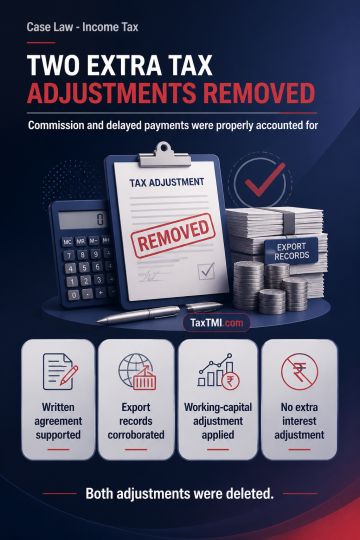
Pure reimbursement without income element escapes tax withholding, while delayed withholding and unsupported provisions face deferred or renewed scrut...
Public benefit requirement defeats charitable registration where residents' association services are reciprocal, member-only facilities governed by mu...
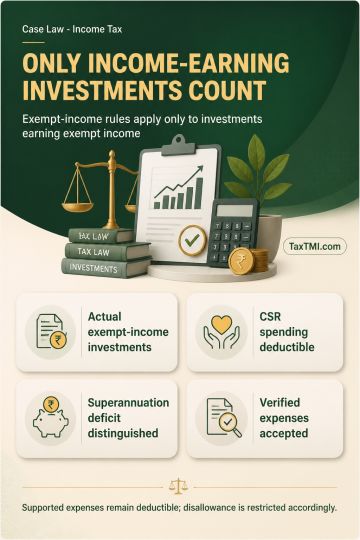
Exempt-income expenditure disallowance is confined to investments that actually generated exempt income, while supported business expenses remain dedu...
Objective characteristics and principal use govern mining-tyre classification, while fresh advance ruling applications may rely on additional technica...
The High Court dismissed the writ petition. The petitioner, being a registered person not liable for registration before the appointed day of 01.07.2017, sought entitlement to transitional credit of excise duty through Credit Transfer Document by filing TRAN-3 without submitting TRAN-1 declaration within the stipulated time u/r 117 of the Central Goods and Services Tax Rules, 2017. The Court held that the requirement of submitting TRAN-1 declaration is not merely procedural but substantive and mandatory u/s 140(3) of the CGST Act, 2017. The time limit prescribed for making the declaration is a statutory mandate, and the Rule Making Authority had to prescribe it consistently with the eligibility conditions in the law. Submission of TRAN-1 is not a mere formality but enables smooth availment of input tax credit by binding the claimant to solemnly declare eligibility. The Court rejected the argument that Rule 117 is merely directory, stating that such a provision in a fiscal statute providing time limit to avail credit is not only substantive but also mandatory.
The High Court dismissed the writ petition. The petitioner, being a registered person not liable for registration before the appointed day of 01.07.2017, sought entitlement to transitional credit of excise duty through Credit Transfer Document by filing TRAN-3 without submitting TRAN-1 declaration within the stipulated time u/r 117 of the Central Goods and Services Tax Rules, 2017. The Court held that the requirement of submitting TRAN-1 declaration is not merely procedural but substantive and mandatory u/s 140(3) of the CGST Act, 2017. The time limit prescribed for making the declaration is a statutory mandate, and the Rule Making Authority had to prescribe it consistently with the eligibility conditions in the law. Submission of TRAN-1 is not a mere formality but enables smooth availment of input tax credit by binding the claimant to solemnly declare eligibility. The Court rejected the argument that Rule 117 is merely directory, stating that such a provision in a fiscal statute providing time limit to avail credit is not only substantive but also mandatory.
Note: It is a system-generated summary and is for quick reference only.
 TaxTMI
 of 4790















 Join Channel


 TaxTMI
