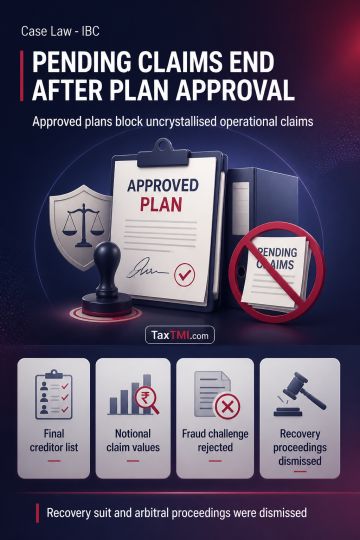
Clean slate principle extinguishes uncrystallised operational claims and bars continuation of pending recovery and arbitral proceedings after plan app...
Works contract classification governs composite layout-development contracts where VAT-paid goods are transferred alongside construction and infrastru...
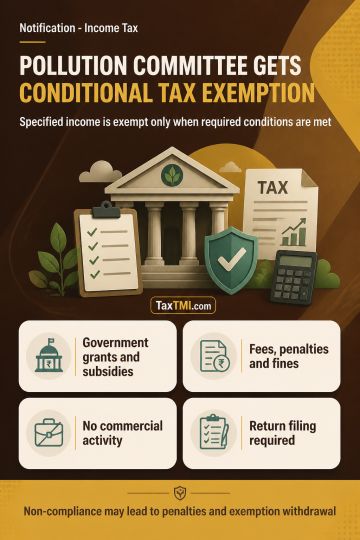
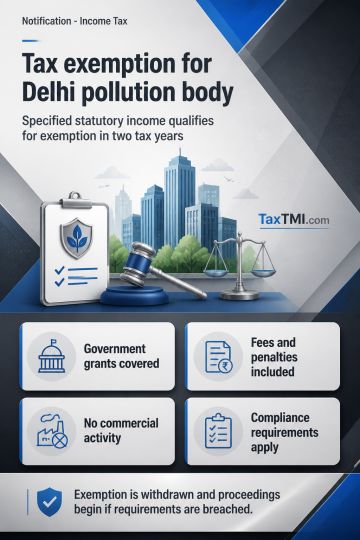
Specified income tax exemption for pollution control body remains conditional on non-commercial activity, unchanged income character, and return filin...
Confiscation of smuggled gold bars/biscuits u/ss 111(b), 111(d), and 111(f) of the Customs Act, 1962. The appellants failed to establish the licit procurement of the foreign-marked gold with 99.90% purity, a notified item u/s 123, thereby not discharging their burden of proving ownership. While the gold cannot be released due to unestablished ownership, the Tribunal reduced the penalties imposed on the appellants considering the roles played and the nature of the offense, deeming the initial penalties excessive compared to the gold's value. The penalty reductions were: Appellant 1 from Rs. 6,25,000 to Rs. 3,50,000, Appellant 2 from Rs. 6,50,000 to Rs. 4,00,000, and Appellant 3 from Rs. 5,80,000 to Rs. 2,00,000 u/s 112 of the Customs Act, 1962.
Confiscation of smuggled gold bars/biscuits u/ss 111(b), 111(d), and 111(f) of the Customs Act, 1962. The appellants failed to establish the licit procurement of the foreign-marked gold with 99.90% purity, a notified item u/s 123, thereby not discharging their burden of proving ownership. While the gold cannot be released due to unestablished ownership, the Tribunal reduced the penalties imposed on the appellants considering the roles played and the nature of the offense, deeming the initial penalties excessive compared to the gold's value. The penalty reductions were: Appellant 1 from Rs. 6,25,000 to Rs. 3,50,000, Appellant 2 from Rs. 6,50,000 to Rs. 4,00,000, and Appellant 3 from Rs. 5,80,000 to Rs. 2,00,000 u/s 112 of the Customs Act, 1962.
Note: It is a system-generated summary and is for quick reference only.
 TaxTMI
 of 4800









 Join Channel


 TaxTMI