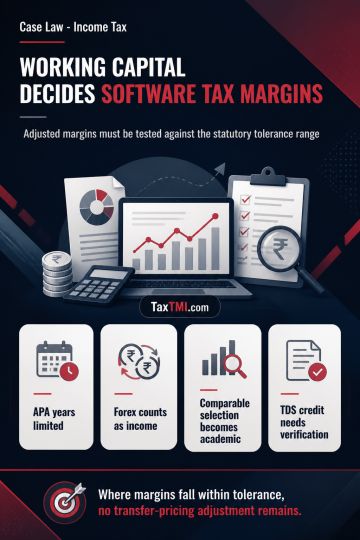
Working-capital adjustment determines whether software-services transfer-pricing margins fall within the statutory tolerance range, eliminating any ad...
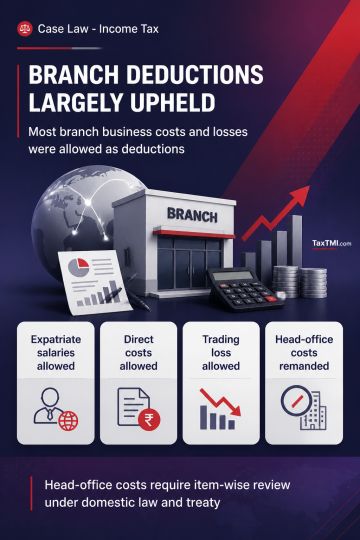
Permanent establishment deductions upheld for expatriate salaries, direct costs and trading losses, while head-office costs require fresh classificati...
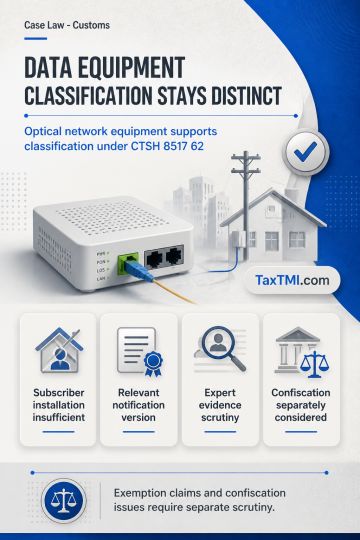
Data transmission equipment classification under CTSH 8517 62 remains distinct from residual classification, with exemption evidence requiring scrutin...
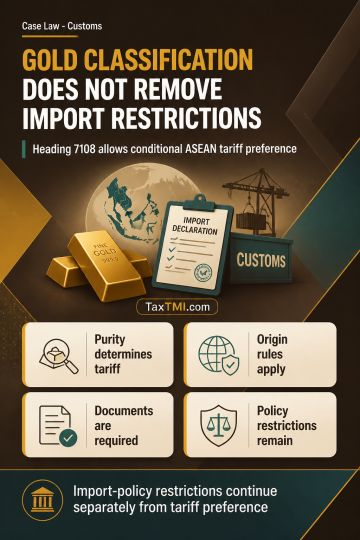
Confiscation of smuggled gold bars/biscuits u/ss 111(b), 111(d), and 111(f) of the Customs Act, 1962. The appellants failed to establish the licit procurement of the foreign-marked gold with 99.90% purity, a notified item u/s 123, thereby not discharging their burden of proving ownership. While the gold cannot be released due to unestablished ownership, the Tribunal reduced the penalties imposed on the appellants considering the roles played and the nature of the offense, deeming the initial penalties excessive compared to the gold's value. The penalty reductions were: Appellant 1 from Rs. 6,25,000 to Rs. 3,50,000, Appellant 2 from Rs. 6,50,000 to Rs. 4,00,000, and Appellant 3 from Rs. 5,80,000 to Rs. 2,00,000 u/s 112 of the Customs Act, 1962.
Confiscation of smuggled gold bars/biscuits u/ss 111(b), 111(d), and 111(f) of the Customs Act, 1962. The appellants failed to establish the licit procurement of the foreign-marked gold with 99.90% purity, a notified item u/s 123, thereby not discharging their burden of proving ownership. While the gold cannot be released due to unestablished ownership, the Tribunal reduced the penalties imposed on the appellants considering the roles played and the nature of the offense, deeming the initial penalties excessive compared to the gold's value. The penalty reductions were: Appellant 1 from Rs. 6,25,000 to Rs. 3,50,000, Appellant 2 from Rs. 6,50,000 to Rs. 4,00,000, and Appellant 3 from Rs. 5,80,000 to Rs. 2,00,000 u/s 112 of the Customs Act, 1962.
Note: It is a system-generated summary and is for quick reference only.
 TaxTMI
 of 4800







 Join Channel


 TaxTMI