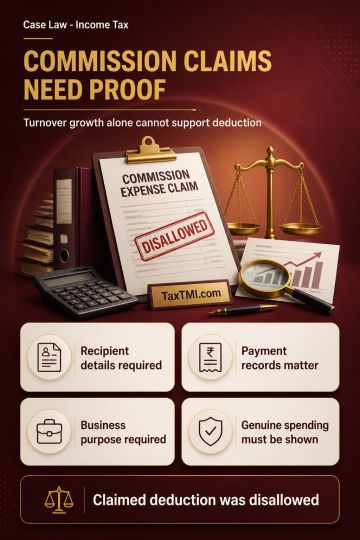
Business expenditure deduction requires proof of genuine commission payments and commercial allowability; turnover growth alone cannot validate the cl...
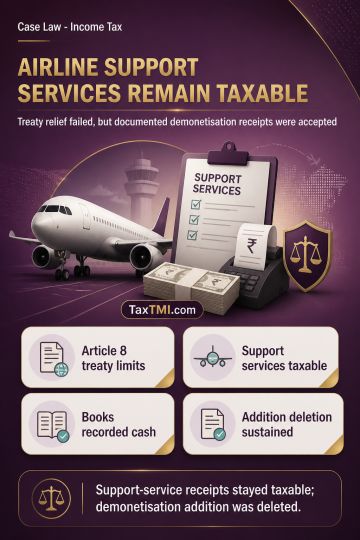
Article 8 treaty coverage excluded third-party airline support services, while documented demonetisation cash receipts remained accepted business inco...
Functional comparability under TNMM requires highway contract benchmarks to reflect operation, maintenance and transfer activities, requiring fresh be...
Confiscation of smuggled gold bars/biscuits u/ss 111(b), 111(d), and 111(f) of the Customs Act, 1962. The appellants failed to establish the licit procurement of the foreign-marked gold with 99.90% purity, a notified item u/s 123, thereby not discharging their burden of proving ownership. While the gold cannot be released due to unestablished ownership, the Tribunal reduced the penalties imposed on the appellants considering the roles played and the nature of the offense, deeming the initial penalties excessive compared to the gold's value. The penalty reductions were: Appellant 1 from Rs. 6,25,000 to Rs. 3,50,000, Appellant 2 from Rs. 6,50,000 to Rs. 4,00,000, and Appellant 3 from Rs. 5,80,000 to Rs. 2,00,000 u/s 112 of the Customs Act, 1962.
Confiscation of smuggled gold bars/biscuits u/ss 111(b), 111(d), and 111(f) of the Customs Act, 1962. The appellants failed to establish the licit procurement of the foreign-marked gold with 99.90% purity, a notified item u/s 123, thereby not discharging their burden of proving ownership. While the gold cannot be released due to unestablished ownership, the Tribunal reduced the penalties imposed on the appellants considering the roles played and the nature of the offense, deeming the initial penalties excessive compared to the gold's value. The penalty reductions were: Appellant 1 from Rs. 6,25,000 to Rs. 3,50,000, Appellant 2 from Rs. 6,50,000 to Rs. 4,00,000, and Appellant 3 from Rs. 5,80,000 to Rs. 2,00,000 u/s 112 of the Customs Act, 1962.
Note: It is a system-generated summary and is for quick reference only.
 TaxTMI
 of 4792





 Join Channel


 TaxTMI
