Mutual fund maturity rules require proper rollover, redemption, disclosure, and due diligence; investor gains cannot excuse regulatory breaches or pen...
Threshold exemption excludes exempt services, while stamp-paper purchases avoid reverse charge; consequential service tax penalties were also set asid...
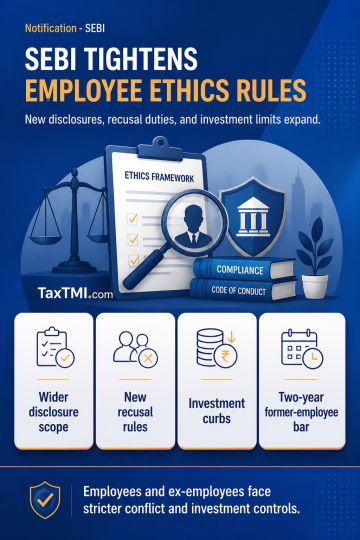
Employee conflict disclosures and investment restrictions expand with new recusal duties, post-employment limits, and compliance reporting requirement...
The issue pertained to the inclusion of demurrage charges in the assessable value for payment of customs duty under the Customs Valuation (Determination of Value of Imported Goods) Rules, 2007. The Tribunal relied on the decision of the Orissa High Court in the case of Tata Steel Ltd. and Others v. Union of India and Others, wherein the High Court held that demurrage charges are not included as part of the cost envisaged by the legislation for determining the assessable value. Consequently, the Tribunal ruled that demurrage charges cannot be included in the assessable value for payment of customs duty.
The issue pertained to the inclusion of demurrage charges in the assessable value for payment of customs duty under the Customs Valuation (Determination of Value of Imported Goods) Rules, 2007. The Tribunal relied on the decision of the Orissa High Court in the case of Tata Steel Ltd. and Others v. Union of India and Others, wherein the High Court held that demurrage charges are not included as part of the cost envisaged by the legislation for determining the assessable value. Consequently, the Tribunal ruled that demurrage charges cannot be included in the assessable value for payment of customs duty.
Note: It is a system-generated summary and is for quick reference only.
 TaxTMI
 of 4801
















 Join Channel


 TaxTMI
