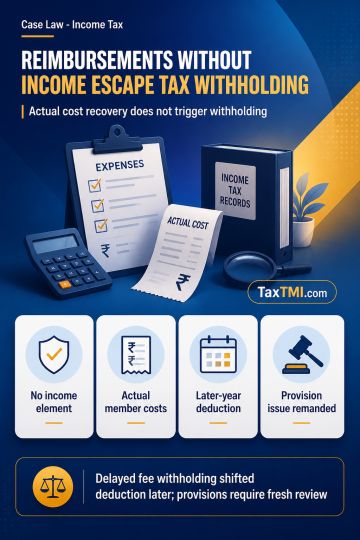
Pure reimbursement without income element escapes tax withholding, while delayed withholding and unsupported provisions face deferred or renewed scrut...
Public benefit requirement defeats charitable registration where residents' association services are reciprocal, member-only facilities governed by mu...
Exempt-income expenditure disallowance is confined to investments that actually generated exempt income, while supported business expenses remain dedu...
Objective characteristics and principal use govern mining-tyre classification, while fresh advance ruling applications may rely on additional technica...
The Tribunal held that the first appellate authority erred in affirming the re-assessment and levy of anti-dumping duty (ADD) u/s 9A of the Customs Tariff Act, 1975, without any material on record to determine whether the re-assessment conformed to the framework of the notification. The Tribunal found that the first appellate authority lacked jurisdiction to adjudicate on the merits of the assessment by the original authority. The absence of the importer's consent for alteration of the assessment and the lack of scrutiny of the entry u/s 46 of the Customs Act invalidated the impugned orders ab initio.
The Tribunal held that the first appellate authority erred in affirming the re-assessment and levy of anti-dumping duty (ADD) u/s 9A of the Customs Tariff Act, 1975, without any material on record to determine whether the re-assessment conformed to the framework of the notification. The Tribunal found that the first appellate authority lacked jurisdiction to adjudicate on the merits of the assessment by the original authority. The absence of the importer's consent for alteration of the assessment and the lack of scrutiny of the entry u/s 46 of the Customs Act invalidated the impugned orders ab initio.
Note: It is a system-generated summary and is for quick reference only.
 TaxTMI
 of 4792



















 Join Channel


 TaxTMI
