Retention of seized property survives where recorded reasons support proceeds of crime, while stayed investigation periods are excluded from limitatio...
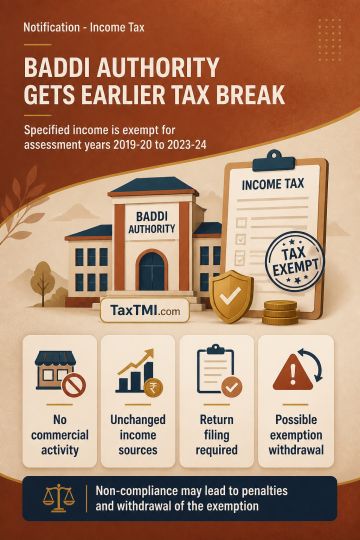
Specified income of Baddi Barotiwala Nalagarh Development Authority receives conditional tax exemption, retrospectively covering its designated assess...
Specified development authority income receives retrospective tax exemption, subject to non-commercial activity, unchanged income sources, and return-...
Unified Brand India framework introduces voluntary Trust Mark certification and funding support for export branding, packaging and global promotional ...
Origin Declaration authentication governs preferential tariff claims under India-UK CETA, requiring a validated reference number before import clearan...
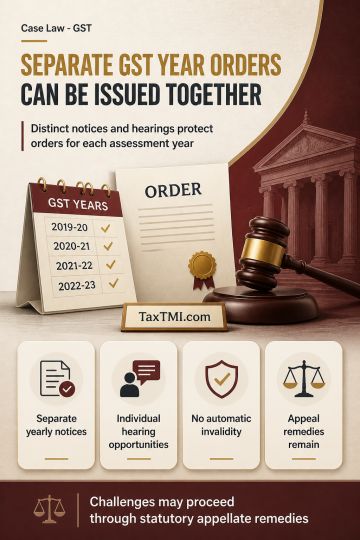
Separate assessment orders for different years remain valid when distinct notices and hearing opportunities prevent prejudice from combined proceeding...
Confiscation of imported liquor cases, imposition of penalties, and demand of duty. The Tribunal held that there was no intentional misdeclaration or fraudulent intent on the part of the appellant, and the application for amendment of the Bill of Entry should have been allowed. The confiscation of 1329 cases and 11 wooden pallets was set aside. Regarding 2328 cases, the confiscation order and redemption fine were set aside as the provisions apply only when goods are concealed and not declared. The demand on 511 cases found short was also set aside due to lack of evidence of clandestine removal. The allegation of clearing 511+483 cases without bills was rejected as the loose documents were not proved with corroborative evidence. The demand of duty on 729 cases of expired beer was set aside as the validity period of the Letter of Approval had not expired. Consequently, the Tribunal allowed the appeals and set aside the duty demands, confiscation of goods, and penalties imposed on the appellant firm, its partner, and employee.
Confiscation of imported liquor cases, imposition of penalties, and demand of duty. The Tribunal held that there was no intentional misdeclaration or fraudulent intent on the part of the appellant, and the application for amendment of the Bill of Entry should have been allowed. The confiscation of 1329 cases and 11 wooden pallets was set aside. Regarding 2328 cases, the confiscation order and redemption fine were set aside as the provisions apply only when goods are concealed and not declared. The demand on 511 cases found short was also set aside due to lack of evidence of clandestine removal. The allegation of clearing 511+483 cases without bills was rejected as the loose documents were not proved with corroborative evidence. The demand of duty on 729 cases of expired beer was set aside as the validity period of the Letter of Approval had not expired. Consequently, the Tribunal allowed the appeals and set aside the duty demands, confiscation of goods, and penalties imposed on the appellant firm, its partner, and employee.
Note: It is a system-generated summary and is for quick reference only.
 TaxTMI
 of 4805













 Join Channel


 TaxTMI
