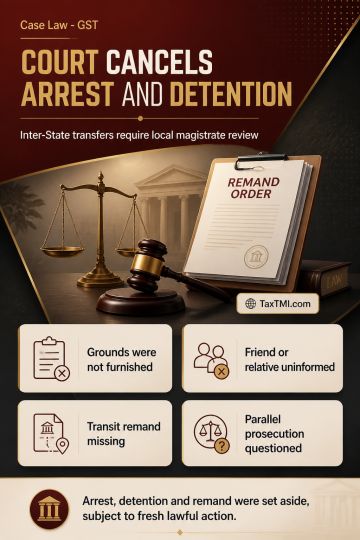
Arrest safeguards and transit remand requirements invalidated detention following inter-State transfer without communicated grounds or magistrate auth...
Arrest safeguards require disclosed grounds, relative intimation and transit remand, while duplicate prosecution under the CGST framework is unsustain...
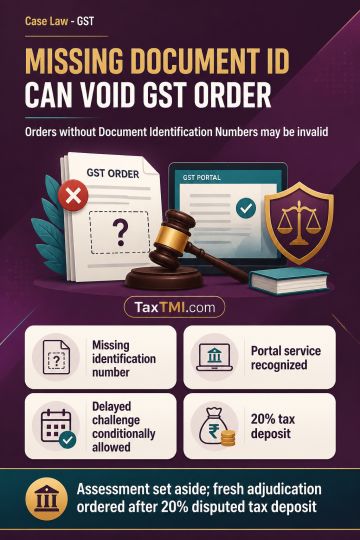
Document Identification Number defects can invalidate GST assessments, with delayed challenges entertained conditionally where patent irregularities e...
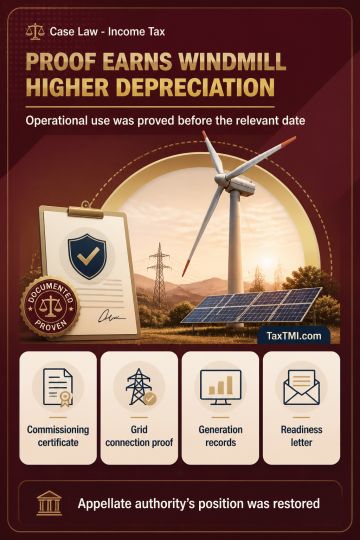
Windmill commissioning evidence supported higher depreciation where grid connection and electricity generation proved operational use before the relev...
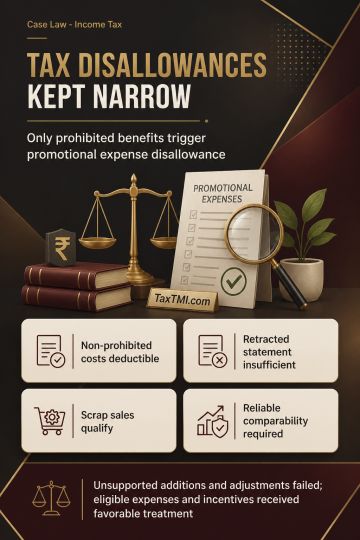
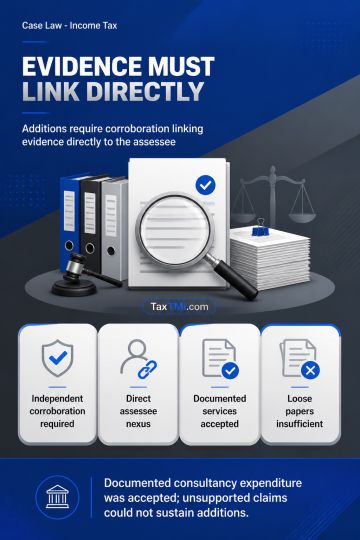
Pharmaceutical promotion and transfer-pricing comparability principles limited disallowances, while uncorroborated search allegations and unsupported ...
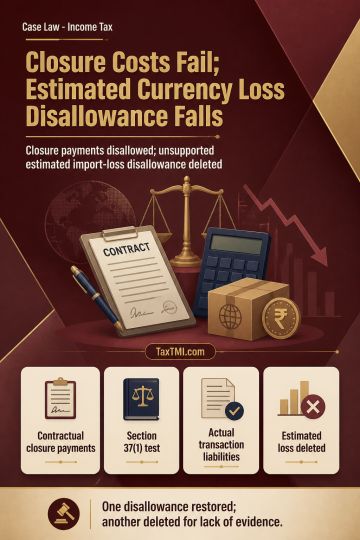
Business expenditure substantiation supports scrap credits, statutory payments and expense claims, while depreciation requires proof of actual busines...
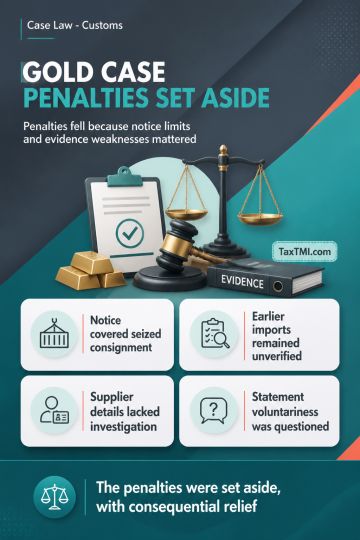
The High Court upheld the CESTAT's order setting aside the confiscation order and imposition of redemption fines under the Customs Act, 1962. The appeals did not involve substantial questions of law and were based on factual issues which the Tribunal had considered in detail. The factual aspects were similar to the Ganesh Benzoplast Limited case, where goods were imported through pipelines and stored in non-bonded tanks after obtaining permissions. The Tribunal rightly relied on the Bombay High Court's decision in Finesse Creation Inc. instead of judgments from other High Courts. The imposition of penalties u/s 117 of the Customs Act was disapproved, as held in Ganesh Benzoplast Limited. The Tribunal's factual findings and reasoning did not warrant interference in appeals involving no substantial questions of law.
The High Court upheld the CESTAT's order setting aside the confiscation order and imposition of redemption fines under the Customs Act, 1962. The appeals did not involve substantial questions of law and were based on factual issues which the Tribunal had considered in detail. The factual aspects were similar to the Ganesh Benzoplast Limited case, where goods were imported through pipelines and stored in non-bonded tanks after obtaining permissions. The Tribunal rightly relied on the Bombay High Court's decision in Finesse Creation Inc. instead of judgments from other High Courts. The imposition of penalties u/s 117 of the Customs Act was disapproved, as held in Ganesh Benzoplast Limited. The Tribunal's factual findings and reasoning did not warrant interference in appeals involving no substantial questions of law.
Note: It is a system-generated summary and is for quick reference only.
 TaxTMI
 of 4792










 Join Channel


 TaxTMI