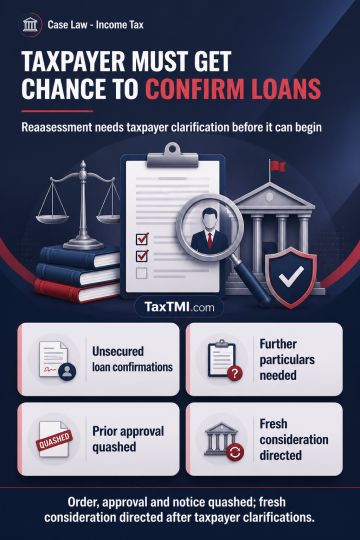
Opportunity to furnish unsecured-loan confirmations is required before reassessment initiation; proceedings require fresh consideration after taxpayer...
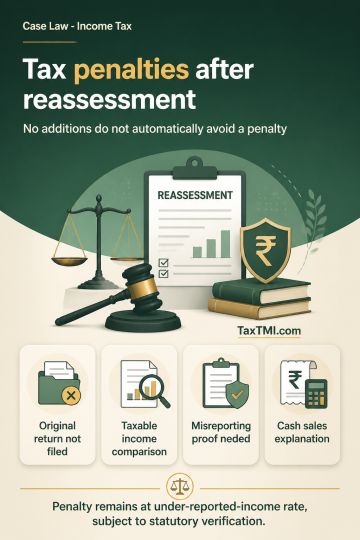
Under-reporting on a first reassessment return attracts penalty, while enhanced misreporting penalty requires proof of a statutory misreporting catego...
The High Court granted anticipatory bail to the petitioners who were accused of fraudulently claiming Input Tax Credit (ITC) by creating fake forms, forging bills, and showing fictitious transactions through dummy firms. The court held that the allegations prima facie attract offenses under the Indian Penal Code (IPC) for availing ITC fraudulently based on false documents and sham transactions, as well as penal provisions under the GST law. While prosecution under two different enactments is permissible as per Section 26 of the General Clauses Act, the court noted that the petitioners had already been prosecuted u/s 132 of the CGST Act for the same allegations and had remained in custody for a substantial period. Considering the overlapping nature of the allegations, the fact that the petitioners were not absconding, and their previous custody, the court granted them anticipatory bail.
The High Court granted anticipatory bail to the petitioners who were accused of fraudulently claiming Input Tax Credit (ITC) by creating fake forms, forging bills, and showing fictitious transactions through dummy firms. The court held that the allegations prima facie attract offenses under the Indian Penal Code (IPC) for availing ITC fraudulently based on false documents and sham transactions, as well as penal provisions under the GST law. While prosecution under two different enactments is permissible as per Section 26 of the General Clauses Act, the court noted that the petitioners had already been prosecuted u/s 132 of the CGST Act for the same allegations and had remained in custody for a substantial period. Considering the overlapping nature of the allegations, the fact that the petitioners were not absconding, and their previous custody, the court granted them anticipatory bail.
Note: It is a system-generated summary and is for quick reference only.
 TaxTMI
  TaxTMI
 of 4915