Defined public benefit can retain charitable character; registration renewal requires examining genuine activities and legal compliance, not surplus a...
Capital reduction is distinct from share buy-back, preventing buy-back tax; restructuring interest and related business deductions also survive scruti...
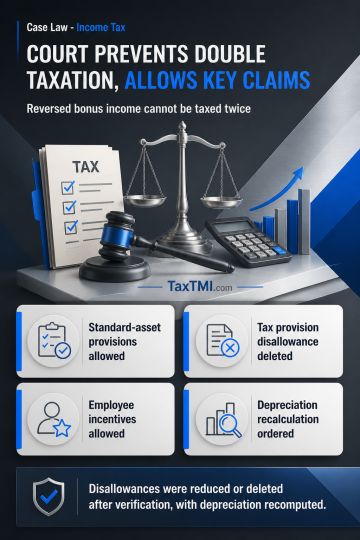
Transfer pricing and tax deductions upheld on established principles, while employee contributions and warranty provisions returned for fresh examinat...
Captive transfer pricing relies on industrial consumer tariffs, while genuine quotations can benchmark effluent treatment transfers under the Other Me...
Specific tariff classification for ophthalmic instruments and extended limitation principles determine the treatment of duty demands, confiscation, an...
The High Court allowed the petition and directed the respondent No. 2, a government entity, to pay the petitioner the difference in GST amount at the enhanced rate of 18% instead of 12% for the period from 01.01.2022 to 30.09.2022 within three months, failing which the petitioner shall be entitled to interest at 6% per annum from the date of entitlement. The Court rejected the objections raised by respondents No. 2 & 3 regarding the maintainability of the writ petition and availability of alternative remedy under the Arbitration Act, as no disputed questions of fact were involved in the case.
The High Court allowed the petition and directed the respondent No. 2, a government entity, to pay the petitioner the difference in GST amount at the enhanced rate of 18% instead of 12% for the period from 01.01.2022 to 30.09.2022 within three months, failing which the petitioner shall be entitled to interest at 6% per annum from the date of entitlement. The Court rejected the objections raised by respondents No. 2 & 3 regarding the maintainability of the writ petition and availability of alternative remedy under the Arbitration Act, as no disputed questions of fact were involved in the case.
Note: It is a system-generated summary and is for quick reference only.
 TaxTMI
 of 4805

















 Join Channel


 TaxTMI

