Charitable trust registration requires a specified-violation notice; settled cash deposits and related-party payments did not justify cancellation or ...
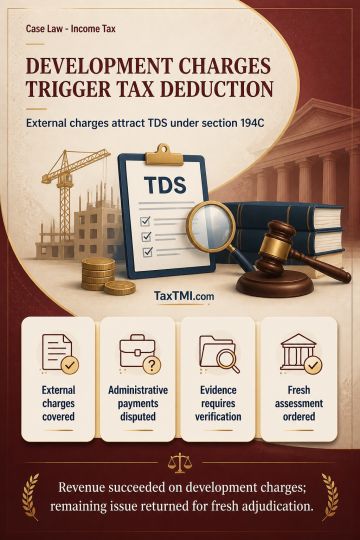
External development charges trigger TDS under section 194C, while disputed administrative payments require factual verification and fresh adjudicatio...
Section 270AA penalty immunity requires identified statutory defaults and a hearing before rejection; reassessment disclosure may constitute under-rep...
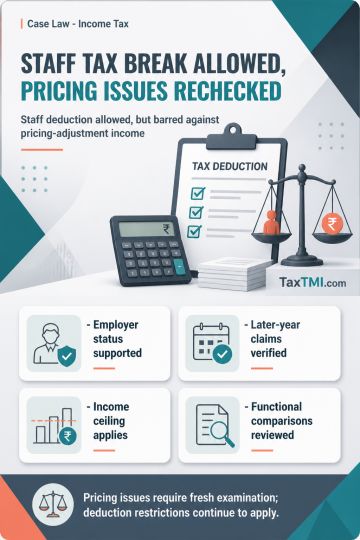
Section 80JJAA employee-cost deduction allowed for deployed staff but barred against transfer-pricing income enhancement, with pricing issues remanded...
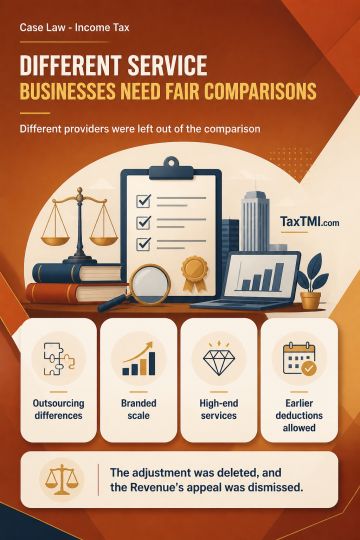
Transfer-pricing methodology protects commercially genuine associated-enterprise payments, while pre-2016 secondary adjustments and related notional i...
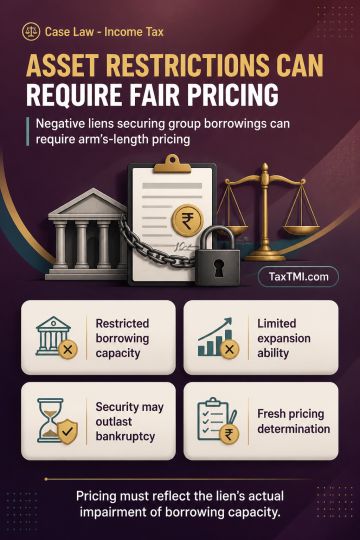
Negative liens over operating assets can constitute international transactions requiring arm's-length pricing reflecting restricted borrowing and expa...
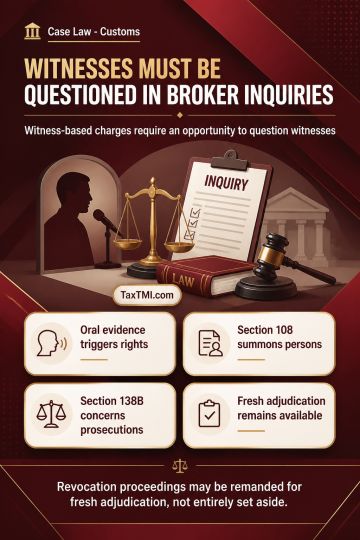
Cross-examination rights in Customs Broker revocation inquiries require witness examination; procedural denial may be cured through fresh adjudication...
The key legal issues and holdings in this case are: 1. Valuation of clinkers transferred by the appellant to their sister concern should be done u/r 4 read with Rule 11 of the Central Excise Valuation (Determination of Price of Excisable Goods) Rules, 2000, rather than Rule 8. This follows the Larger Bench judgment in Ispat Industries case and the Tribunal's own decision in Ultratech Cement Ltd. case. 2. The principle of revenue neutrality cannot be considered as an incentive to not follow the statutory valuation rules, solely on the ground that the other unit could avail credit of differential duty payable. Revenue neutrality is not a statutory concept but an equitable principle developed by courts as a mitigating factor in determining intention behind non-payment of duty. 3. The extended period of limitation cannot be applied in cases involving interpretation of statutory valuation principles, in the absence of suppression or misrepresentation of facts by the assessee. The Tribunal set aside the demand for the extended period. 4. The appeals are remanded to the adjudicating authority to redetermine the assessable value applying Rule 4 read with Rule 11, compute differential duty with interest for the normal period, and set aside the penalty, as the issue pertains to interpretation of valuation rules.
The key legal issues and holdings in this case are: 1. Valuation of clinkers transferred by the appellant to their sister concern should be done u/r 4 read with Rule 11 of the Central Excise Valuation (Determination of Price of Excisable Goods) Rules, 2000, rather than Rule 8. This follows the Larger Bench judgment in Ispat Industries case and the Tribunal's own decision in Ultratech Cement Ltd. case. 2. The principle of revenue neutrality cannot be considered as an incentive to not follow the statutory valuation rules, solely on the ground that the other unit could avail credit of differential duty payable. Revenue neutrality is not a statutory concept but an equitable principle developed by courts as a mitigating factor in determining intention behind non-payment of duty. 3. The extended period of limitation cannot be applied in cases involving interpretation of statutory valuation principles, in the absence of suppression or misrepresentation of facts by the assessee. The Tribunal set aside the demand for the extended period. 4. The appeals are remanded to the adjudicating authority to redetermine the assessable value applying Rule 4 read with Rule 11, compute differential duty with interest for the normal period, and set aside the penalty, as the issue pertains to interpretation of valuation rules.
Note: It is a system-generated summary and is for quick reference only.
 TaxTMI
  TaxTMI
 of 4828













 Join Channel


