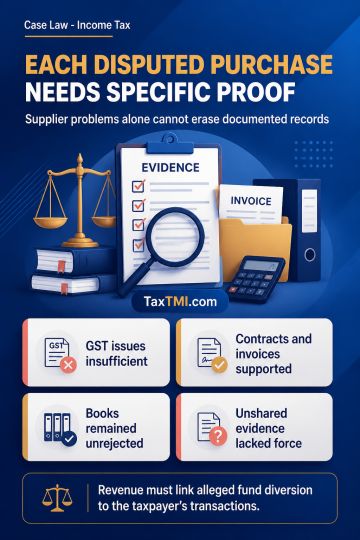
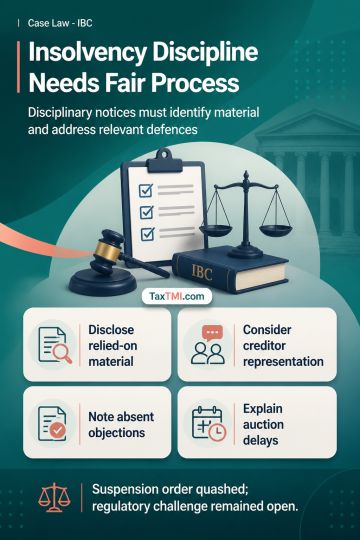
Natural justice in insolvency-professional discipline requires disclosed material; notices based on extraneous material and ignored defences are vitia...
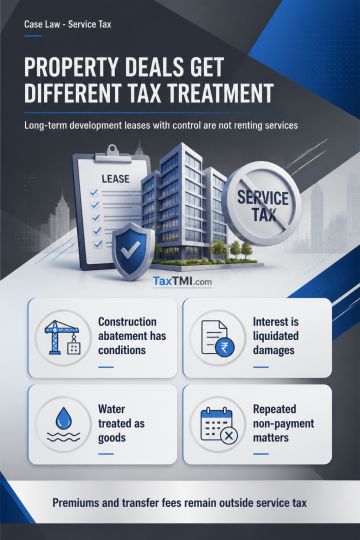
Development rights transfers treated as immovable property, while construction abatement applies and repeated non-payment permits extended service-tax...
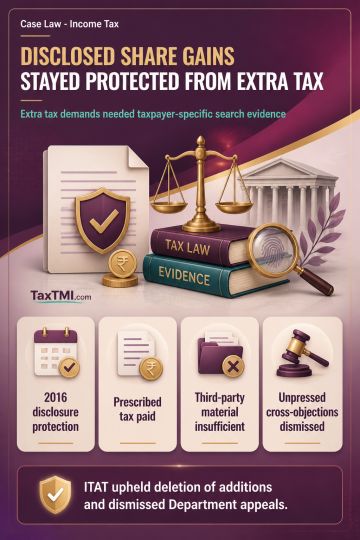
Income Disclosure Scheme immunity and search-material requirements barred further share-transaction additions in unabated assessments under section 15...
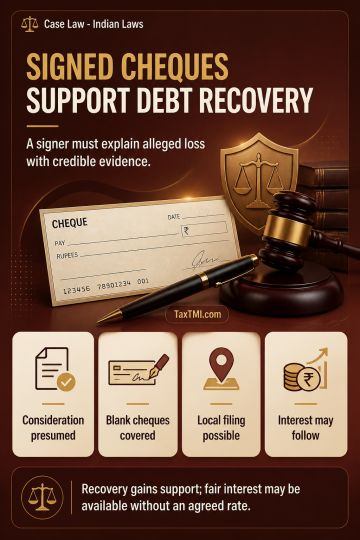
The petitioner issued two post-dated cheques bearing No. 622623 for Rs. 93,00,000/- and No. 622624 for Rs. 1,54,00,000/- to the respondent as per a Deed of Undertaking. The Deed stipulated that the petitioner would clear GST of Rs. 9,63,00,000/- for a firm, out of which 10% (Rs. 33,00,000/-) would be paid to the respondent. If the GST rate was 2%, the amount payable would be Rs. 1,54,00,000/-. The cheques were issued subject to fulfillment of certain conditions. The High Court held that such a stipulation regarding issuance of cheques could be valid. It found no ground to quash the complaint u/s 138 of the Negotiable Instruments Act or the cognizance taken by the Judicial Magistrate. The issues raised appeared to be matters for trial. The High Court rejected the petition invoking inherent powers for quashing, holding that no case for quashing was made out.
The petitioner issued two post-dated cheques bearing No. 622623 for Rs. 93,00,000/- and No. 622624 for Rs. 1,54,00,000/- to the respondent as per a Deed of Undertaking. The Deed stipulated that the petitioner would clear GST of Rs. 9,63,00,000/- for a firm, out of which 10% (Rs. 33,00,000/-) would be paid to the respondent. If the GST rate was 2%, the amount payable would be Rs. 1,54,00,000/-. The cheques were issued subject to fulfillment of certain conditions. The High Court held that such a stipulation regarding issuance of cheques could be valid. It found no ground to quash the complaint u/s 138 of the Negotiable Instruments Act or the cognizance taken by the Judicial Magistrate. The issues raised appeared to be matters for trial. The High Court rejected the petition invoking inherent powers for quashing, holding that no case for quashing was made out.
Note: It is a system-generated summary and is for quick reference only.
 TaxTMI
  TaxTMI
 of 4828



 Join Channel