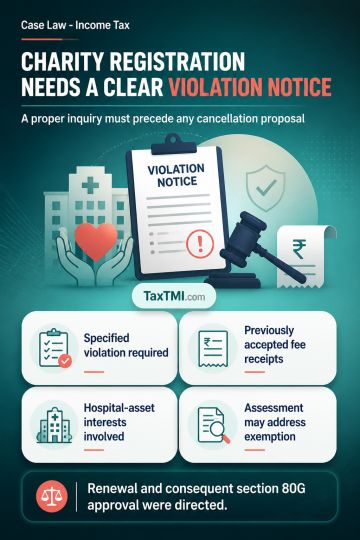
Charitable trust registration requires a specified-violation notice; settled cash deposits and related-party payments did not justify cancellation or ...
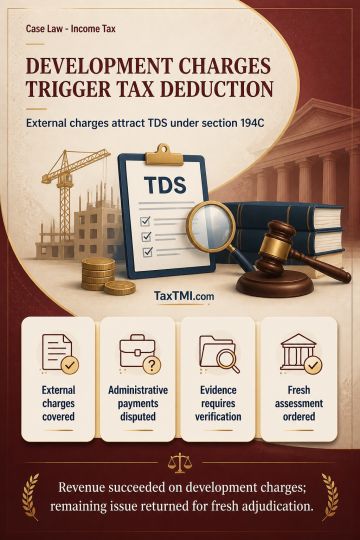
External development charges trigger TDS under section 194C, while disputed administrative payments require factual verification and fresh adjudicatio...
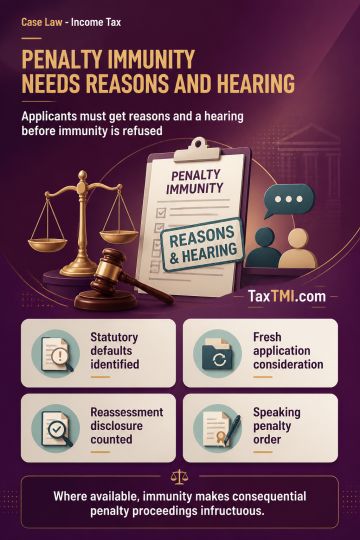
Section 270AA penalty immunity requires identified statutory defaults and a hearing before rejection; reassessment disclosure may constitute under-rep...
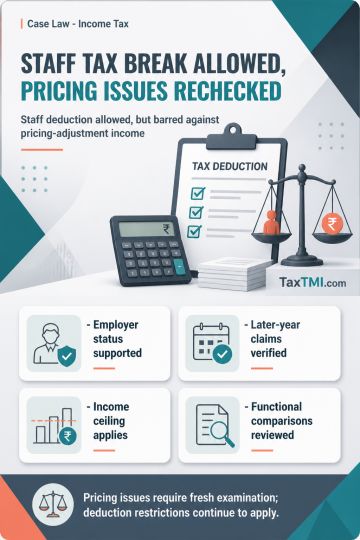
Section 80JJAA employee-cost deduction allowed for deployed staff but barred against transfer-pricing income enhancement, with pricing issues remanded...
Transfer-pricing methodology protects commercially genuine associated-enterprise payments, while pre-2016 secondary adjustments and related notional i...
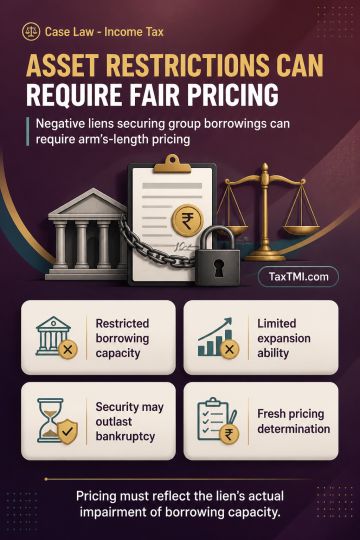
Negative liens over operating assets can constitute international transactions requiring arm's-length pricing reflecting restricted borrowing and expa...
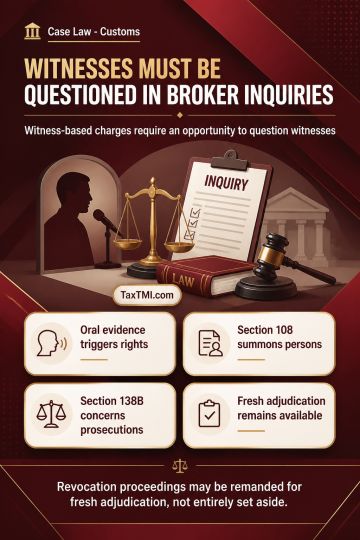
Cross-examination rights in Customs Broker revocation inquiries require witness examination; procedural denial may be cured through fresh adjudication...
The summary focuses on the rejection of cross-examination of DRI officers and a co-noticee by the competent authority. The main objective of cross-examination is to challenge the accuracy, credibility, and reliability of testimony provided by witnesses. However, in this case, the DRI officers have no personal interest, and their statements were not relied upon by the revenue in the show cause notice. The appellant cannot direct the manner of investigation by an investigative agency, and any concerns regarding the investigation's efficacy and integrity can be brought out in the reply to the show cause notice. Section 24 of the Act clarifies that mere retraction of a statement does not invalidate its evidentiary value unless certain conditions are met. The Adjudicating Authority's decision to deny cross-examination cannot be faulted when no incriminating statement was recorded from the officers, and the appellant himself made a valid confessional statement. Section 122A of the Customs Act does not mandate cross-examination, and its grant is subject to the Adjudicating Authority's discretion based on principles of natural justice. The impugned decision denying cross-examination was taken judiciously and cannot be substituted merely because another view is possible.
The summary focuses on the rejection of cross-examination of DRI officers and a co-noticee by the competent authority. The main objective of cross-examination is to challenge the accuracy, credibility, and reliability of testimony provided by witnesses. However, in this case, the DRI officers have no personal interest, and their statements were not relied upon by the revenue in the show cause notice. The appellant cannot direct the manner of investigation by an investigative agency, and any concerns regarding the investigation's efficacy and integrity can be brought out in the reply to the show cause notice. Section 24 of the Act clarifies that mere retraction of a statement does not invalidate its evidentiary value unless certain conditions are met. The Adjudicating Authority's decision to deny cross-examination cannot be faulted when no incriminating statement was recorded from the officers, and the appellant himself made a valid confessional statement. Section 122A of the Customs Act does not mandate cross-examination, and its grant is subject to the Adjudicating Authority's discretion based on principles of natural justice. The impugned decision denying cross-examination was taken judiciously and cannot be substituted merely because another view is possible.
Note: It is a system-generated summary and is for quick reference only.
 TaxTMI
  TaxTMI
 of 4828













 Join Channel


