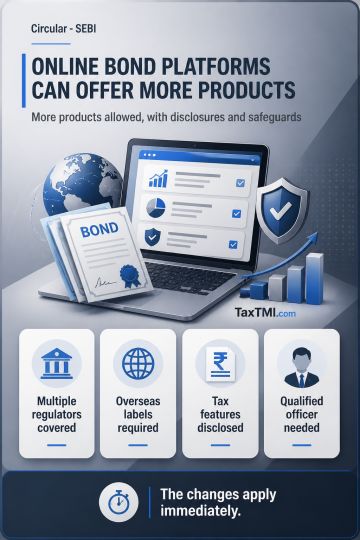
Online bond platforms may offer overseas-regulated products and tax-specific bonds subject to disclosures, compliance safeguards and revised complianc...
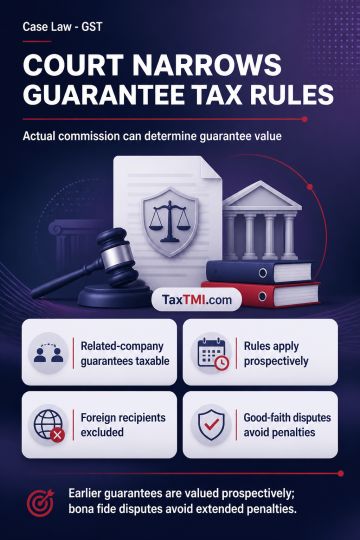
Corporate guarantee valuation permits actual ascertainable commission while barring retroactive application and extended-period penalties for bona fid...
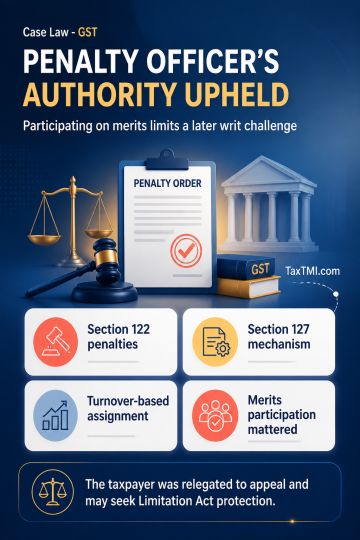
Proper-officer jurisdiction under UPGST penalty provisions upheld; participation on merits prevents bypassing the statutory appellate remedy through w...
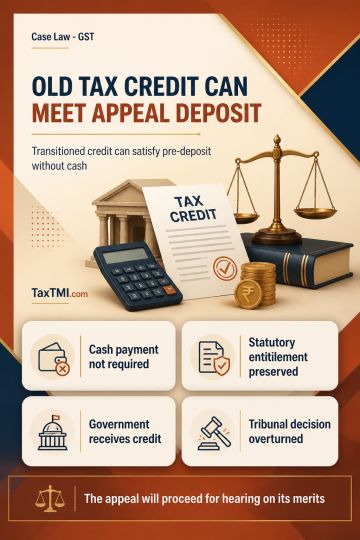
Transitioned CENVAT credit may validly satisfy mandatory pre-deposit requirements for legacy service tax appeals through Electronic Credit Ledger debi...
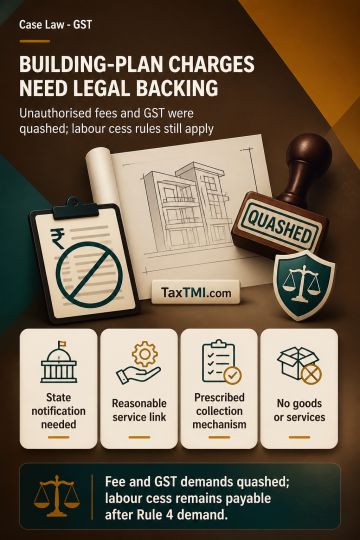
Building-plan sanction charges require statutory authority; unauthorised fees and GST were quashed, while labour cess must follow prescribed collectio...
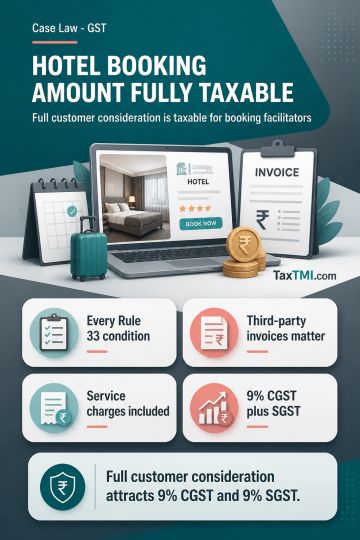
Pure-agent exclusion fails where hotel booking facilitators receive third-party services themselves, making entire customer consideration taxable as r...
Applicability: The waiver provisions u/s 128A apply to cases involving tax demands u/s 73 for financial years 2017-18, 2018-19, and 2019-20, and cases involving erroneous refunds. To avail the waiver, the full tax amount demanded must be paid by the notified date, excluding amounts no longer payable due to retrospective amendments to Section 16(5) and 16(6). Procedure: Applications for waiver must be filed in prescribed forms, and proper officers will examine eligibility. Notices may be issued, and applicants can file replies. Orders approving or rejecting waiver applications will be issued, with deemed approval if no order is passed within the time limit. Appeals against rejection orders are allowed. Payments: Amounts paid towards the demand before the notified date, including by tax officers recovering from other persons, are considered payments for eligibility. Interest/penalty amounts cannot be adjusted against tax dues. Partial payments do not qualify for waiver. ITC can be utilized for payment, except for reverse charge/e-commerce operator liabilities and erroneous refund demands. Clarifications: The circular provides clarifications on various issues, including applicability to IGST/Cess demands, transitional credit demands, penalties under other provisions, import IGST.
Applicability: The waiver provisions u/s 128A apply to cases involving tax demands u/s 73 for financial years 2017-18, 2018-19, and 2019-20, and cases involving erroneous refunds. To avail the waiver, the full tax amount demanded must be paid by the notified date, excluding amounts no longer payable due to retrospective amendments to Section 16(5) and 16(6). Procedure: Applications for waiver must be filed in prescribed forms, and proper officers will examine eligibility. Notices may be issued, and applicants can file replies. Orders approving or rejecting waiver applications will be issued, with deemed approval if no order is passed within the time limit. Appeals against rejection orders are allowed. Payments: Amounts paid towards the demand before the notified date, including by tax officers recovering from other persons, are considered payments for eligibility. Interest/penalty amounts cannot be adjusted against tax dues. Partial payments do not qualify for waiver. ITC can be utilized for payment, except for reverse charge/e-commerce operator liabilities and erroneous refund demands. Clarifications: The circular provides clarifications on various issues, including applicability to IGST/Cess demands, transitional credit demands, penalties under other provisions, import IGST.
Note: It is a system-generated summary and is for quick reference only.
 TaxTMI
 of 4800




 Join Channel


 TaxTMI