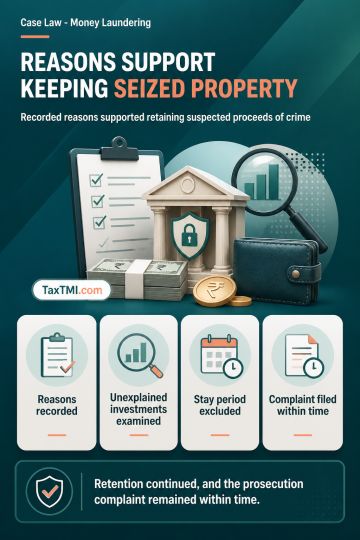
Retention of seized property survives where recorded reasons support proceeds of crime, while stayed investigation periods are excluded from limitatio...
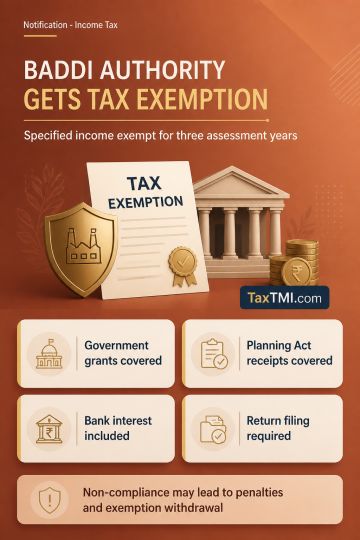
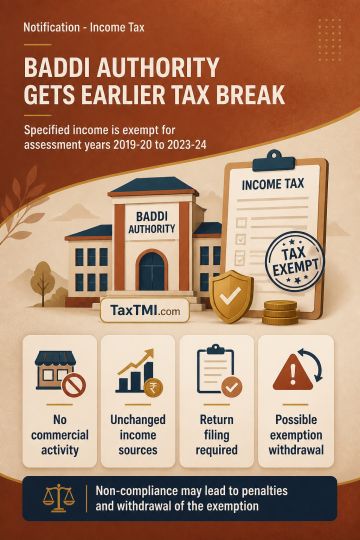
Specified income of Baddi Barotiwala Nalagarh Development Authority receives conditional tax exemption, retrospectively covering its designated assess...
Specified development authority income receives retrospective tax exemption, subject to non-commercial activity, unchanged income sources, and return-...
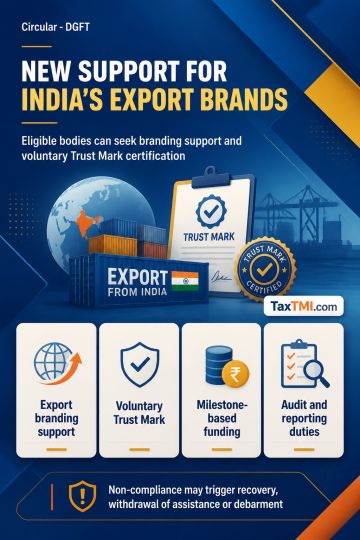
Unified Brand India framework introduces voluntary Trust Mark certification and funding support for export branding, packaging and global promotional ...
Origin Declaration authentication governs preferential tariff claims under India-UK CETA, requiring a validated reference number before import clearan...
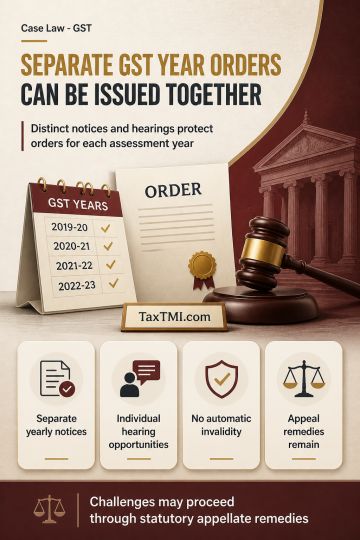
Separate assessment orders for different years remain valid when distinct notices and hearing opportunities prevent prejudice from combined proceeding...
Applicability: The waiver provisions u/s 128A apply to cases involving tax demands u/s 73 for financial years 2017-18, 2018-19, and 2019-20, and cases involving erroneous refunds. To avail the waiver, the full tax amount demanded must be paid by the notified date, excluding amounts no longer payable due to retrospective amendments to Section 16(5) and 16(6). Procedure: Applications for waiver must be filed in prescribed forms, and proper officers will examine eligibility. Notices may be issued, and applicants can file replies. Orders approving or rejecting waiver applications will be issued, with deemed approval if no order is passed within the time limit. Appeals against rejection orders are allowed. Payments: Amounts paid towards the demand before the notified date, including by tax officers recovering from other persons, are considered payments for eligibility. Interest/penalty amounts cannot be adjusted against tax dues. Partial payments do not qualify for waiver. ITC can be utilized for payment, except for reverse charge/e-commerce operator liabilities and erroneous refund demands. Clarifications: The circular provides clarifications on various issues, including applicability to IGST/Cess demands, transitional credit demands, penalties under other provisions, import IGST.
Applicability: The waiver provisions u/s 128A apply to cases involving tax demands u/s 73 for financial years 2017-18, 2018-19, and 2019-20, and cases involving erroneous refunds. To avail the waiver, the full tax amount demanded must be paid by the notified date, excluding amounts no longer payable due to retrospective amendments to Section 16(5) and 16(6). Procedure: Applications for waiver must be filed in prescribed forms, and proper officers will examine eligibility. Notices may be issued, and applicants can file replies. Orders approving or rejecting waiver applications will be issued, with deemed approval if no order is passed within the time limit. Appeals against rejection orders are allowed. Payments: Amounts paid towards the demand before the notified date, including by tax officers recovering from other persons, are considered payments for eligibility. Interest/penalty amounts cannot be adjusted against tax dues. Partial payments do not qualify for waiver. ITC can be utilized for payment, except for reverse charge/e-commerce operator liabilities and erroneous refund demands. Clarifications: The circular provides clarifications on various issues, including applicability to IGST/Cess demands, transitional credit demands, penalties under other provisions, import IGST.
Note: It is a system-generated summary and is for quick reference only.
 TaxTMI
 of 4805





 Join Channel


 TaxTMI
