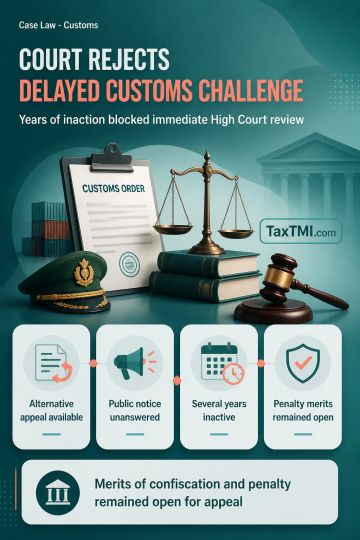
Alternative statutory remedy and unexplained delay barred writ review of customs confiscation adjudication, leaving merits for appellate consideration...
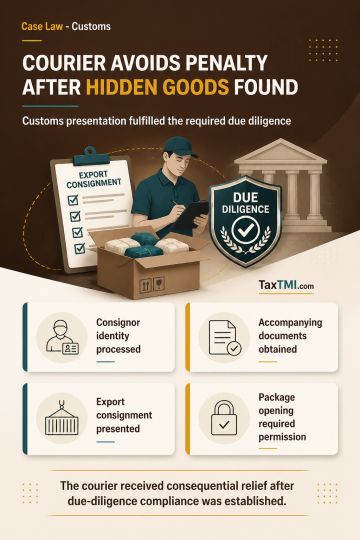
Authorised courier due diligence protects against penalties where declared exports conceal prohibited goods despite proper documentation and customs p...
Customs-controlled container movement now extends to DP World facilities, subject to segregation, inspections, reconciliation, and EXIM cargo priority...
The circular amends paragraph 15 of the Master Circular for Credit Rating Agencies (CRAs), providing guidance on treatment of technical defaults. It clarifies that in scenarios where non-payment of debt occurs due to reasons beyond the issuer's control, such as failure to remit due to incorrect investor account details or instructions from authorities, CRAs shall verify availability of funds, reasons for failure, and payment into an escrow account. CRAs must furnish details to stock exchanges, depositories, and debenture trustees, who shall disseminate the information. CRAs must sensitize issuers to use penny-drop verification facility to prevent such occurrences. The term "technical default" is omitted from paragraph 15.3, which now covers scenarios fundamentally altering the defaulting firm's credit risk profile. The circular is applicable immediately and issued under SEBI's powers to protect investors and regulate securities market.
The circular amends paragraph 15 of the Master Circular for Credit Rating Agencies (CRAs), providing guidance on treatment of technical defaults. It clarifies that in scenarios where non-payment of debt occurs due to reasons beyond the issuer's control, such as failure to remit due to incorrect investor account details or instructions from authorities, CRAs shall verify availability of funds, reasons for failure, and payment into an escrow account. CRAs must furnish details to stock exchanges, depositories, and debenture trustees, who shall disseminate the information. CRAs must sensitize issuers to use penny-drop verification facility to prevent such occurrences. The term "technical default" is omitted from paragraph 15.3, which now covers scenarios fundamentally altering the defaulting firm's credit risk profile. The circular is applicable immediately and issued under SEBI's powers to protect investors and regulate securities market.
Note: It is a system-generated summary and is for quick reference only.
 TaxTMI
  TaxTMI
 of 4828






 Join Channel


