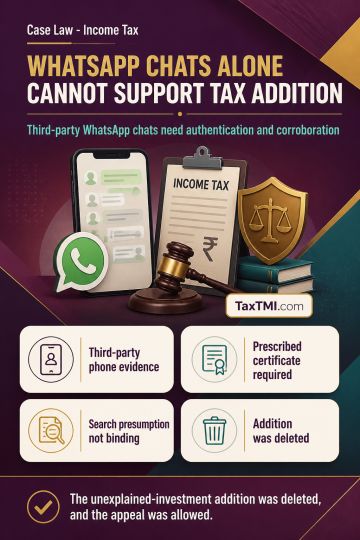
Electronic WhatsApp evidence without authentication or independent corroboration cannot sustain an unexplained-investment addition based on third-part...
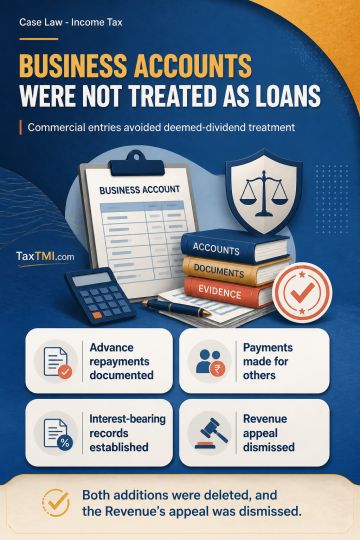
Mutual current-account transactions excluded from deemed dividend treatment where no fresh borrowing arose; unsupported unsecured-loan addition also f...
Section 179 of the Income Tax Act empowers tax authorities to recover outstanding dues from directors of private companies during the relevant previous year. The latter part casts a negative onus on directors to prove non-recovery was not due to gross neglect, misfeasance, or breach of duty. In this case, the company was incorporated as a public limited company, and the revenue authorities failed to dispute this status while initiating proceedings u/s 179. Consequently, the High Court held that Section 179 is inapplicable to public limited companies, and the writ petition was allowed.
Section 179 of the Income Tax Act empowers tax authorities to recover outstanding dues from directors of private companies during the relevant previous year. The latter part casts a negative onus on directors to prove non-recovery was not due to gross neglect, misfeasance, or breach of duty. In this case, the company was incorporated as a public limited company, and the revenue authorities failed to dispute this status while initiating proceedings u/s 179. Consequently, the High Court held that Section 179 is inapplicable to public limited companies, and the writ petition was allowed.
Note: It is a system-generated summary and is for quick reference only.
 TaxTMI
  TaxTMI
 of 4828







 Join Channel