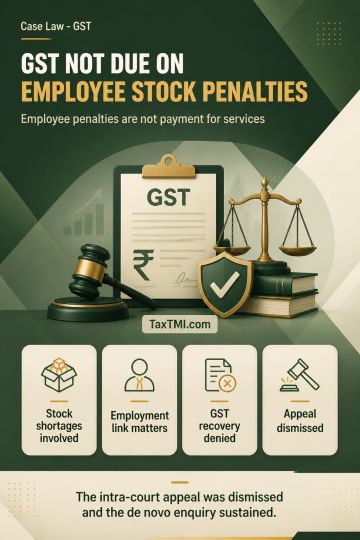
Employee stock-shortage penalties do not constitute consideration for services, preventing GST collection under Schedule II in employment relationship...
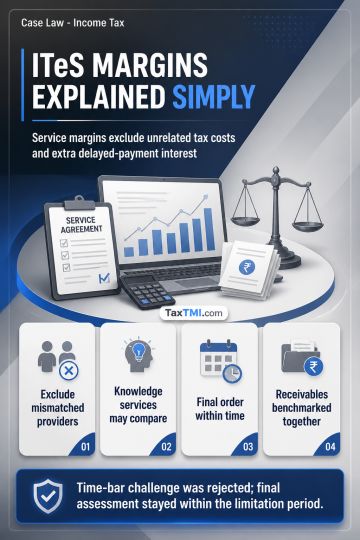
Transfer-pricing treatment of ITeS margins excludes pass-through tax recoveries and separate delayed-receivables interest after working-capital adjust...
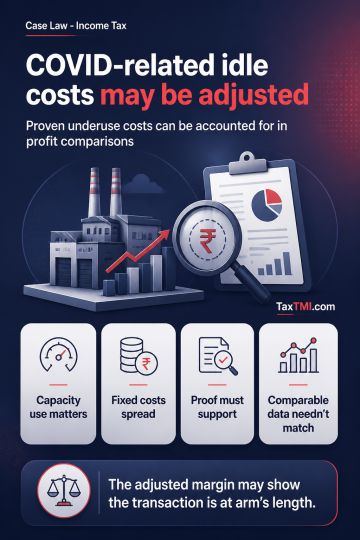
Capacity-utilisation adjustments under TNMM can neutralise substantiated COVID-related idle costs where underutilisation materially affects profitabil...
Page of 4830
Press 'Enter' after typing page number.
181 to 200 of 96587 Results
❮
❯
❯❯
0 / 200
Expand Note
Add to Folder
No Folders have been created
+
Are you sure you want to delete "My most important" ?
The Tribunal allowed the assessee's claim for depreciation on goodwill arising from amalgamation u/s 32(1)(ii), following the Supreme Court's decision in Smifs Securities Ltd. It held that once goodwill is recognized per Accounting Standard-14, depreciation is allowable. The sixth proviso to Section 32(1) was not applicable as the amalgamating company did not claim depreciation on goodwill. Provisions of Explanation 7 to Section 43(1), Section 49(1)(iii)(e), and Section 55(2)(a)(ii) were held inapplicable. The Tribunal also allowed depreciation on customer relationships and distribution network acquired through amalgamation, being intangible assets valued by an independent valuer. However, it dismissed the claim for refund of excess tax paid on dividends distributed to non-resident shareholders, following the Special Bench decision in Total Oil India Private Ltd.
The Tribunal allowed the assessee's claim for depreciation on goodwill arising from amalgamation u/s 32(1)(ii), following the Supreme Court's decision in Smifs Securities Ltd. It held that once goodwill is recognized per Accounting Standard-14, depreciation is allowable. The sixth proviso to Section 32(1) was not applicable as the amalgamating company did not claim depreciation on goodwill. Provisions of Explanation 7 to Section 43(1), Section 49(1)(iii)(e), and Section 55(2)(a)(ii) were held inapplicable. The Tribunal also allowed depreciation on customer relationships and distribution network acquired through amalgamation, being intangible assets valued by an independent valuer. However, it dismissed the claim for refund of excess tax paid on dividends distributed to non-resident shareholders, following the Special Bench decision in Total Oil India Private Ltd.
Note: It is a system-generated summary and is for quick reference only.
 TaxTMI
  TaxTMI
 of 4830



 Join Channel


