Inherited property sale proceeds require capital-gains treatment where ownership is supported by evidence, not suspicion or unverified signature doubt...
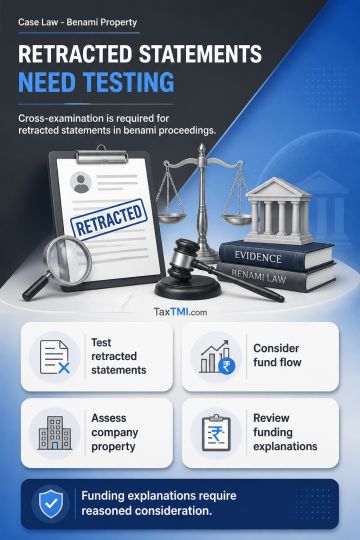
Cross-examination of retracted statements is essential where foundational evidence supports a benami allegation and documented funding explanations re...
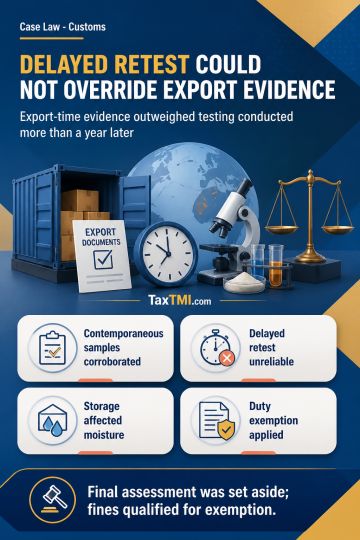
Capital-goods exemption covers plant-modernisation accessories, while the import restriction applies only to earlier capital-goods components and spar...
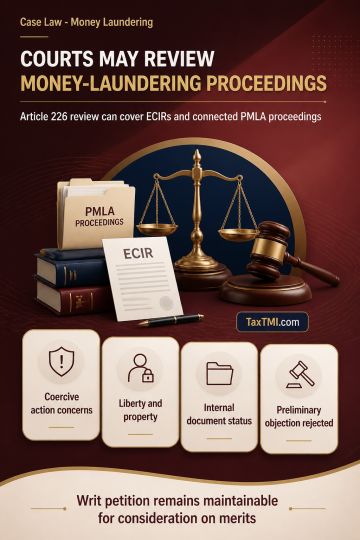
Constitutional judicial review permits challenges to ECIRs and connected money-laundering proceedings where coercive action affects fundamental intere...
The petitioner filed appeals against orders under CGST/SGST Acts after a delay of four years. The court held that it cannot normally exercise jurisdiction under Article 226 to extend the time limit for filing appeals u/s 107 of the CGST/SGST Acts, as per the Supreme Court's rulings in Singh Enterprises and Ketan V. Parekh cases. Although Section 5 of the Limitation Act may not apply, the benefit of Section 14 can be extended in rare cases with extraordinary circumstances, which were not present in this case. Despite Article 226 not fixing a limitation period for writ petitions, inordinate delay in filing can lead to dismissal. The petitioner's contention of illness was viewed with suspicion. Consequently, the writ petition was dismissed due to the failure to approach the court within a reasonable time and the absence of extraordinary circumstances justifying condonation of delay.
The petitioner filed appeals against orders under CGST/SGST Acts after a delay of four years. The court held that it cannot normally exercise jurisdiction under Article 226 to extend the time limit for filing appeals u/s 107 of the CGST/SGST Acts, as per the Supreme Court's rulings in Singh Enterprises and Ketan V. Parekh cases. Although Section 5 of the Limitation Act may not apply, the benefit of Section 14 can be extended in rare cases with extraordinary circumstances, which were not present in this case. Despite Article 226 not fixing a limitation period for writ petitions, inordinate delay in filing can lead to dismissal. The petitioner's contention of illness was viewed with suspicion. Consequently, the writ petition was dismissed due to the failure to approach the court within a reasonable time and the absence of extraordinary circumstances justifying condonation of delay.
Note: It is a system-generated summary and is for quick reference only.
 TaxTMI
 of 4786



















 Join Channel


 TaxTMI