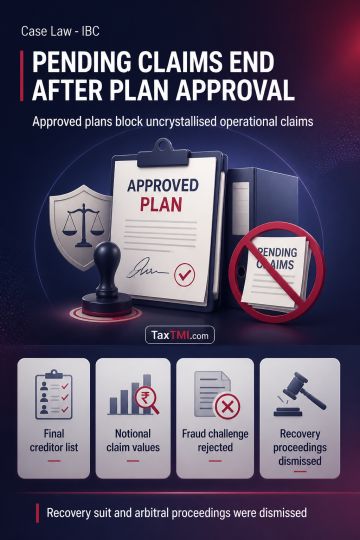
Clean slate principle extinguishes uncrystallised operational claims and bars continuation of pending recovery and arbitral proceedings after plan app...
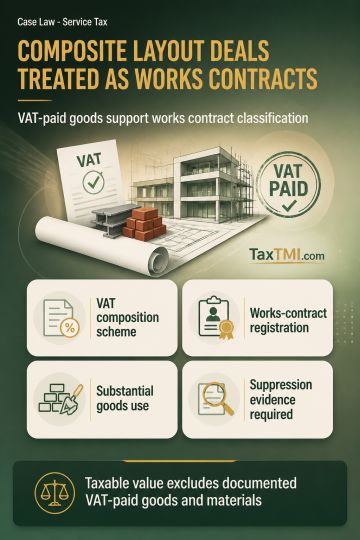
Works contract classification governs composite layout-development contracts where VAT-paid goods are transferred alongside construction and infrastru...
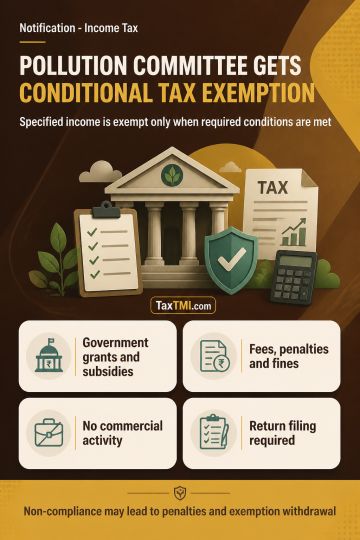
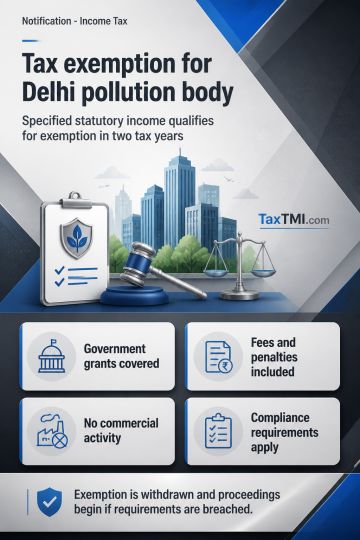
Specified income tax exemption for pollution control body remains conditional on non-commercial activity, unchanged income character, and return filin...
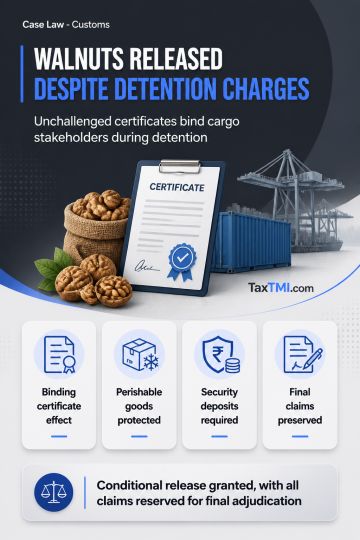
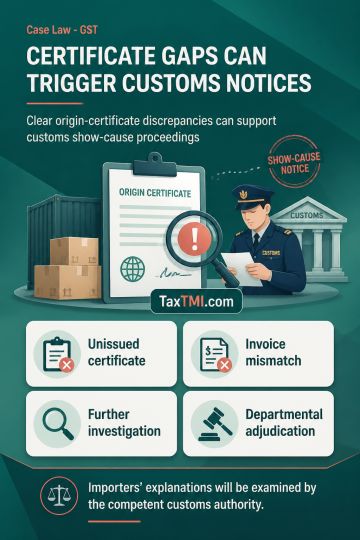
Jurisdictional facts in certificate-of-origin discrepancies can support customs show-cause proceedings, leaving factual explanations for departmental ...
The case revolves around the taxation of income earned by the assessee from licensing software to Indian customers under the India-USA Double Taxation Avoidance Agreement (DTAA). The key points are: The assessee provided the right to use computer software licenses through End User License Agreements (EULAs) or reseller agreements to Indian customers. It contended that such income was not taxable u/s 9(1)(vii) of the Income Tax Act or Article 12 (Royalty) of the India-USA DTAA. The ITAT held that the assessee's reliance on the Supreme Court decision in Engineering Analysis Centre of Excellence Pvt. Ltd. was well-founded. The transaction fell under the second category of software sale, granting non-exclusive restrictive licenses, which would not be covered under the definition of royalty as per the DTAA and hence not taxable in India. Regarding technical support services, the ITAT found that the receipts from DXC Technology India Private Limited, which had a separate clause for such services, constituted only 0.11% of the total receipts. The Assessing Officer erred in concluding that the entire receipts would fall under technical services. The ITAT held that for services to be considered 'Fees for Technical Services' under Article 12 of the India-US treaty.
The case revolves around the taxation of income earned by the assessee from licensing software to Indian customers under the India-USA Double Taxation Avoidance Agreement (DTAA). The key points are: The assessee provided the right to use computer software licenses through End User License Agreements (EULAs) or reseller agreements to Indian customers. It contended that such income was not taxable u/s 9(1)(vii) of the Income Tax Act or Article 12 (Royalty) of the India-USA DTAA. The ITAT held that the assessee's reliance on the Supreme Court decision in Engineering Analysis Centre of Excellence Pvt. Ltd. was well-founded. The transaction fell under the second category of software sale, granting non-exclusive restrictive licenses, which would not be covered under the definition of royalty as per the DTAA and hence not taxable in India. Regarding technical support services, the ITAT found that the receipts from DXC Technology India Private Limited, which had a separate clause for such services, constituted only 0.11% of the total receipts. The Assessing Officer erred in concluding that the entire receipts would fall under technical services. The ITAT held that for services to be considered 'Fees for Technical Services' under Article 12 of the India-US treaty.
Note: It is a system-generated summary and is for quick reference only.
 TaxTMI
 of 4796



 Join Channel


 TaxTMI