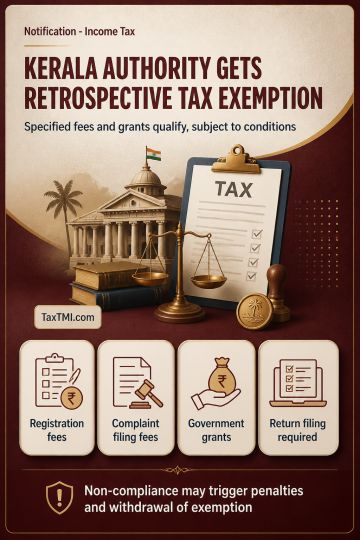
Tax exemption for regulatory authority income applies retrospectively, subject to non-commercial activity, unchanged income sources, and return filing...
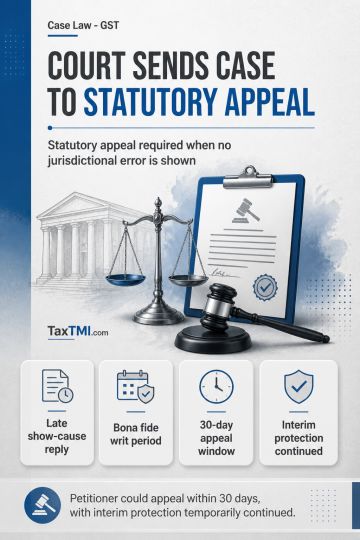
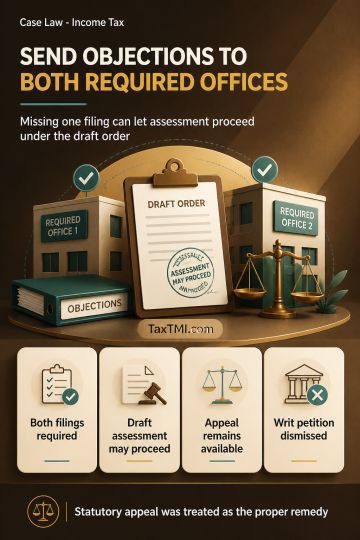
Dispute Resolution Panel objections must reach both prescribed forums; otherwise assessment may proceed and statutory appeal remains the proper remedy...
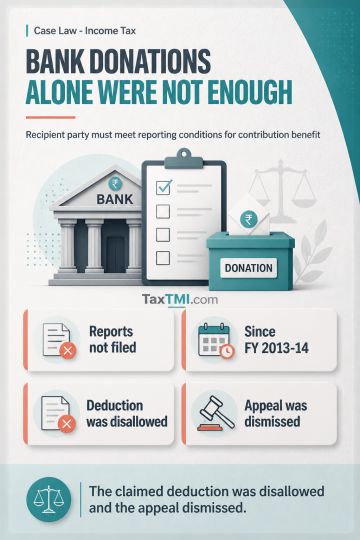
Political contribution deductions require recipient party compliance with contribution-reporting conditions; banking-channel donations alone do not qu...
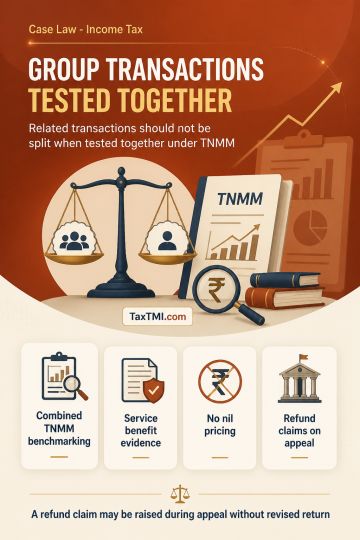
Aggregation under TNMM prevents selective testing of intra-group services without comparable uncontrolled transactions, while appellate additional cla...
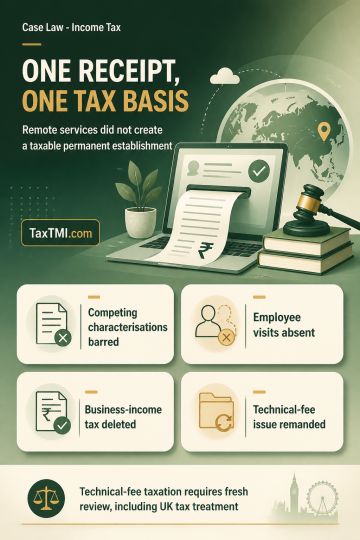
Protective assessment cannot duplicate identical receipts under competing characterisations; remote services did not establish a taxable permanent est...
Page of 4792
Press 'Enter' after typing page number.
461 to 480 of 95833 Results
❮
❯
❯❯
0 / 200
Expand Note
Add to Folder
No Folders have been created
+
Are you sure you want to delete "My most important" ?
The case revolves around the taxation of income earned by the assessee from licensing software to Indian customers under the India-USA Double Taxation Avoidance Agreement (DTAA). The key points are: The assessee provided the right to use computer software licenses through End User License Agreements (EULAs) or reseller agreements to Indian customers. It contended that such income was not taxable u/s 9(1)(vii) of the Income Tax Act or Article 12 (Royalty) of the India-USA DTAA. The ITAT held that the assessee's reliance on the Supreme Court decision in Engineering Analysis Centre of Excellence Pvt. Ltd. was well-founded. The transaction fell under the second category of software sale, granting non-exclusive restrictive licenses, which would not be covered under the definition of royalty as per the DTAA and hence not taxable in India. Regarding technical support services, the ITAT found that the receipts from DXC Technology India Private Limited, which had a separate clause for such services, constituted only 0.11% of the total receipts. The Assessing Officer erred in concluding that the entire receipts would fall under technical services. The ITAT held that for services to be considered 'Fees for Technical Services' under Article 12 of the India-US treaty.
The case revolves around the taxation of income earned by the assessee from licensing software to Indian customers under the India-USA Double Taxation Avoidance Agreement (DTAA). The key points are: The assessee provided the right to use computer software licenses through End User License Agreements (EULAs) or reseller agreements to Indian customers. It contended that such income was not taxable u/s 9(1)(vii) of the Income Tax Act or Article 12 (Royalty) of the India-USA DTAA. The ITAT held that the assessee's reliance on the Supreme Court decision in Engineering Analysis Centre of Excellence Pvt. Ltd. was well-founded. The transaction fell under the second category of software sale, granting non-exclusive restrictive licenses, which would not be covered under the definition of royalty as per the DTAA and hence not taxable in India. Regarding technical support services, the ITAT found that the receipts from DXC Technology India Private Limited, which had a separate clause for such services, constituted only 0.11% of the total receipts. The Assessing Officer erred in concluding that the entire receipts would fall under technical services. The ITAT held that for services to be considered 'Fees for Technical Services' under Article 12 of the India-US treaty.
Note: It is a system-generated summary and is for quick reference only.
 TaxTMI
 of 4792




 Join Channel


 TaxTMI