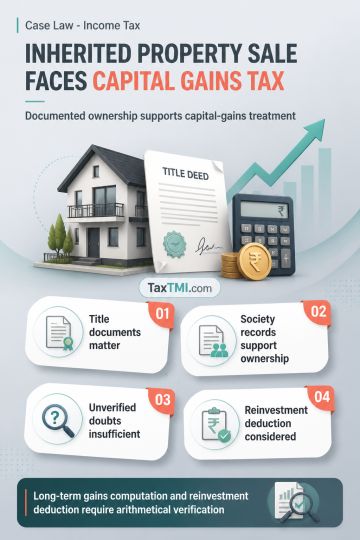
Inherited property sale proceeds require capital-gains treatment where ownership is supported by evidence, not suspicion or unverified signature doubt...
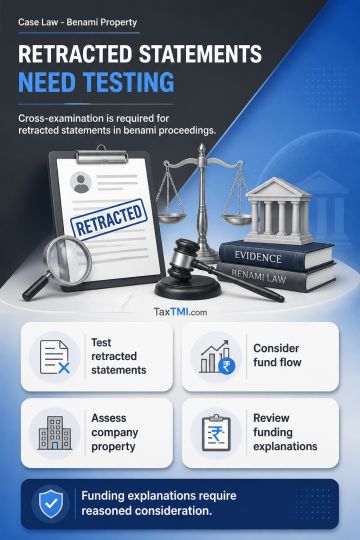
Cross-examination of retracted statements is essential where foundational evidence supports a benami allegation and documented funding explanations re...
Capital-goods exemption covers plant-modernisation accessories, while the import restriction applies only to earlier capital-goods components and spar...
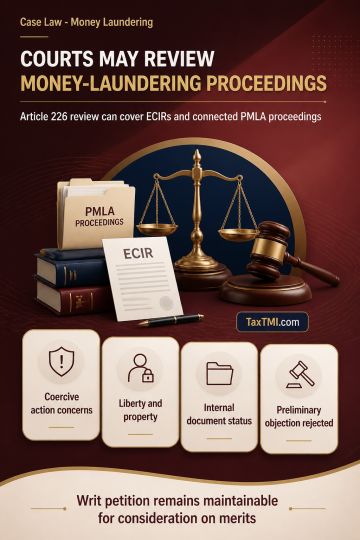
Constitutional judicial review permits challenges to ECIRs and connected money-laundering proceedings where coercive action affects fundamental intere...
The assessee trust was denied exemption u/s 11 as it was found to be systematically exploiting its property commercially by renting out space for exhibitions, corporate meetings, etc., which were not related to the objects of the trust. The Assessing Officer held that these activities were not incidental to attaining the trust's objectives. Additionally, the assessee failed to maintain separate books of accounts for such commercial receipts as required u/s 11(4A). The Tribunal observed that based on the Supreme Court's decision in Ahmedabad Urban Development Authority, an entity can be granted exemption if the profits generated while carrying out general public utility objectives do not exceed 20% of total receipts as per the second proviso to Section 2(15). However, this aspect was not adjudicated upon by the lower authorities. Consequently, the Tribunal set aside the impugned order and restored the matter to the Assessing Officer to decide afresh, considering the ratio of the Ahmedabad Urban Development Authority judgment regarding the 20% limit on commercial receipts. The revenue's appeal was partly allowed for statistical purposes.
The assessee trust was denied exemption u/s 11 as it was found to be systematically exploiting its property commercially by renting out space for exhibitions, corporate meetings, etc., which were not related to the objects of the trust. The Assessing Officer held that these activities were not incidental to attaining the trust's objectives. Additionally, the assessee failed to maintain separate books of accounts for such commercial receipts as required u/s 11(4A). The Tribunal observed that based on the Supreme Court's decision in Ahmedabad Urban Development Authority, an entity can be granted exemption if the profits generated while carrying out general public utility objectives do not exceed 20% of total receipts as per the second proviso to Section 2(15). However, this aspect was not adjudicated upon by the lower authorities. Consequently, the Tribunal set aside the impugned order and restored the matter to the Assessing Officer to decide afresh, considering the ratio of the Ahmedabad Urban Development Authority judgment regarding the 20% limit on commercial receipts. The revenue's appeal was partly allowed for statistical purposes.
Note: It is a system-generated summary and is for quick reference only.
 TaxTMI
 of 4784








 Join Channel


 TaxTMI