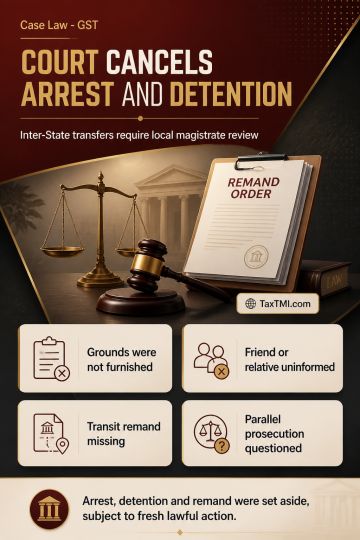
Arrest safeguards and transit remand requirements invalidated detention following inter-State transfer without communicated grounds or magistrate auth...
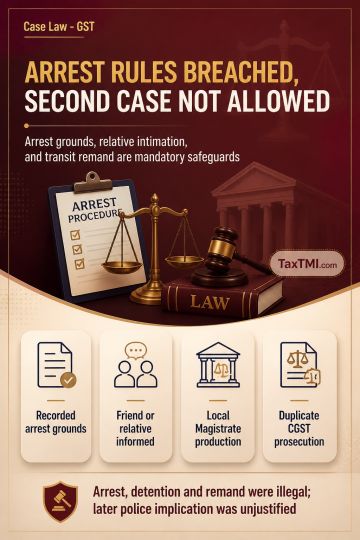
Arrest safeguards require disclosed grounds, relative intimation and transit remand, while duplicate prosecution under the CGST framework is unsustain...
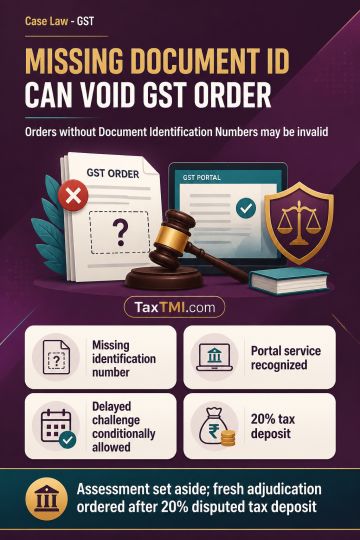
Document Identification Number defects can invalidate GST assessments, with delayed challenges entertained conditionally where patent irregularities e...
Windmill commissioning evidence supported higher depreciation where grid connection and electricity generation proved operational use before the relev...
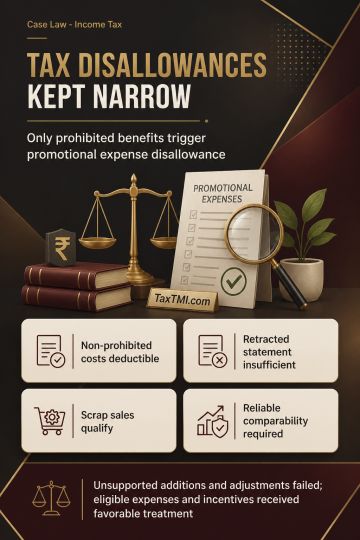
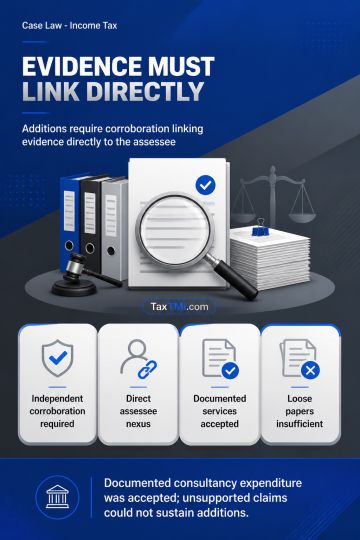
Pharmaceutical promotion and transfer-pricing comparability principles limited disallowances, while uncorroborated search allegations and unsupported ...
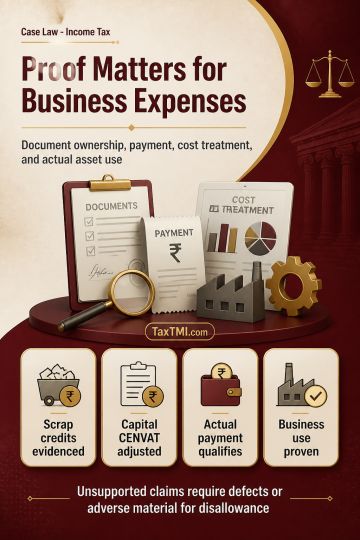
Business expenditure substantiation supports scrap credits, statutory payments and expense claims, while depreciation requires proof of actual busines...
The assessee trust was denied exemption u/s 11 as it was found to be systematically exploiting its property commercially by renting out space for exhibitions, corporate meetings, etc., which were not related to the objects of the trust. The Assessing Officer held that these activities were not incidental to attaining the trust's objectives. Additionally, the assessee failed to maintain separate books of accounts for such commercial receipts as required u/s 11(4A). The Tribunal observed that based on the Supreme Court's decision in Ahmedabad Urban Development Authority, an entity can be granted exemption if the profits generated while carrying out general public utility objectives do not exceed 20% of total receipts as per the second proviso to Section 2(15). However, this aspect was not adjudicated upon by the lower authorities. Consequently, the Tribunal set aside the impugned order and restored the matter to the Assessing Officer to decide afresh, considering the ratio of the Ahmedabad Urban Development Authority judgment regarding the 20% limit on commercial receipts. The revenue's appeal was partly allowed for statistical purposes.
The assessee trust was denied exemption u/s 11 as it was found to be systematically exploiting its property commercially by renting out space for exhibitions, corporate meetings, etc., which were not related to the objects of the trust. The Assessing Officer held that these activities were not incidental to attaining the trust's objectives. Additionally, the assessee failed to maintain separate books of accounts for such commercial receipts as required u/s 11(4A). The Tribunal observed that based on the Supreme Court's decision in Ahmedabad Urban Development Authority, an entity can be granted exemption if the profits generated while carrying out general public utility objectives do not exceed 20% of total receipts as per the second proviso to Section 2(15). However, this aspect was not adjudicated upon by the lower authorities. Consequently, the Tribunal set aside the impugned order and restored the matter to the Assessing Officer to decide afresh, considering the ratio of the Ahmedabad Urban Development Authority judgment regarding the 20% limit on commercial receipts. The revenue's appeal was partly allowed for statistical purposes.
Note: It is a system-generated summary and is for quick reference only.
 TaxTMI
 of 4792






 Join Channel


 TaxTMI