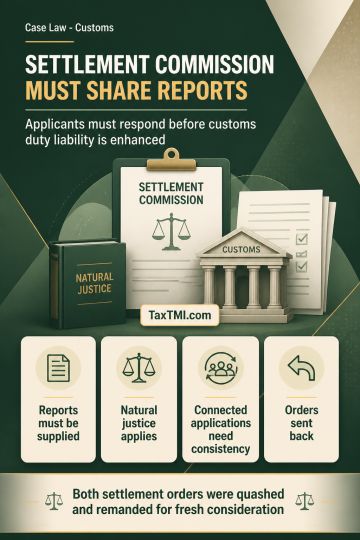
Opportunity to respond to jurisdictional reports is mandatory before customs settlement duty enhancement; connected applications require consistent ad...
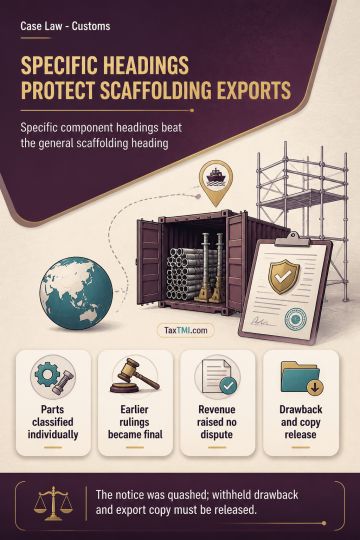
Specific customs headings for scaffolding components prevail over general classification, invalidating misclassification proceedings and enabling with...
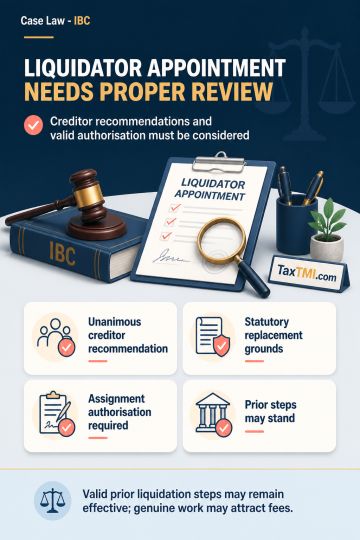
Liquidator appointment under Section 34 requires consideration of creditor recommendations, valid professional authorisation, and preservation of vali...
Page of 4790
Press 'Enter' after typing page number.
361 to 380 of 95794 Results
❮
❯
❯❯
0 / 200
Expand Note
Add to Folder
No Folders have been created
+
Are you sure you want to delete "My most important" ?
The assessee trust was denied exemption u/s 11 as it was found to be systematically exploiting its property commercially by renting out space for exhibitions, corporate meetings, etc., which were not related to the objects of the trust. The Assessing Officer held that these activities were not incidental to attaining the trust's objectives. Additionally, the assessee failed to maintain separate books of accounts for such commercial receipts as required u/s 11(4A). The Tribunal observed that based on the Supreme Court's decision in Ahmedabad Urban Development Authority, an entity can be granted exemption if the profits generated while carrying out general public utility objectives do not exceed 20% of total receipts as per the second proviso to Section 2(15). However, this aspect was not adjudicated upon by the lower authorities. Consequently, the Tribunal set aside the impugned order and restored the matter to the Assessing Officer to decide afresh, considering the ratio of the Ahmedabad Urban Development Authority judgment regarding the 20% limit on commercial receipts. The revenue's appeal was partly allowed for statistical purposes.
The assessee trust was denied exemption u/s 11 as it was found to be systematically exploiting its property commercially by renting out space for exhibitions, corporate meetings, etc., which were not related to the objects of the trust. The Assessing Officer held that these activities were not incidental to attaining the trust's objectives. Additionally, the assessee failed to maintain separate books of accounts for such commercial receipts as required u/s 11(4A). The Tribunal observed that based on the Supreme Court's decision in Ahmedabad Urban Development Authority, an entity can be granted exemption if the profits generated while carrying out general public utility objectives do not exceed 20% of total receipts as per the second proviso to Section 2(15). However, this aspect was not adjudicated upon by the lower authorities. Consequently, the Tribunal set aside the impugned order and restored the matter to the Assessing Officer to decide afresh, considering the ratio of the Ahmedabad Urban Development Authority judgment regarding the 20% limit on commercial receipts. The revenue's appeal was partly allowed for statistical purposes.
Note: It is a system-generated summary and is for quick reference only.
 TaxTMI
 of 4790





 Join Channel


 TaxTMI