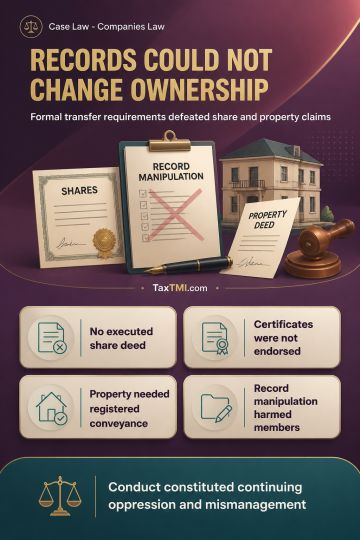
Statutory transfer formalities invalidated alleged share and property transfers, while retrospective record manipulation constituted oppression and mi...
Provisional attachment of laundered funds and equivalent-value property sustained, with statutory protection limited to pension, gratuity and providen...
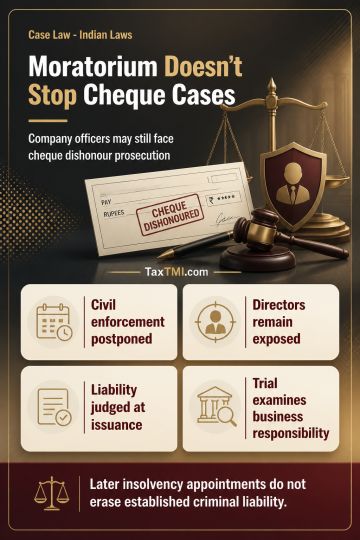
Insolvency moratorium does not shield company officers from cheque dishonour prosecution for liability arising before corporate insolvency proceedings...
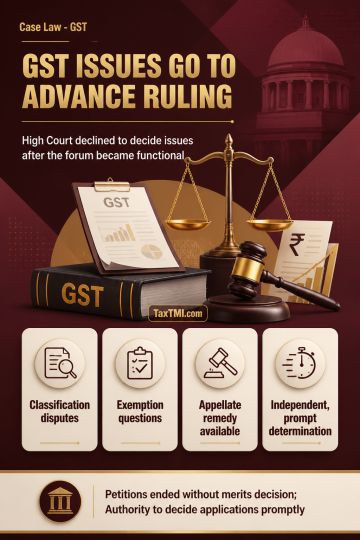
Advance-ruling mechanism governs pending GST classification, exemption and taxability disputes, limiting writ review once the specialised forum functi...
Page of 4788
Press 'Enter' after typing page number.
581 to 600 of 95752 Results
❮
❯
❯❯
0 / 200
Expand Note
Add to Folder
No Folders have been created
+
Are you sure you want to delete "My most important" ?
The Appellate Tribunal dismissed the appeal filed by the Appellants, who were allottees seeking equitable treatment with other creditors in the same class, amendment of the Information Memorandum (IM) reflecting their units as cancelled, and refund of the amount paid. The key points are: The Resolution Professional (RP) lacks adjudicatory powers on claims filed before them and could not have reversed the cancellation action taken by the Corporate Debtor prior to the CIRP initiation. The Resolution Plan, approved by the Committee of Creditors (CoC) with 100% majority, provided treatment to the cancelled allottees, complying with Section 30 of the Code. The Appellants had approached UPRERA and accepted partial refunds from the erstwhile management, indicating acceptance of cancellation. The Appellants did not challenge the pre-CIRP cancellation and misrepresented their claims. The CoC and RP could not revoke the cancellation as it was beyond their jurisdiction. The cancellation was based on an unchallenged UPRERA order, and the CoC acted within its commercial wisdom in approving the Resolution Plan. The Appellate Tribunal found no fault in the due process followed by the Adjudicating Authority.
The Appellate Tribunal dismissed the appeal filed by the Appellants, who were allottees seeking equitable treatment with other creditors in the same class, amendment of the Information Memorandum (IM) reflecting their units as cancelled, and refund of the amount paid. The key points are: The Resolution Professional (RP) lacks adjudicatory powers on claims filed before them and could not have reversed the cancellation action taken by the Corporate Debtor prior to the CIRP initiation. The Resolution Plan, approved by the Committee of Creditors (CoC) with 100% majority, provided treatment to the cancelled allottees, complying with Section 30 of the Code. The Appellants had approached UPRERA and accepted partial refunds from the erstwhile management, indicating acceptance of cancellation. The Appellants did not challenge the pre-CIRP cancellation and misrepresented their claims. The CoC and RP could not revoke the cancellation as it was beyond their jurisdiction. The cancellation was based on an unchallenged UPRERA order, and the CoC acted within its commercial wisdom in approving the Resolution Plan. The Appellate Tribunal found no fault in the due process followed by the Adjudicating Authority.
Note: It is a system-generated summary and is for quick reference only.
 TaxTMI
 of 4788











 Join Channel


 TaxTMI