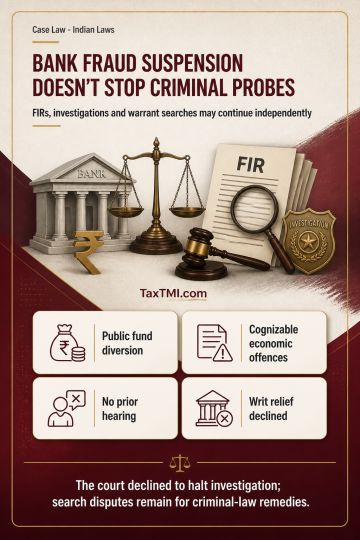
Administrative fraud classification suspension does not halt independent criminal investigation or warrant-based searches into alleged economic offenc...
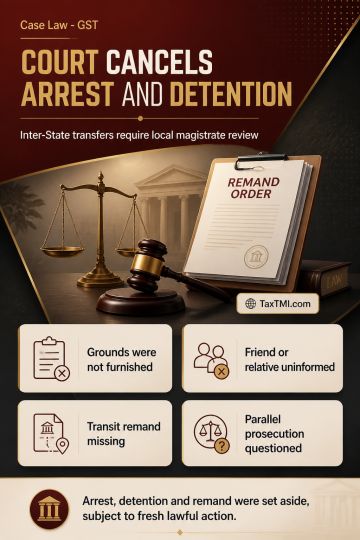
Arrest safeguards and transit remand requirements invalidated detention following inter-State transfer without communicated grounds or magistrate auth...
Arrest safeguards require disclosed grounds, relative intimation and transit remand, while duplicate prosecution under the CGST framework is unsustain...
Document Identification Number defects can invalidate GST assessments, with delayed challenges entertained conditionally where patent irregularities e...
The Appellate Tribunal dismissed the appeal filed by the Appellants, who were allottees seeking equitable treatment with other creditors in the same class, amendment of the Information Memorandum (IM) reflecting their units as cancelled, and refund of the amount paid. The key points are: The Resolution Professional (RP) lacks adjudicatory powers on claims filed before them and could not have reversed the cancellation action taken by the Corporate Debtor prior to the CIRP initiation. The Resolution Plan, approved by the Committee of Creditors (CoC) with 100% majority, provided treatment to the cancelled allottees, complying with Section 30 of the Code. The Appellants had approached UPRERA and accepted partial refunds from the erstwhile management, indicating acceptance of cancellation. The Appellants did not challenge the pre-CIRP cancellation and misrepresented their claims. The CoC and RP could not revoke the cancellation as it was beyond their jurisdiction. The cancellation was based on an unchallenged UPRERA order, and the CoC acted within its commercial wisdom in approving the Resolution Plan. The Appellate Tribunal found no fault in the due process followed by the Adjudicating Authority.
The Appellate Tribunal dismissed the appeal filed by the Appellants, who were allottees seeking equitable treatment with other creditors in the same class, amendment of the Information Memorandum (IM) reflecting their units as cancelled, and refund of the amount paid. The key points are: The Resolution Professional (RP) lacks adjudicatory powers on claims filed before them and could not have reversed the cancellation action taken by the Corporate Debtor prior to the CIRP initiation. The Resolution Plan, approved by the Committee of Creditors (CoC) with 100% majority, provided treatment to the cancelled allottees, complying with Section 30 of the Code. The Appellants had approached UPRERA and accepted partial refunds from the erstwhile management, indicating acceptance of cancellation. The Appellants did not challenge the pre-CIRP cancellation and misrepresented their claims. The CoC and RP could not revoke the cancellation as it was beyond their jurisdiction. The cancellation was based on an unchallenged UPRERA order, and the CoC acted within its commercial wisdom in approving the Resolution Plan. The Appellate Tribunal found no fault in the due process followed by the Adjudicating Authority.
Note: It is a system-generated summary and is for quick reference only.
 TaxTMI
 of 4788









 Join Channel


 TaxTMI
