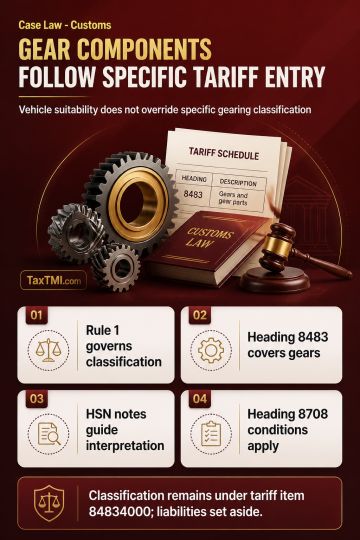
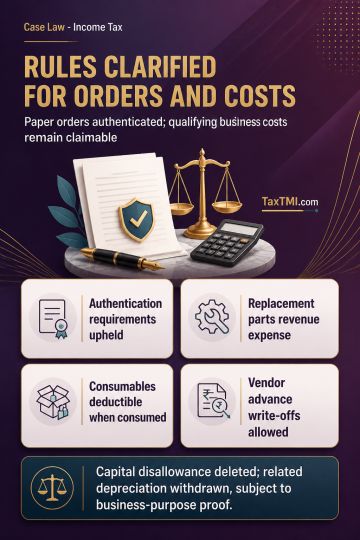
Authentication of paper assessment orders upheld, while qualifying repairs, consumables and vendor advance write-offs remain deductible business claim...
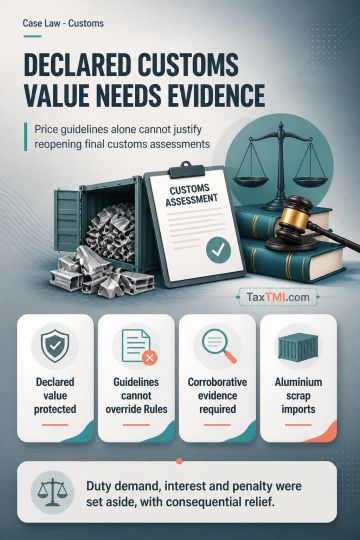
Transaction value cannot be rejected solely on non-statutory valuation guidelines without corroborative evidence supporting reassessment of final cust...
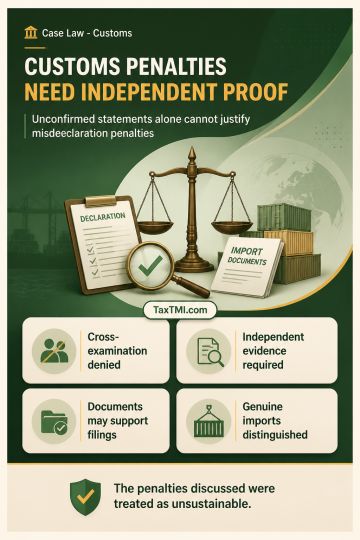
Cross-examination rights and corroborated evidence limit customs penalties for misdeclaration in genuine import transactions involving documented clea...
Tariff classification of vehicle gear components follows the specific gearing entry, displacing motor-vehicle parts classification and related liabili...
Page of 4786
Press 'Enter' after typing page number.
381 to 400 of 95715 Results
❮
❯
❯❯
0 / 200
Expand Note
Add to Folder
No Folders have been created
+
Are you sure you want to delete "My most important" ?
The Appellate Tribunal dismissed the appeal filed by the Appellants, who were allottees seeking equitable treatment with other creditors in the same class, amendment of the Information Memorandum (IM) reflecting their units as cancelled, and refund of the amount paid. The key points are: The Resolution Professional (RP) lacks adjudicatory powers on claims filed before them and could not have reversed the cancellation action taken by the Corporate Debtor prior to the CIRP initiation. The Resolution Plan, approved by the Committee of Creditors (CoC) with 100% majority, provided treatment to the cancelled allottees, complying with Section 30 of the Code. The Appellants had approached UPRERA and accepted partial refunds from the erstwhile management, indicating acceptance of cancellation. The Appellants did not challenge the pre-CIRP cancellation and misrepresented their claims. The CoC and RP could not revoke the cancellation as it was beyond their jurisdiction. The cancellation was based on an unchallenged UPRERA order, and the CoC acted within its commercial wisdom in approving the Resolution Plan. The Appellate Tribunal found no fault in the due process followed by the Adjudicating Authority.
The Appellate Tribunal dismissed the appeal filed by the Appellants, who were allottees seeking equitable treatment with other creditors in the same class, amendment of the Information Memorandum (IM) reflecting their units as cancelled, and refund of the amount paid. The key points are: The Resolution Professional (RP) lacks adjudicatory powers on claims filed before them and could not have reversed the cancellation action taken by the Corporate Debtor prior to the CIRP initiation. The Resolution Plan, approved by the Committee of Creditors (CoC) with 100% majority, provided treatment to the cancelled allottees, complying with Section 30 of the Code. The Appellants had approached UPRERA and accepted partial refunds from the erstwhile management, indicating acceptance of cancellation. The Appellants did not challenge the pre-CIRP cancellation and misrepresented their claims. The CoC and RP could not revoke the cancellation as it was beyond their jurisdiction. The cancellation was based on an unchallenged UPRERA order, and the CoC acted within its commercial wisdom in approving the Resolution Plan. The Appellate Tribunal found no fault in the due process followed by the Adjudicating Authority.
Note: It is a system-generated summary and is for quick reference only.
 TaxTMI
 of 4786











 Join Channel


 TaxTMI