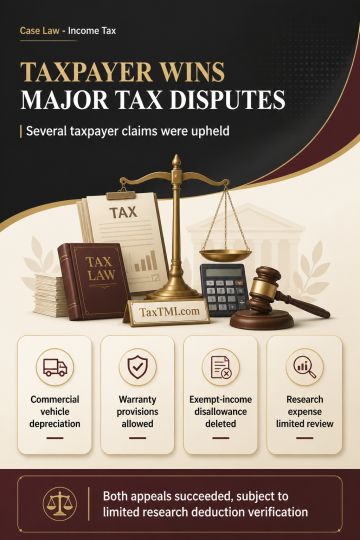
Commercial vehicle depreciation, scientifically determined warranty provisions and exempt-income disallowances were resolved in favour of the taxpayer...
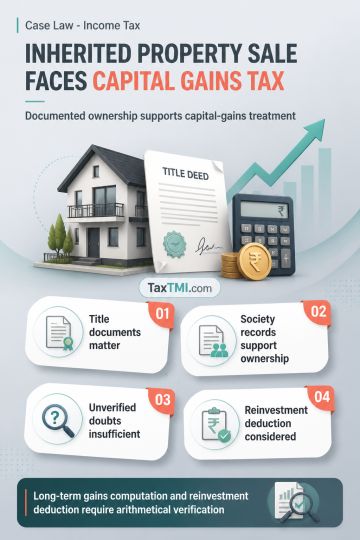
Inherited property sale proceeds require capital-gains treatment where ownership is supported by evidence, not suspicion or unverified signature doubt...
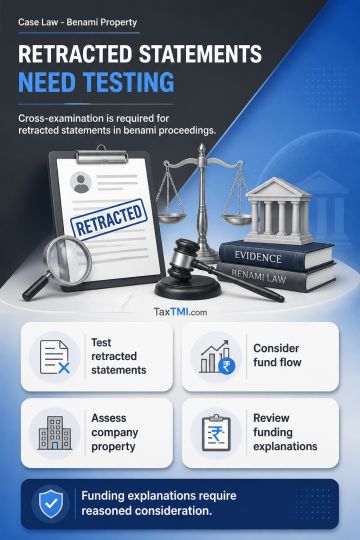
Cross-examination of retracted statements is essential where foundational evidence supports a benami allegation and documented funding explanations re...
Capital-goods exemption covers plant-modernisation accessories, while the import restriction applies only to earlier capital-goods components and spar...
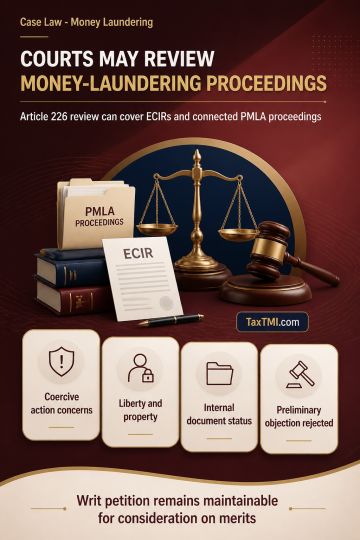
Constitutional judicial review permits challenges to ECIRs and connected money-laundering proceedings where coercive action affects fundamental intere...
When a service provider has already paid 100% service tax on manpower supply and security services, demanding the same service tax from the service recipient, who is liable to pay service tax on reverse charge basis, amounts to double taxation on the same service, which is not permissible. Even though the service recipient is liable to pay service tax on reverse charge basis, once the service provider has paid the service tax, the same cannot be recovered twice from the recipient. Since the service tax payment by the provider is correct, it is admissible as Cenvat credit to the recipient. Therefore, neither the service tax demand against the recipient nor the demand of Cenvat credit of the same amount is sustainable.
When a service provider has already paid 100% service tax on manpower supply and security services, demanding the same service tax from the service recipient, who is liable to pay service tax on reverse charge basis, amounts to double taxation on the same service, which is not permissible. Even though the service recipient is liable to pay service tax on reverse charge basis, once the service provider has paid the service tax, the same cannot be recovered twice from the recipient. Since the service tax payment by the provider is correct, it is admissible as Cenvat credit to the recipient. Therefore, neither the service tax demand against the recipient nor the demand of Cenvat credit of the same amount is sustainable.
Note: It is a system-generated summary and is for quick reference only.
 TaxTMI
 of 4782





 Join Channel


 TaxTMI
