Additional evidence in transfer pricing dispute leads to fresh examination, while tax deductions, TDS credit, fee and refund interest require verifica...
Category II AIF pass-through taxation preserves non-business income character; investment receipts cannot be reclassified without applying recognised ...
Mutual fund maturity rules require proper rollover, redemption, disclosure, and due diligence; investor gains cannot excuse regulatory breaches or pen...
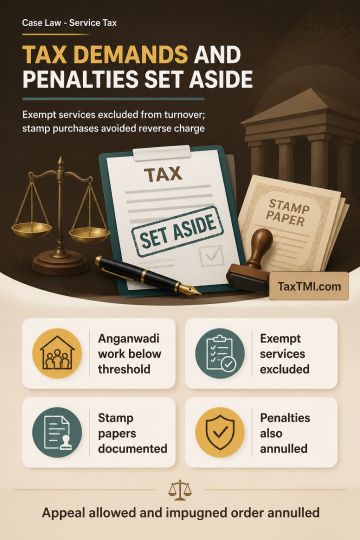
Threshold exemption excludes exempt services, while stamp-paper purchases avoid reverse charge; consequential service tax penalties were also set asid...
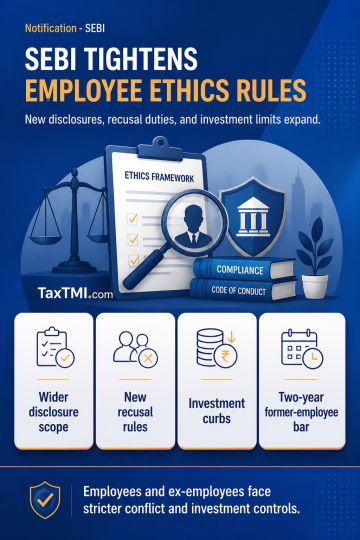
Employee conflict disclosures and investment restrictions expand with new recusal duties, post-employment limits, and compliance reporting requirement...
This case deals with the classification of handcrafted stone articles like 'Chakla Belan' (rolling board and pin), mortar, pestle, etc. for export under the Merchandise Exports from India Scheme (MEIS). The key points are: Self-assessment procedure under Customs Act empowers authorities to verify valuation, classification, exemptions, etc. The exporters classified the goods under ITC(HS) 68159990, entitling 5-7% MEIS rewards. Authorities later objected, alleging misclassification to claim higher rewards. The HC examined the scope of assessment, audit, and recovery powers under Customs Act and Foreign Trade (Development & Regulation) Act/Rules. It held customs cannot question MEIS certificates issued by DGFT without DGFT's adjudication on validity. Section 28AAA requires collusion/misstatement for recovery, not mere classification dispute. The HC quashed the objections, stating classification fell under DGFT's purview as per FTP provisions. It directed refund of amounts deposited by exporters but left it open for DGFT to initiate proceedings on MEIS certificate validity if permissible. The ruling balanced customs' assessment powers with DGFT's authority over export promotion schemes.
This case deals with the classification of handcrafted stone articles like 'Chakla Belan' (rolling board and pin), mortar, pestle, etc. for export under the Merchandise Exports from India Scheme (MEIS). The key points are: Self-assessment procedure under Customs Act empowers authorities to verify valuation, classification, exemptions, etc. The exporters classified the goods under ITC(HS) 68159990, entitling 5-7% MEIS rewards. Authorities later objected, alleging misclassification to claim higher rewards. The HC examined the scope of assessment, audit, and recovery powers under Customs Act and Foreign Trade (Development & Regulation) Act/Rules. It held customs cannot question MEIS certificates issued by DGFT without DGFT's adjudication on validity. Section 28AAA requires collusion/misstatement for recovery, not mere classification dispute. The HC quashed the objections, stating classification fell under DGFT's purview as per FTP provisions. It directed refund of amounts deposited by exporters but left it open for DGFT to initiate proceedings on MEIS certificate validity if permissible. The ruling balanced customs' assessment powers with DGFT's authority over export promotion schemes.
Note: It is a system-generated summary and is for quick reference only.
 TaxTMI
 of 4803













 Join Channel


 TaxTMI
