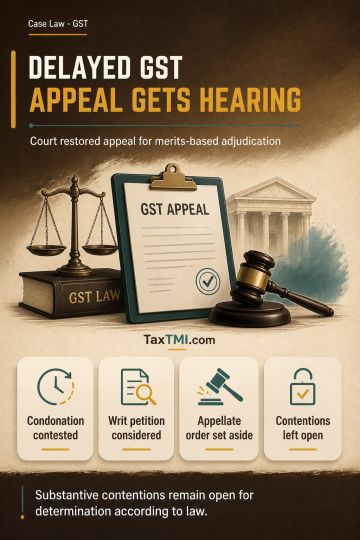
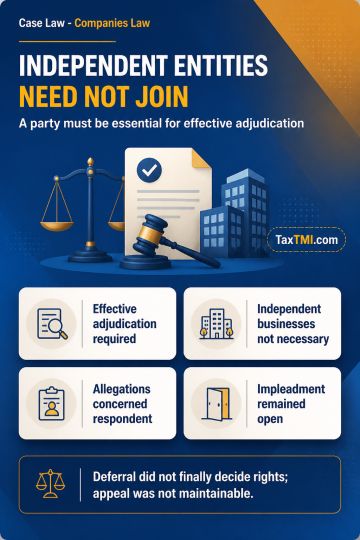
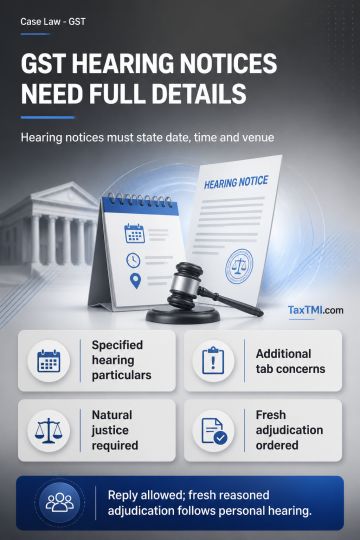
Necessary-party requirements limit impleadment of independent entities, while deferred consideration does not create an appealable adverse determinati...
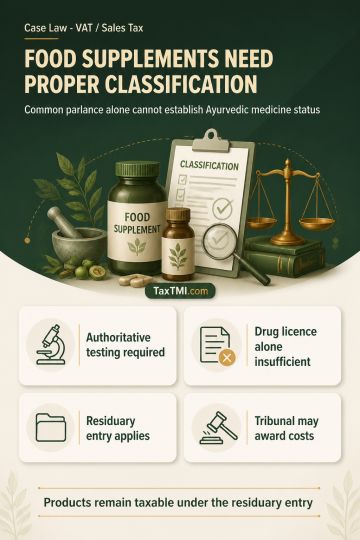
Food supplement classification requires common parlance and authoritative tests, preventing treatment as proprietary Ayurvedic medicines without suppo...
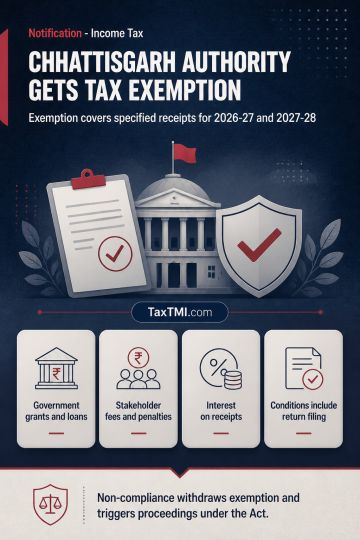
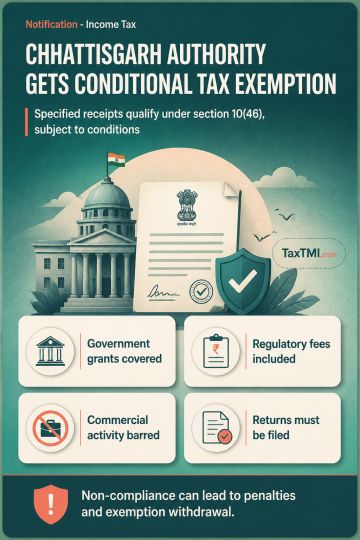
Specified regulatory authority income receives conditional tax exemption, subject to non-commercial activity, unchanged income character, and return f...
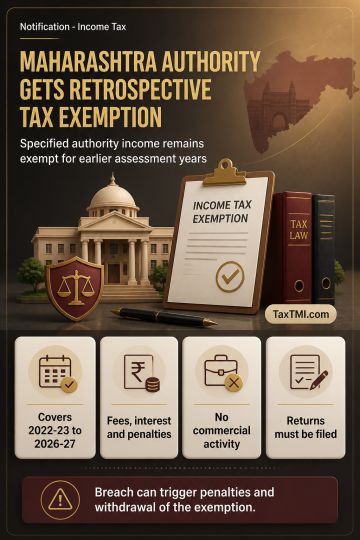
Tax exemption for regulatory authority income applies retrospectively, subject to non-commercial activity, unchanged income sources, and return-filing...
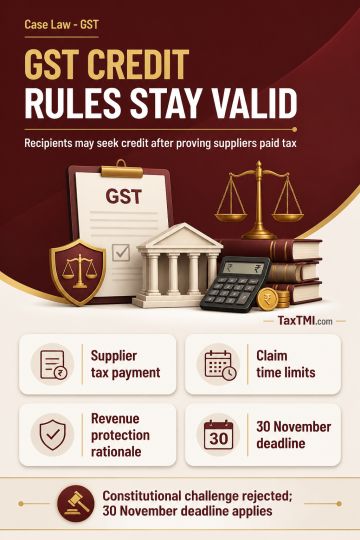
Input tax credit conditions remain constitutionally valid, with eligible recipient claims considered under GST circulars and retrospective filing dead...
This case deals with the classification of handcrafted stone articles like 'Chakla Belan' (rolling board and pin), mortar, pestle, etc. for export under the Merchandise Exports from India Scheme (MEIS). The key points are: Self-assessment procedure under Customs Act empowers authorities to verify valuation, classification, exemptions, etc. The exporters classified the goods under ITC(HS) 68159990, entitling 5-7% MEIS rewards. Authorities later objected, alleging misclassification to claim higher rewards. The HC examined the scope of assessment, audit, and recovery powers under Customs Act and Foreign Trade (Development & Regulation) Act/Rules. It held customs cannot question MEIS certificates issued by DGFT without DGFT's adjudication on validity. Section 28AAA requires collusion/misstatement for recovery, not mere classification dispute. The HC quashed the objections, stating classification fell under DGFT's purview as per FTP provisions. It directed refund of amounts deposited by exporters but left it open for DGFT to initiate proceedings on MEIS certificate validity if permissible. The ruling balanced customs' assessment powers with DGFT's authority over export promotion schemes.
This case deals with the classification of handcrafted stone articles like 'Chakla Belan' (rolling board and pin), mortar, pestle, etc. for export under the Merchandise Exports from India Scheme (MEIS). The key points are: Self-assessment procedure under Customs Act empowers authorities to verify valuation, classification, exemptions, etc. The exporters classified the goods under ITC(HS) 68159990, entitling 5-7% MEIS rewards. Authorities later objected, alleging misclassification to claim higher rewards. The HC examined the scope of assessment, audit, and recovery powers under Customs Act and Foreign Trade (Development & Regulation) Act/Rules. It held customs cannot question MEIS certificates issued by DGFT without DGFT's adjudication on validity. Section 28AAA requires collusion/misstatement for recovery, not mere classification dispute. The HC quashed the objections, stating classification fell under DGFT's purview as per FTP provisions. It directed refund of amounts deposited by exporters but left it open for DGFT to initiate proceedings on MEIS certificate validity if permissible. The ruling balanced customs' assessment powers with DGFT's authority over export promotion schemes.
Note: It is a system-generated summary and is for quick reference only.
 TaxTMI
 of 4792




 Join Channel


 TaxTMI