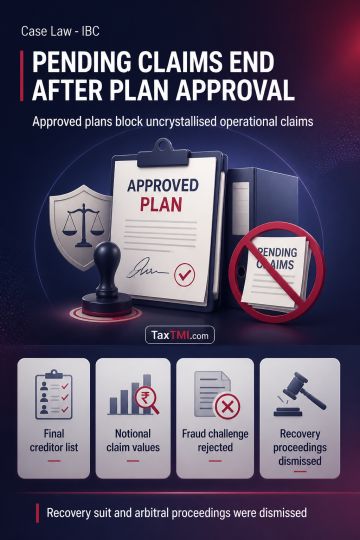
Clean slate principle extinguishes uncrystallised operational claims and bars continuation of pending recovery and arbitral proceedings after plan app...
Works contract classification governs composite layout-development contracts where VAT-paid goods are transferred alongside construction and infrastru...
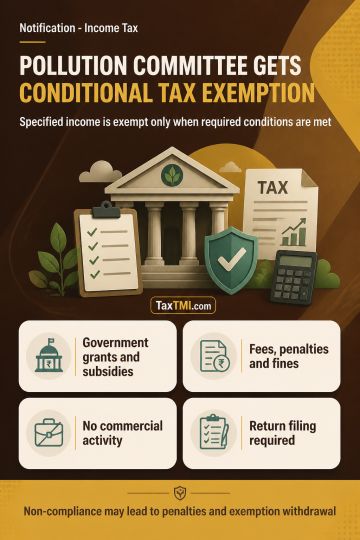
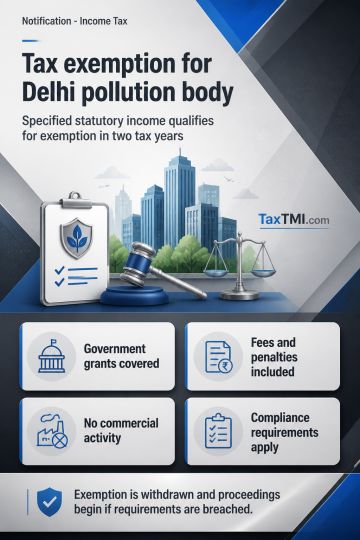
Specified income tax exemption for pollution control body remains conditional on non-commercial activity, unchanged income character, and return filin...
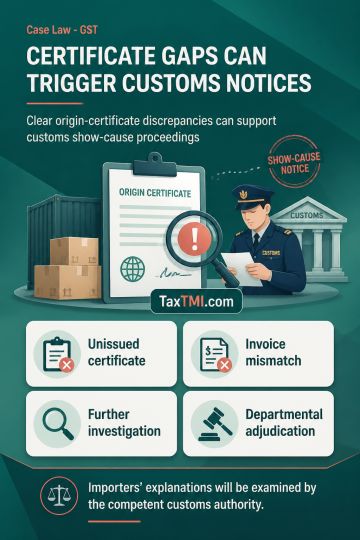
Jurisdictional facts in certificate-of-origin discrepancies can support customs show-cause proceedings, leaving factual explanations for departmental ...
The CESTAT held that the benefit of Notification No. 21/2016-CUS (ADD) dated 31.05.2016 is not to be provided to the appellant. The invocation of the extended period of limitation u/s 28(4) of the Customs Act, 1962, and the consequent imposition of penalty u/s 114A of the Act were examined. The CESTAT found that the dispute related to bills of entry filed on 24.10.2016, 27.10.2016, and 31.01.2017, but the show cause notice was issued on 20.10.2021. All the relevant information was available in the import invoice and bill of lading at the time of filing the bills of entry. There was no suppression of facts by the appellant. Therefore, the ingredients to invoke the extended period u/s 28(4) were not available. The demand for the bills of entry dated 24.10.2016, 27.10.2016, and 31.01.2017 was time-barred as the show cause notice was issued much after the normal period of limitation.
The CESTAT held that the benefit of Notification No. 21/2016-CUS (ADD) dated 31.05.2016 is not to be provided to the appellant. The invocation of the extended period of limitation u/s 28(4) of the Customs Act, 1962, and the consequent imposition of penalty u/s 114A of the Act were examined. The CESTAT found that the dispute related to bills of entry filed on 24.10.2016, 27.10.2016, and 31.01.2017, but the show cause notice was issued on 20.10.2021. All the relevant information was available in the import invoice and bill of lading at the time of filing the bills of entry. There was no suppression of facts by the appellant. Therefore, the ingredients to invoke the extended period u/s 28(4) were not available. The demand for the bills of entry dated 24.10.2016, 27.10.2016, and 31.01.2017 was time-barred as the show cause notice was issued much after the normal period of limitation.
Note: It is a system-generated summary and is for quick reference only.
 TaxTMI
 of 4798





 Join Channel


 TaxTMI