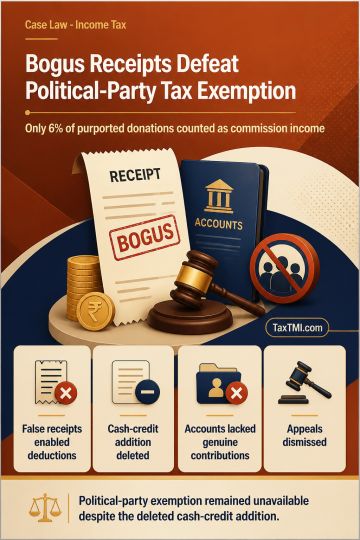
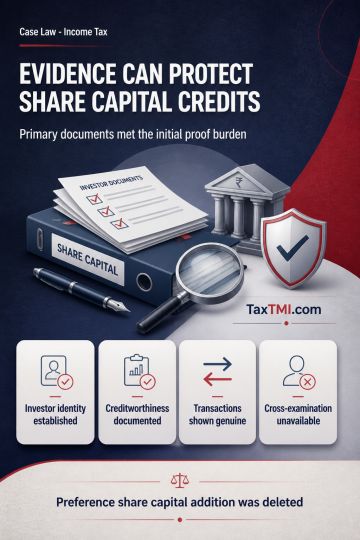
Bogus donation receipts justified commission income assessment and defeated political-party tax exemption for inaccurate accounts and reporting failur...
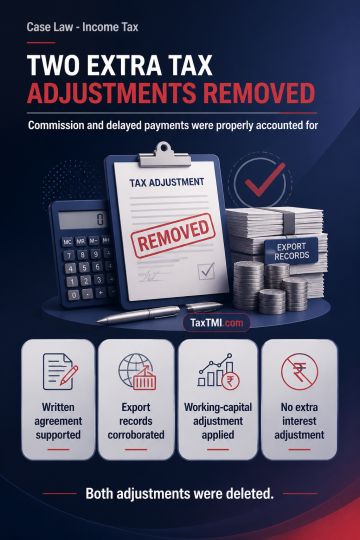
Pure reimbursement without income element escapes tax withholding, while delayed withholding and unsupported provisions face deferred or renewed scrut...
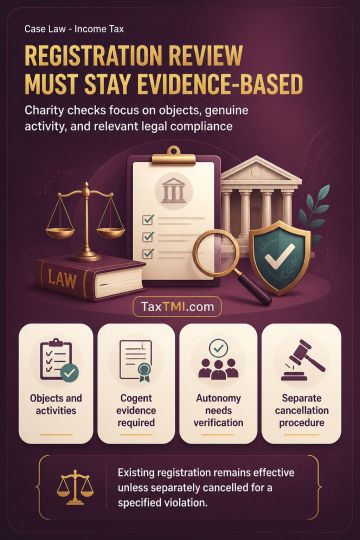
Public benefit requirement defeats charitable registration where residents' association services are reciprocal, member-only facilities governed by mu...
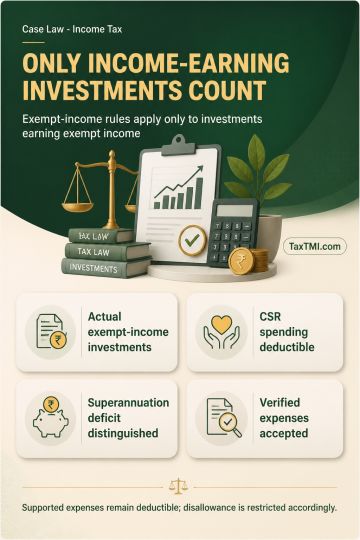
Exempt-income expenditure disallowance is confined to investments that actually generated exempt income, while supported business expenses remain dedu...
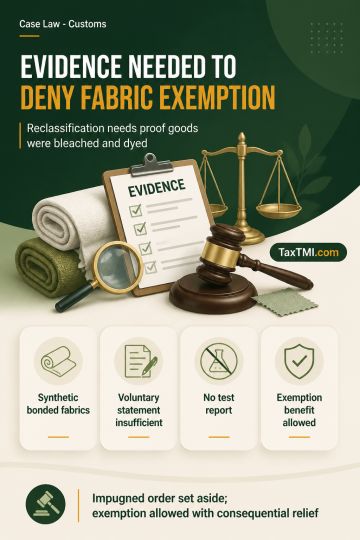
The CESTAT held that the benefit of Notification No. 21/2016-CUS (ADD) dated 31.05.2016 is not to be provided to the appellant. The invocation of the extended period of limitation u/s 28(4) of the Customs Act, 1962, and the consequent imposition of penalty u/s 114A of the Act were examined. The CESTAT found that the dispute related to bills of entry filed on 24.10.2016, 27.10.2016, and 31.01.2017, but the show cause notice was issued on 20.10.2021. All the relevant information was available in the import invoice and bill of lading at the time of filing the bills of entry. There was no suppression of facts by the appellant. Therefore, the ingredients to invoke the extended period u/s 28(4) were not available. The demand for the bills of entry dated 24.10.2016, 27.10.2016, and 31.01.2017 was time-barred as the show cause notice was issued much after the normal period of limitation.
The CESTAT held that the benefit of Notification No. 21/2016-CUS (ADD) dated 31.05.2016 is not to be provided to the appellant. The invocation of the extended period of limitation u/s 28(4) of the Customs Act, 1962, and the consequent imposition of penalty u/s 114A of the Act were examined. The CESTAT found that the dispute related to bills of entry filed on 24.10.2016, 27.10.2016, and 31.01.2017, but the show cause notice was issued on 20.10.2021. All the relevant information was available in the import invoice and bill of lading at the time of filing the bills of entry. There was no suppression of facts by the appellant. Therefore, the ingredients to invoke the extended period u/s 28(4) were not available. The demand for the bills of entry dated 24.10.2016, 27.10.2016, and 31.01.2017 was time-barred as the show cause notice was issued much after the normal period of limitation.
Note: It is a system-generated summary and is for quick reference only.
 TaxTMI
 of 4792









 Join Channel


 TaxTMI