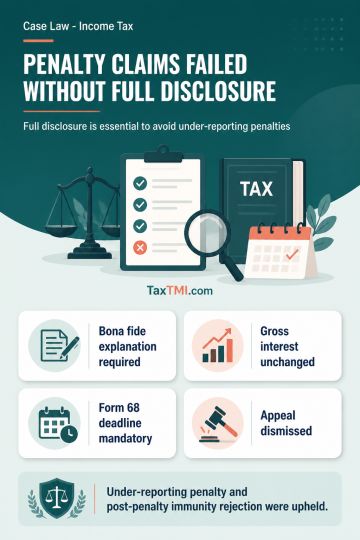
Bona fide disclosure requirements govern under-reporting penalties, and post-penalty immunity applications cannot secure available statutory protectio...
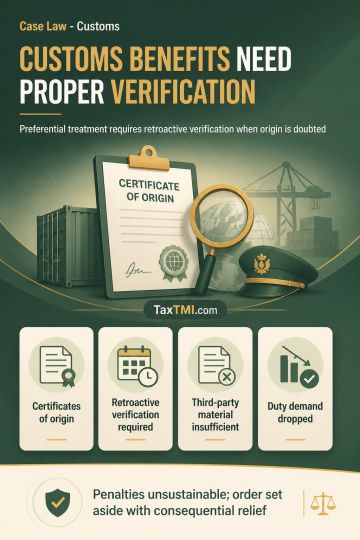
Certificate-of-origin verification procedure governs preferential customs benefits; denial without retroactive verification was set aside with consequ...
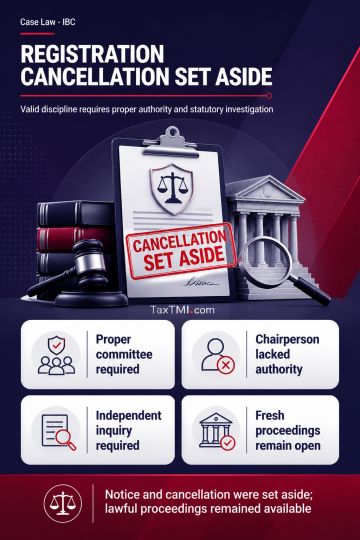
Disciplinary Committee jurisdiction and mandatory investigation requirements invalidated cancellation of an insolvency professional's registration and...
Retention of seized property survives where recorded reasons support proceeds of crime, while stayed investigation periods are excluded from limitatio...
Appellant financed an individual for smuggling gold from Dubai and selling it in India. Penalty was imposed u/s 112(b)(i) of the Customs Act, 1962. The Commissioner held that the appellant was concerned with selling, purchasing, and dealing with goods liable for confiscation, rendering them liable for penalty u/s 112(b)(i). Section 112(b) allows imposing a penalty when a person acquires possession of or is concerned in carrying, removing, depositing, harboring, keeping, concealing, selling, purchasing, or dealing with goods known or reasonably believed to be liable for confiscation u/s 111. However, the Revenue did not allege that the appellant was involved in such activities. The appellant did not acquire possession or concern themselves with importing gold, so the penalty u/s 112(b) should not have been imposed. The appellant did not fall within Section 112(b)'s ambit as they neither acquired possession nor dealt with goods known or reasonably believed to be liable for confiscation. The department failed to prove the appellant's knowledge of activities related to smuggled gold, lacking grounds for imposing a penalty. Mens rea is crucial for penalizing persons u/s 112(b), and the evidence did not suggest the appellant was aware the goods were smuggled into India. Therefore, the penalty imposed on the appellant cannot be sustained.
Appellant financed an individual for smuggling gold from Dubai and selling it in India. Penalty was imposed u/s 112(b)(i) of the Customs Act, 1962. The Commissioner held that the appellant was concerned with selling, purchasing, and dealing with goods liable for confiscation, rendering them liable for penalty u/s 112(b)(i). Section 112(b) allows imposing a penalty when a person acquires possession of or is concerned in carrying, removing, depositing, harboring, keeping, concealing, selling, purchasing, or dealing with goods known or reasonably believed to be liable for confiscation u/s 111. However, the Revenue did not allege that the appellant was involved in such activities. The appellant did not acquire possession or concern themselves with importing gold, so the penalty u/s 112(b) should not have been imposed. The appellant did not fall within Section 112(b)'s ambit as they neither acquired possession nor dealt with goods known or reasonably believed to be liable for confiscation. The department failed to prove the appellant's knowledge of activities related to smuggled gold, lacking grounds for imposing a penalty. Mens rea is crucial for penalizing persons u/s 112(b), and the evidence did not suggest the appellant was aware the goods were smuggled into India. Therefore, the penalty imposed on the appellant cannot be sustained.
Note: It is a system-generated summary and is for quick reference only.
 TaxTMI
 of 4798












 Join Channel


 TaxTMI

