Cooperative society deposits, member-interest TDS exemption and credit-facility deduction claims require verification through records and supporting e...
Customs jurisdiction over EPCG condition breaches survives export-obligation discharge certificates, requiring alleged fraud and misdeclaration to be ...
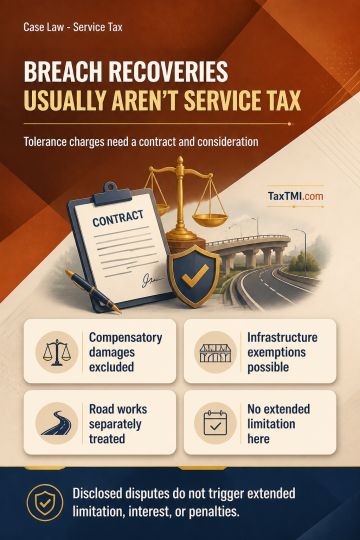
Contractual tolerance requires consideration; breach recoveries, qualifying public infrastructure services and road works escape service tax liability...
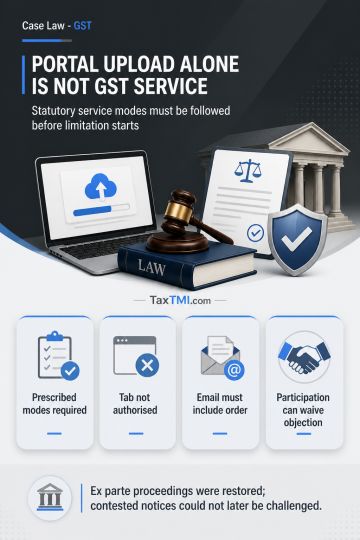
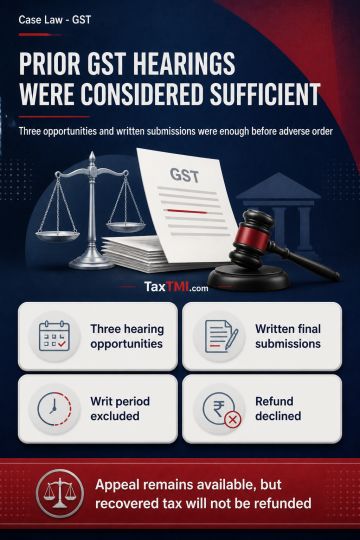
Personal hearing requirements in GST adjudication were satisfied by prior opportunities and written submissions; appellate limitation received writ-pe...
Appellant financed an individual for smuggling gold from Dubai and selling it in India. Penalty was imposed u/s 112(b)(i) of the Customs Act, 1962. The Commissioner held that the appellant was concerned with selling, purchasing, and dealing with goods liable for confiscation, rendering them liable for penalty u/s 112(b)(i). Section 112(b) allows imposing a penalty when a person acquires possession of or is concerned in carrying, removing, depositing, harboring, keeping, concealing, selling, purchasing, or dealing with goods known or reasonably believed to be liable for confiscation u/s 111. However, the Revenue did not allege that the appellant was involved in such activities. The appellant did not acquire possession or concern themselves with importing gold, so the penalty u/s 112(b) should not have been imposed. The appellant did not fall within Section 112(b)'s ambit as they neither acquired possession nor dealt with goods known or reasonably believed to be liable for confiscation. The department failed to prove the appellant's knowledge of activities related to smuggled gold, lacking grounds for imposing a penalty. Mens rea is crucial for penalizing persons u/s 112(b), and the evidence did not suggest the appellant was aware the goods were smuggled into India. Therefore, the penalty imposed on the appellant cannot be sustained.
Appellant financed an individual for smuggling gold from Dubai and selling it in India. Penalty was imposed u/s 112(b)(i) of the Customs Act, 1962. The Commissioner held that the appellant was concerned with selling, purchasing, and dealing with goods liable for confiscation, rendering them liable for penalty u/s 112(b)(i). Section 112(b) allows imposing a penalty when a person acquires possession of or is concerned in carrying, removing, depositing, harboring, keeping, concealing, selling, purchasing, or dealing with goods known or reasonably believed to be liable for confiscation u/s 111. However, the Revenue did not allege that the appellant was involved in such activities. The appellant did not acquire possession or concern themselves with importing gold, so the penalty u/s 112(b) should not have been imposed. The appellant did not fall within Section 112(b)'s ambit as they neither acquired possession nor dealt with goods known or reasonably believed to be liable for confiscation. The department failed to prove the appellant's knowledge of activities related to smuggled gold, lacking grounds for imposing a penalty. Mens rea is crucial for penalizing persons u/s 112(b), and the evidence did not suggest the appellant was aware the goods were smuggled into India. Therefore, the penalty imposed on the appellant cannot be sustained.
Note: It is a system-generated summary and is for quick reference only.
 TaxTMI
 of 4792










 Join Channel


 TaxTMI