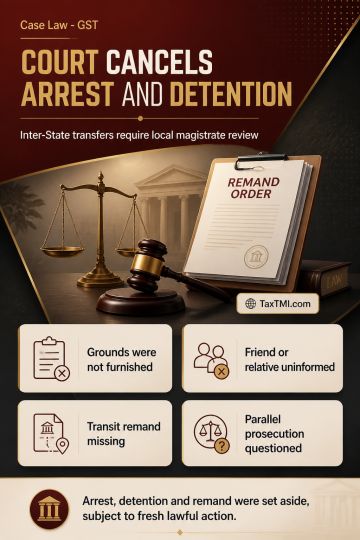
Arrest safeguards and transit remand requirements invalidated detention following inter-State transfer without communicated grounds or magistrate auth...
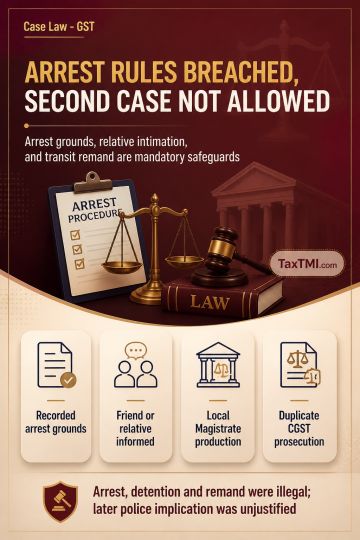
Arrest safeguards require disclosed grounds, relative intimation and transit remand, while duplicate prosecution under the CGST framework is unsustain...
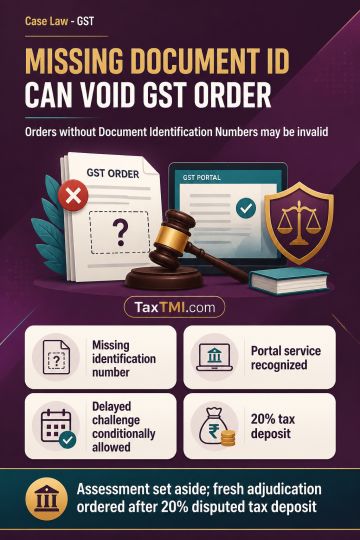
Document Identification Number defects can invalidate GST assessments, with delayed challenges entertained conditionally where patent irregularities e...
Windmill commissioning evidence supported higher depreciation where grid connection and electricity generation proved operational use before the relev...
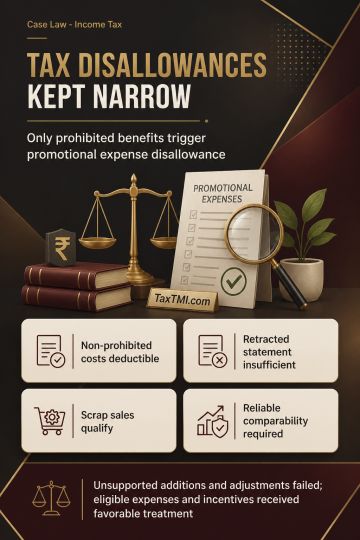
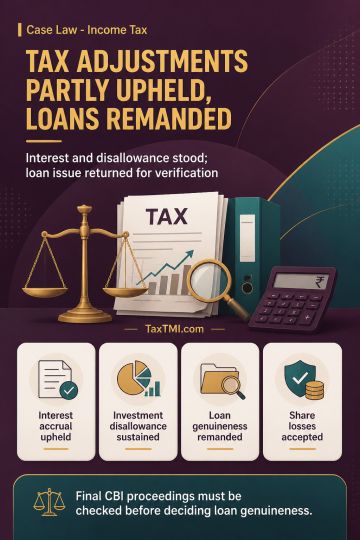
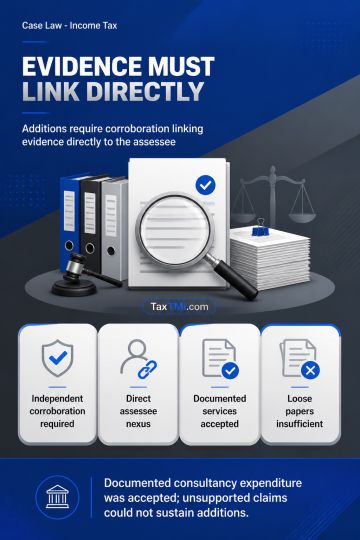
Pharmaceutical promotion and transfer-pricing comparability principles limited disallowances, while uncorroborated search allegations and unsupported ...
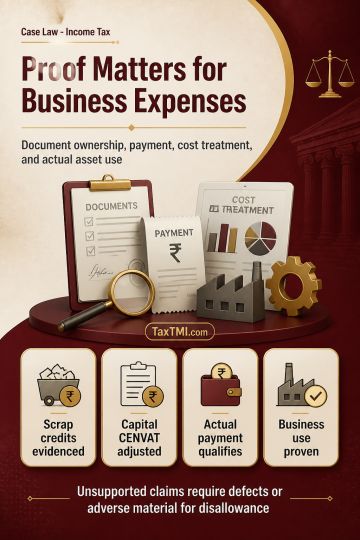
Business expenditure substantiation supports scrap credits, statutory payments and expense claims, while depreciation requires proof of actual busines...
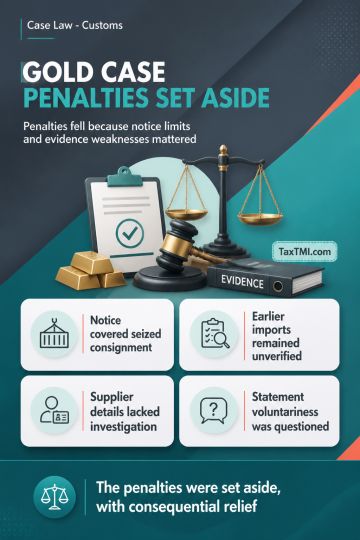
Appellant financed an individual for smuggling gold from Dubai and selling it in India. Penalty was imposed u/s 112(b)(i) of the Customs Act, 1962. The Commissioner held that the appellant was concerned with selling, purchasing, and dealing with goods liable for confiscation, rendering them liable for penalty u/s 112(b)(i). Section 112(b) allows imposing a penalty when a person acquires possession of or is concerned in carrying, removing, depositing, harboring, keeping, concealing, selling, purchasing, or dealing with goods known or reasonably believed to be liable for confiscation u/s 111. However, the Revenue did not allege that the appellant was involved in such activities. The appellant did not acquire possession or concern themselves with importing gold, so the penalty u/s 112(b) should not have been imposed. The appellant did not fall within Section 112(b)'s ambit as they neither acquired possession nor dealt with goods known or reasonably believed to be liable for confiscation. The department failed to prove the appellant's knowledge of activities related to smuggled gold, lacking grounds for imposing a penalty. Mens rea is crucial for penalizing persons u/s 112(b), and the evidence did not suggest the appellant was aware the goods were smuggled into India. Therefore, the penalty imposed on the appellant cannot be sustained.
Appellant financed an individual for smuggling gold from Dubai and selling it in India. Penalty was imposed u/s 112(b)(i) of the Customs Act, 1962. The Commissioner held that the appellant was concerned with selling, purchasing, and dealing with goods liable for confiscation, rendering them liable for penalty u/s 112(b)(i). Section 112(b) allows imposing a penalty when a person acquires possession of or is concerned in carrying, removing, depositing, harboring, keeping, concealing, selling, purchasing, or dealing with goods known or reasonably believed to be liable for confiscation u/s 111. However, the Revenue did not allege that the appellant was involved in such activities. The appellant did not acquire possession or concern themselves with importing gold, so the penalty u/s 112(b) should not have been imposed. The appellant did not fall within Section 112(b)'s ambit as they neither acquired possession nor dealt with goods known or reasonably believed to be liable for confiscation. The department failed to prove the appellant's knowledge of activities related to smuggled gold, lacking grounds for imposing a penalty. Mens rea is crucial for penalizing persons u/s 112(b), and the evidence did not suggest the appellant was aware the goods were smuggled into India. Therefore, the penalty imposed on the appellant cannot be sustained.
Note: It is a system-generated summary and is for quick reference only.
 TaxTMI
 of 4792











 Join Channel


 TaxTMI