Transfer pricing comparability requires functional alignment, reliable financial data, and careful review of working capital and receivables adjustmen...
Transfer pricing rules require benchmarking corporate guarantees and associated-enterprise advances, while invalid domestic-transaction adjustments ca...
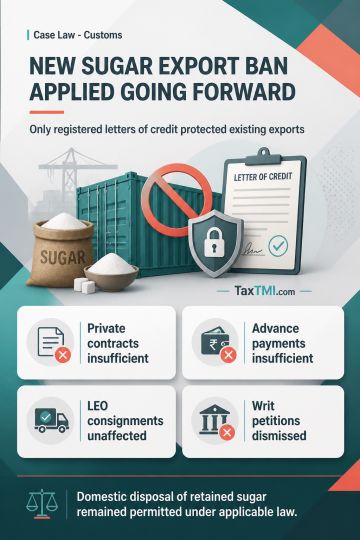
Prospective sugar export prohibition required registered letters of credit; private contracts and export quotas created no enforceable continuation ri...
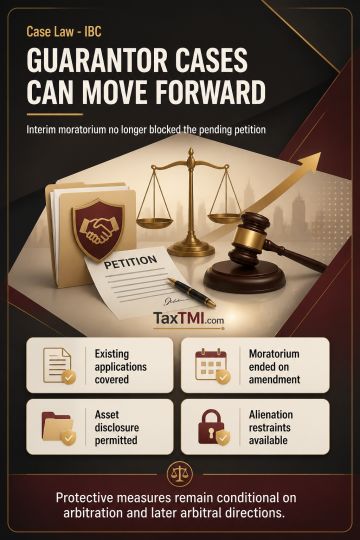
Retroactive interim-moratorium exclusion permits protective asset disclosure and preservation measures against personal guarantors pending arbitration...
The Appellate Tribunal held that the Commissioner of Income Tax (Exemptions) erred in rejecting the trust's registration u/s 12AA. The trust's objects were not found to be profit-oriented, and no activity was conducted against its objects. The events organized by an individual could not be attributed to the trust, especially when no expenses were incurred, as per the Income and Expenditure statements. The Supreme Court's decision clarified that an entity advancing general public utility cannot engage in trade, commerce, or business for consideration. However, the Delhi High Court upheld the constitutional validity of the proviso to Section 2(15), applying where the dominant intention is profit-making. Since nothing suggested the trust's objects were profit-oriented, the order rejecting registration was set aside, and the Commissioner was directed to register the trust in accordance with the law.
The Appellate Tribunal held that the Commissioner of Income Tax (Exemptions) erred in rejecting the trust's registration u/s 12AA. The trust's objects were not found to be profit-oriented, and no activity was conducted against its objects. The events organized by an individual could not be attributed to the trust, especially when no expenses were incurred, as per the Income and Expenditure statements. The Supreme Court's decision clarified that an entity advancing general public utility cannot engage in trade, commerce, or business for consideration. However, the Delhi High Court upheld the constitutional validity of the proviso to Section 2(15), applying where the dominant intention is profit-making. Since nothing suggested the trust's objects were profit-oriented, the order rejecting registration was set aside, and the Commissioner was directed to register the trust in accordance with the law.
Note: It is a system-generated summary and is for quick reference only.
 TaxTMI
 of 4782







 Join Channel


 TaxTMI