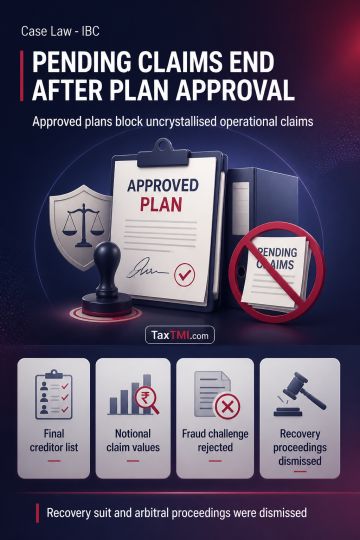
Clean slate principle extinguishes uncrystallised operational claims and bars continuation of pending recovery and arbitral proceedings after plan app...
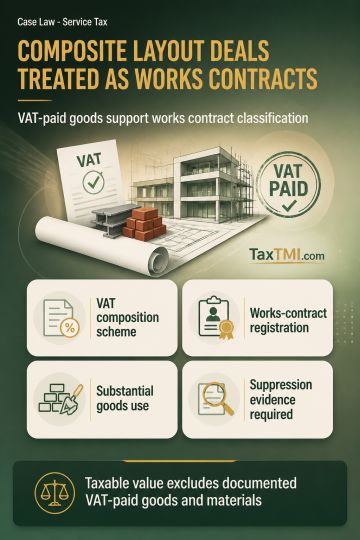
Works contract classification governs composite layout-development contracts where VAT-paid goods are transferred alongside construction and infrastru...
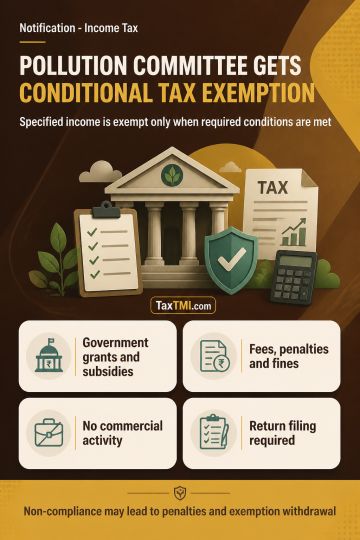
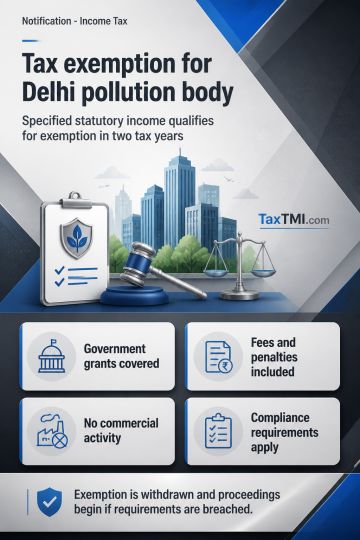
Specified income tax exemption for pollution control body remains conditional on non-commercial activity, unchanged income character, and return filin...
Jurisdictional facts in certificate-of-origin discrepancies can support customs show-cause proceedings, leaving factual explanations for departmental ...
The Appellate Tribunal held that the Commissioner of Income Tax (Exemptions) erred in rejecting the trust's registration u/s 12AA. The trust's objects were not found to be profit-oriented, and no activity was conducted against its objects. The events organized by an individual could not be attributed to the trust, especially when no expenses were incurred, as per the Income and Expenditure statements. The Supreme Court's decision clarified that an entity advancing general public utility cannot engage in trade, commerce, or business for consideration. However, the Delhi High Court upheld the constitutional validity of the proviso to Section 2(15), applying where the dominant intention is profit-making. Since nothing suggested the trust's objects were profit-oriented, the order rejecting registration was set aside, and the Commissioner was directed to register the trust in accordance with the law.
The Appellate Tribunal held that the Commissioner of Income Tax (Exemptions) erred in rejecting the trust's registration u/s 12AA. The trust's objects were not found to be profit-oriented, and no activity was conducted against its objects. The events organized by an individual could not be attributed to the trust, especially when no expenses were incurred, as per the Income and Expenditure statements. The Supreme Court's decision clarified that an entity advancing general public utility cannot engage in trade, commerce, or business for consideration. However, the Delhi High Court upheld the constitutional validity of the proviso to Section 2(15), applying where the dominant intention is profit-making. Since nothing suggested the trust's objects were profit-oriented, the order rejecting registration was set aside, and the Commissioner was directed to register the trust in accordance with the law.
Note: It is a system-generated summary and is for quick reference only.
 TaxTMI
 of 4792





 Join Channel


 TaxTMI