Clean slate principle extinguishes uncrystallised operational claims and bars continuation of pending recovery and arbitral proceedings after plan app...
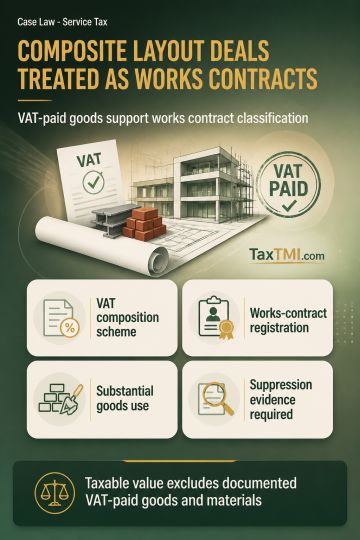
Works contract classification governs composite layout-development contracts where VAT-paid goods are transferred alongside construction and infrastru...
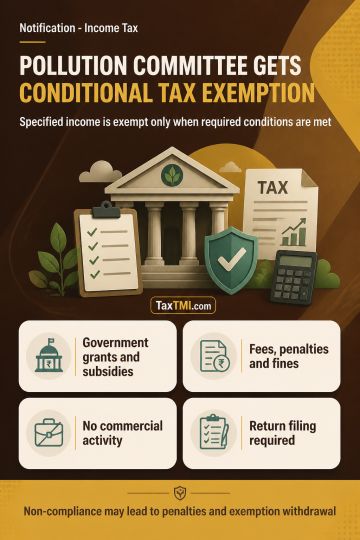
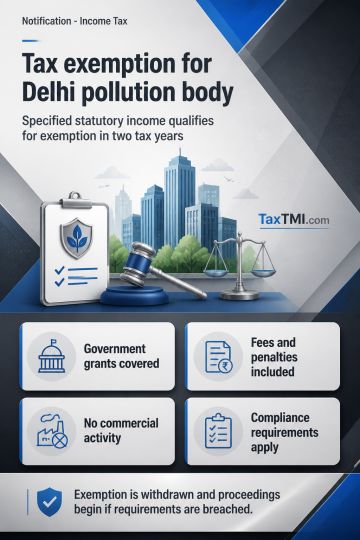
Specified income tax exemption for pollution control body remains conditional on non-commercial activity, unchanged income character, and return filin...
Jurisdictional facts in certificate-of-origin discrepancies can support customs show-cause proceedings, leaving factual explanations for departmental ...
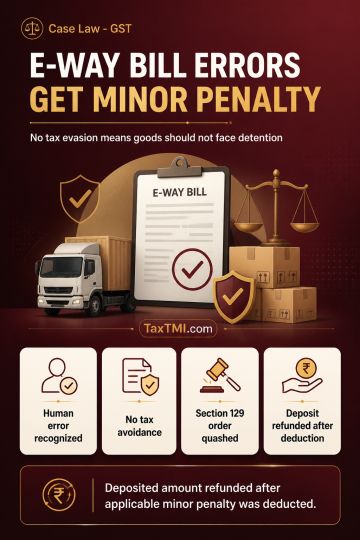
E-Way Bill was not properly filled, but upon inspection, no discrepancy was found between the physically available goods and the goods disclosed in the E-Way Bill. The assessee claimed no intent to evade tax. The authorities did not find any intent to evade tax. The High Court held that in cases of mere technical breaches, where substantial compliance is disclosed, physical inspection tallies with the goods declared in the E-Way Bill, and no intent of tax evasion is made out, proceedings u/s 129 of the GST Act become vitiated. Consequently, the impugned order was quashed, and the petition was allowed.
E-Way Bill was not properly filled, but upon inspection, no discrepancy was found between the physically available goods and the goods disclosed in the E-Way Bill. The assessee claimed no intent to evade tax. The authorities did not find any intent to evade tax. The High Court held that in cases of mere technical breaches, where substantial compliance is disclosed, physical inspection tallies with the goods declared in the E-Way Bill, and no intent of tax evasion is made out, proceedings u/s 129 of the GST Act become vitiated. Consequently, the impugned order was quashed, and the petition was allowed.
Note: It is a system-generated summary and is for quick reference only.
 TaxTMI
 of 4792











 Join Channel


 TaxTMI