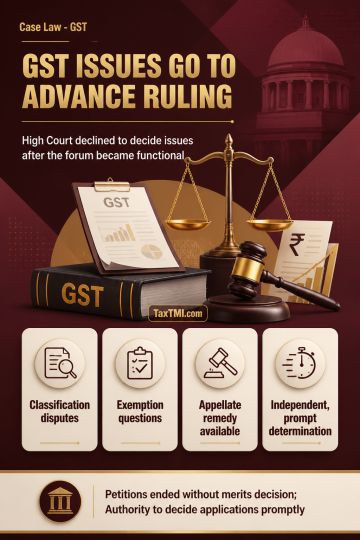
Advance-ruling mechanism governs pending GST classification, exemption and taxability disputes, limiting writ review once the specialised forum functi...
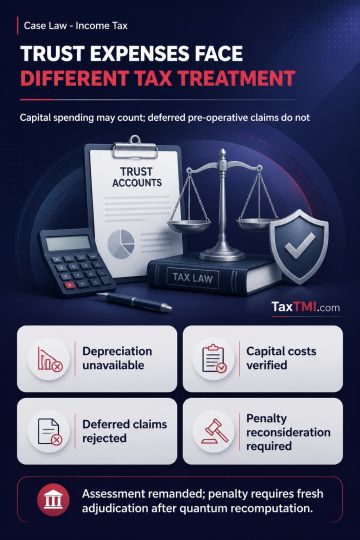
Charitable trust income application permits verified capital expenditure but rejects deferred pre-operative claims and requires reconsideration of con...
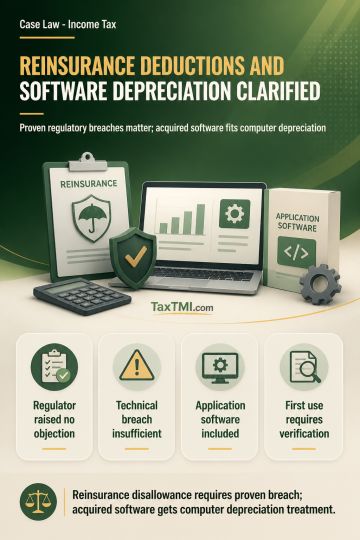
Reinsurance premium deductions require established regulatory breaches, while independently acquired software qualifies within the computer depreciati...
E-Way Bill was not properly filled, but upon inspection, no discrepancy was found between the physically available goods and the goods disclosed in the E-Way Bill. The assessee claimed no intent to evade tax. The authorities did not find any intent to evade tax. The High Court held that in cases of mere technical breaches, where substantial compliance is disclosed, physical inspection tallies with the goods declared in the E-Way Bill, and no intent of tax evasion is made out, proceedings u/s 129 of the GST Act become vitiated. Consequently, the impugned order was quashed, and the petition was allowed.
E-Way Bill was not properly filled, but upon inspection, no discrepancy was found between the physically available goods and the goods disclosed in the E-Way Bill. The assessee claimed no intent to evade tax. The authorities did not find any intent to evade tax. The High Court held that in cases of mere technical breaches, where substantial compliance is disclosed, physical inspection tallies with the goods declared in the E-Way Bill, and no intent of tax evasion is made out, proceedings u/s 129 of the GST Act become vitiated. Consequently, the impugned order was quashed, and the petition was allowed.
Note: It is a system-generated summary and is for quick reference only.
 TaxTMI
 of 4790








 Join Channel


 TaxTMI
