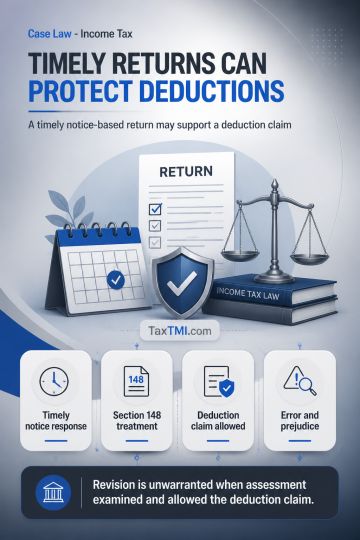
Commercial vehicle depreciation, scientifically determined warranty provisions and exempt-income disallowances were resolved in favour of the taxpayer...
Inherited property sale proceeds require capital-gains treatment where ownership is supported by evidence, not suspicion or unverified signature doubt...
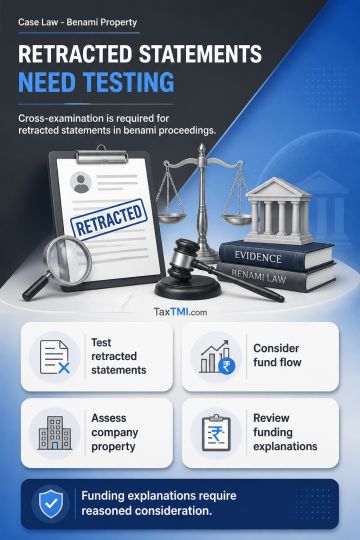
Cross-examination of retracted statements is essential where foundational evidence supports a benami allegation and documented funding explanations re...
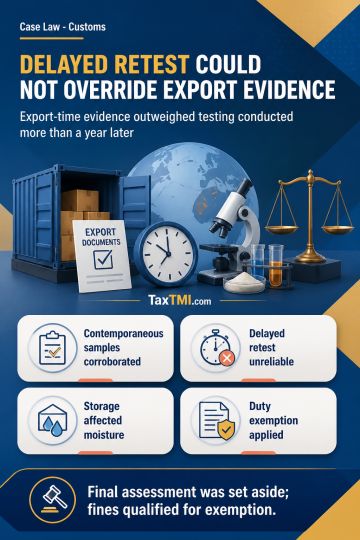
Capital-goods exemption covers plant-modernisation accessories, while the import restriction applies only to earlier capital-goods components and spar...
Constitutional judicial review permits challenges to ECIRs and connected money-laundering proceedings where coercive action affects fundamental intere...
Interplay between Sections 153C and 147 of the Income Tax Act, specifically whether recourse to Section 147 is available when the Assessing Officer (AO) is empowered to proceed u/s 153C. It was held that Section 153C enables the AO to assess or reassess income where incriminating assets, material, or documents are found during a search u/s 132 or requisition u/s 132A in respect of another person. However, in the present case, the jurisdictional conditions to initiate proceedings u/s 153C were not satisfied as the AO of the searched person did not record a satisfaction note and transmit relevant material to the Assessee's AO. The reassessment proceedings were initiated u/s 147 based on information received from the Investigation Wing regarding the Assessee's purchase of penny stock units. Since the AO did not assume jurisdiction u/s 153C, the non-obstante clause of Section 153C would not override Sections 147, 148, and 149, and the decision to reassess u/s 147 was upheld.
Interplay between Sections 153C and 147 of the Income Tax Act, specifically whether recourse to Section 147 is available when the Assessing Officer (AO) is empowered to proceed u/s 153C. It was held that Section 153C enables the AO to assess or reassess income where incriminating assets, material, or documents are found during a search u/s 132 or requisition u/s 132A in respect of another person. However, in the present case, the jurisdictional conditions to initiate proceedings u/s 153C were not satisfied as the AO of the searched person did not record a satisfaction note and transmit relevant material to the Assessee's AO. The reassessment proceedings were initiated u/s 147 based on information received from the Investigation Wing regarding the Assessee's purchase of penny stock units. Since the AO did not assume jurisdiction u/s 153C, the non-obstante clause of Section 153C would not override Sections 147, 148, and 149, and the decision to reassess u/s 147 was upheld.
Note: It is a system-generated summary and is for quick reference only.
 TaxTMI
 of 4782


















 Join Channel


 TaxTMI
