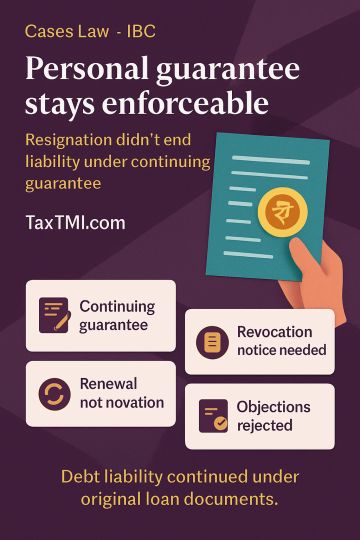
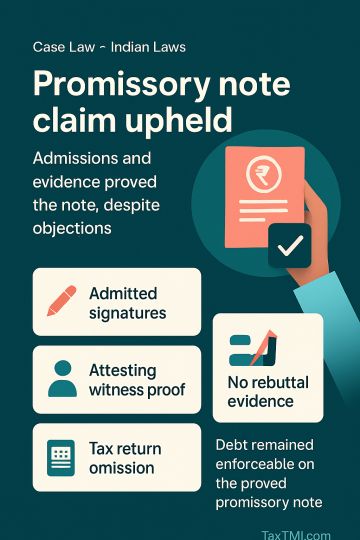
Promissory note presumption of consideration survives blank-signature and income-tax non-disclosure objections when admissions and attesting evidence ...
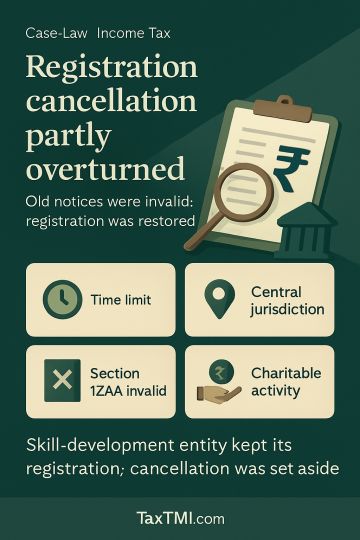
Charitable registration cancellation: limitation and jurisdiction upheld, but withdrawal quashed under discontinued provisions for skill-development e...
Page of 4803
Press 'Enter' after typing page number.
1421 to 1440 of 96047 Results
❮
❯
❯❯
0 / 200
Expand Note
Add to Folder
No Folders have been created
+
Are you sure you want to delete "My most important" ?
The High Court held that the Assessing Officer cannot disallow losses merely based on assumptions and surmises regarding the commercial expediency of transactions undertaken by the assessee. The transaction for sale and purchase of dies was a pure commercial transaction entered into by the assessee in its commercial wisdom, and the fact that the assessee incurred a loss in the said transaction was not disputed. There was no allegation of any undisclosed consideration or clandestine transaction to reverse the loss. The Assessing Officer made the addition solely based on their perception of what was commercially expedient, which is not within their purview. The assessee had justified its commercial decision by reflecting enhanced turnover and profits from its business, but even if profits were not earned, it would not make a difference, as the examination is limited to whether the transactions were genuine, not whether they were commercially expedient. The High Court found no material other than suspicion to justify the addition and decided in favor of the assessee.
The High Court held that the Assessing Officer cannot disallow losses merely based on assumptions and surmises regarding the commercial expediency of transactions undertaken by the assessee. The transaction for sale and purchase of dies was a pure commercial transaction entered into by the assessee in its commercial wisdom, and the fact that the assessee incurred a loss in the said transaction was not disputed. There was no allegation of any undisclosed consideration or clandestine transaction to reverse the loss. The Assessing Officer made the addition solely based on their perception of what was commercially expedient, which is not within their purview. The assessee had justified its commercial decision by reflecting enhanced turnover and profits from its business, but even if profits were not earned, it would not make a difference, as the examination is limited to whether the transactions were genuine, not whether they were commercially expedient. The High Court found no material other than suspicion to justify the addition and decided in favor of the assessee.
Note: It is a system-generated summary and is for quick reference only.
 TaxTMI
 of 4803





 Join Channel


 TaxTMI