Additional evidence in transfer pricing dispute leads to fresh examination, while tax deductions, TDS credit, fee and refund interest require verifica...
Category II AIF pass-through taxation preserves non-business income character; investment receipts cannot be reclassified without applying recognised ...
Mutual fund maturity rules require proper rollover, redemption, disclosure, and due diligence; investor gains cannot excuse regulatory breaches or pen...
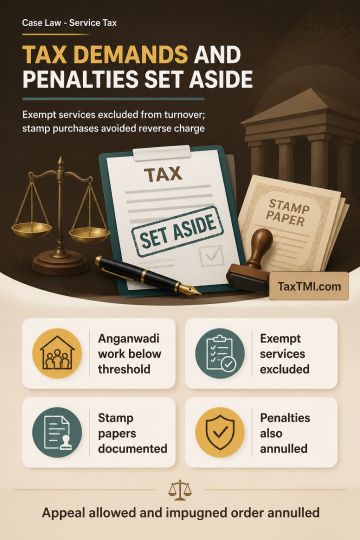
Threshold exemption excludes exempt services, while stamp-paper purchases avoid reverse charge; consequential service tax penalties were also set asid...
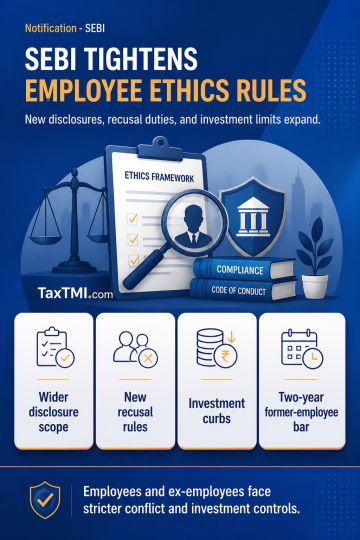
Employee conflict disclosures and investment restrictions expand with new recusal duties, post-employment limits, and compliance reporting requirement...
A legal challenge was raised regarding the requirement to pay the Social Welfare Surcharge (SWS) on imported goods when the basic customs and additional duty were exempted through a scrip. The court examined Section 110 of the Finance Act, 2018, which levies SWS at 10% on the aggregate of duties collected under the Customs Act. The petitioner argued that since no customs duty was paid due to the exemption, the SWS, being a percentage of the duty paid, should also be zero. The court agreed with this reasoning, distinguishing it from previous cases on NCCD where the issue was the absence of a notification for levy. The court held that upon obtaining an exemption, the liability to pay duty is discharged, and no duty collection follows the levy. Consequently, if the duty paid is zero, the SWS, calculated as a percentage of the duty paid, must also be zero. The court granted a declaration that the petitioner is not required to pay SWS on customs duty exempted under the scrip.
A legal challenge was raised regarding the requirement to pay the Social Welfare Surcharge (SWS) on imported goods when the basic customs and additional duty were exempted through a scrip. The court examined Section 110 of the Finance Act, 2018, which levies SWS at 10% on the aggregate of duties collected under the Customs Act. The petitioner argued that since no customs duty was paid due to the exemption, the SWS, being a percentage of the duty paid, should also be zero. The court agreed with this reasoning, distinguishing it from previous cases on NCCD where the issue was the absence of a notification for levy. The court held that upon obtaining an exemption, the liability to pay duty is discharged, and no duty collection follows the levy. Consequently, if the duty paid is zero, the SWS, calculated as a percentage of the duty paid, must also be zero. The court granted a declaration that the petitioner is not required to pay SWS on customs duty exempted under the scrip.
Note: It is a system-generated summary and is for quick reference only.
 TaxTMI
 of 4803












 Join Channel


 TaxTMI
