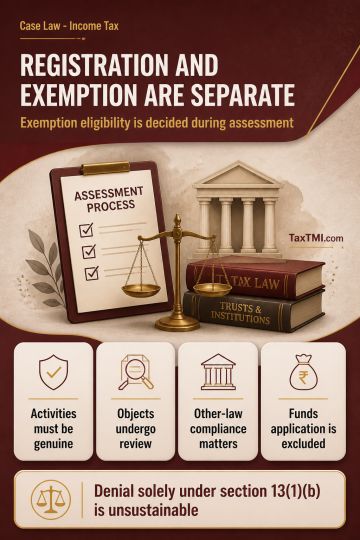
Defined public benefit can retain charitable character; registration renewal requires examining genuine activities and legal compliance, not surplus a...
Capital reduction is distinct from share buy-back, preventing buy-back tax; restructuring interest and related business deductions also survive scruti...
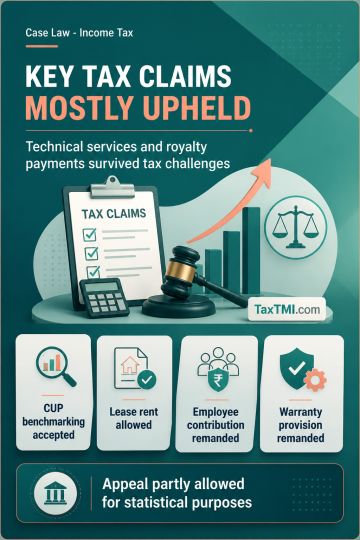
Transfer pricing and tax deductions upheld on established principles, while employee contributions and warranty provisions returned for fresh examinat...
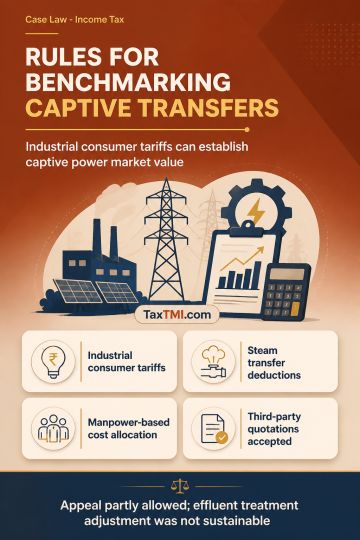
Captive transfer pricing relies on industrial consumer tariffs, while genuine quotations can benchmark effluent treatment transfers under the Other Me...
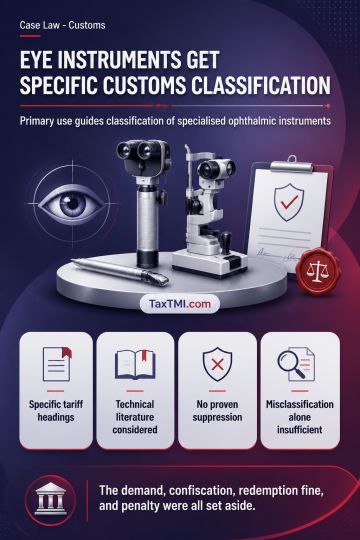
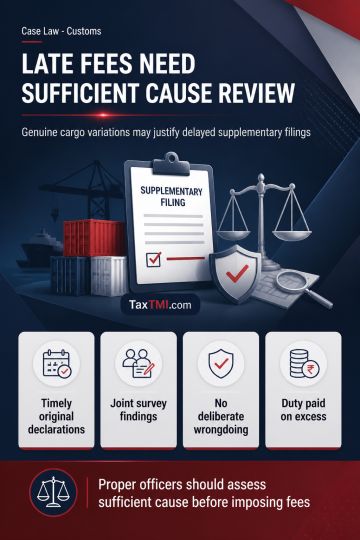
Specific tariff classification for ophthalmic instruments and extended limitation principles determine the treatment of duty demands, confiscation, an...
Page of 4801
Press 'Enter' after typing page number.
1161 to 1180 of 96001 Results
❮
❯
❯❯
0 / 200
Expand Note
Add to Folder
No Folders have been created
+
Are you sure you want to delete "My most important" ?
Mobile service providers (MSPs) can claim CENVAT credit on excise duties paid on mobile towers and prefabricated buildings (PFBs) used for providing output services. Mobile towers and PFBs qualify as "capital goods" or "inputs" under the CENVAT Rules, enabling MSPs to claim credit. The Supreme Court applied the "marketability test" to determine movability, ruling that if goods can be dismantled, relocated without damage, and sold in the market, they retain mobility and qualify as movable property, not immovable. Towers and PFBs meet this test as they can be dismantled, relocated, and sold without losing their essential character. PFBs, housing BTS equipment and power backup, are accessories to antennas and BTS, which are capital goods. Therefore, towers and PFBs are "goods" and "inputs" under CENVAT Rules, allowing MSPs to claim credit on duties paid.
Mobile service providers (MSPs) can claim CENVAT credit on excise duties paid on mobile towers and prefabricated buildings (PFBs) used for providing output services. Mobile towers and PFBs qualify as "capital goods" or "inputs" under the CENVAT Rules, enabling MSPs to claim credit. The Supreme Court applied the "marketability test" to determine movability, ruling that if goods can be dismantled, relocated without damage, and sold in the market, they retain mobility and qualify as movable property, not immovable. Towers and PFBs meet this test as they can be dismantled, relocated, and sold without losing their essential character. PFBs, housing BTS equipment and power backup, are accessories to antennas and BTS, which are capital goods. Therefore, towers and PFBs are "goods" and "inputs" under CENVAT Rules, allowing MSPs to claim credit on duties paid.
Note: It is a system-generated summary and is for quick reference only.
 TaxTMI
 of 4801







 Join Channel


 TaxTMI